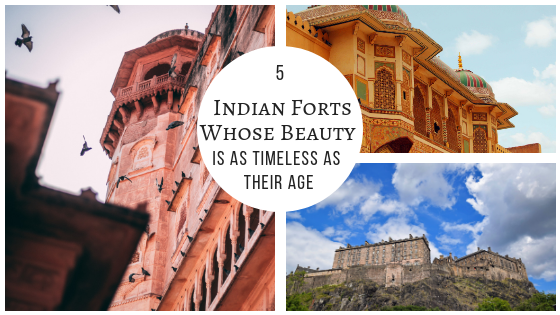
India is incredibly rich when it comes to its ancient history. All the heritage monuments, forts, and palaces are some of the most intriguing tourist places in India. In different Indian cities, India has splendor forts beautifying its aura. The construction of these forts was done majorly during the colonial era in the reign of the British East India Company. They depict the history of India’s magnificent past.
Let’s check out the five best forts that are as timeless as their age:
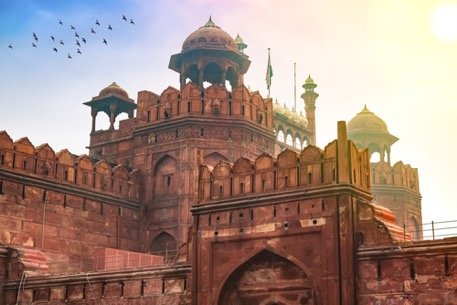
Red Fort – Delhi
This early 16th-century fort is a historian’s paradise which is visually mind-blowing. It is a manifestation of extravagance hoisting the Indian tri-color flag every year on the Independence Day of India. So, do not miss out on this stunningly majestic fort which also has shops selling a host of wares inside. Enjoy the guided tour into this fort and its museums that carries the glorious past of India as well as the prospect of its sovereignty.
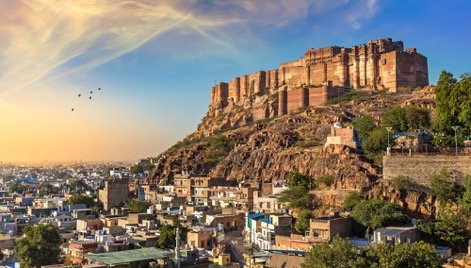
Mehrangarh Fort – Jodhpur
Unbeatable, intimidating and yet with bizarre haunting beauty, Mehrangarh Fort is a nugget that one must explore when visiting Jodhpur. This fort was built around 1460 by Rao Jodha and has withstood during many battles. According to historians, it is said that a hermit used to live in the premises of the fort and cursed Rao Jodha that the fort will face droughts. A lot of human sacrifices were made because of this curse. Intriguing, right? Take a trip down the history lane at this marvelous fort to hear more fascinating stories from the locals.
Jaisalmer Fort – Jaisalmer
In the spirit of Thar Desert, there lies the princely state of western Rajasthan, Jaisalmer. Amidst the desert city, a vast and magnificent Jaisalmer fort is located. The entire fortress is constructed of golden-colored sandstone, which is why it emanates a slightly iridescent hue in the sun. It’s recommended to go with a qualified guide who will take you around the proper places inside and let you know about the related historical events.
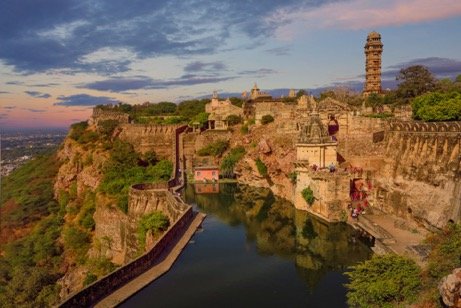
Chittorgarh Fort – Chittorgarh
You must have seen the epic movie Padmavat starring Bollywood’s best stars. Here we will talk about the star of that movie, the legendary Chittorgarh fort where the shooting of Padmavat was done. Arguably the most prestigious and beautiful fort in India, Chittorgarh Fort is the living testimony that represents the bravery of the great Rajput rulers of the country. In history, this fort was ransacked by Alauddin Khilji, Akbar and Bahadur Shar and is still standing strong after these invasions. Pretty much like how the movie Padmavat went off blowing the box office even after having a few the controversies.
Terekhol Fort – Goa
Picture Courtesy: Government of India
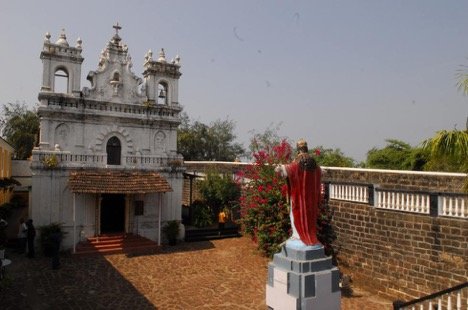
Whenever you travel to Goa, visiting Terekhol Fort is a must for all travel enthusiasts.Maharaja Khem Sawant Bhonsle of Sawantwadi built this fort in the 17th century. The most exquisite thing about this fort is that it has a church known as the Church of St. Anthony, which was established in the year 1764. During May, the annual feast is organized in this church. One must look out for the enthralling view of the golden sand of Keri Beach and the Terekhol River from the fort. Terekhol Fort is located at the northern tip of Goa and is open all week from 9 am to 7 pm for exploration.
Planning to Drive to These Forts? Make Sure to Have Your Vehicle Insured
Lately, we have seen that people dig for road trips. They hop on their car or bikes and travel to leave the hustle-bustle of their busy life behind. During such road trips, mishaps on the road can happen. So, while you invest in your travel requirements like flight tickets, hotel bookings, food, and similar others, do not forget to buy vehicle insurance. With that, you’ll be covered with financial aid when on the road.
Rajasthan is home to a number of amazing tourist spots whether it be Jaipur, Jodhpur, etc. The city under the spotlight is Jaisalmer.
Jaisalmer is situated in the deep west, just a little away from India-Pakistan border. This remote city has won the title of the ‘Golden city’ on the back of its majestic beauty.
Best time to visit Jaisalmer
Let us get it out and clear that the worst time to visit the desert state is summer season – that is from April to August.This is too hot especially in afternoons and temperatures rise up to 42 degrees – your experience will be spoiled by the heat. This, however, is the best time for budget travels.
Jaisalmer’s tourism peak season falls in the winter season that is months from November to March. In terms of climate, it is the best place to visit Jaisalmer – the nights are even cold while even during day time you can travel around with convenience. This, however, can also be a quite expensive time to visit the state.
The best time to visit Jaisalmer is thus the monsoon season that is September to October – especially the month of October. Despite this period being named monsoon, the desert city receives very little rainfall which might even increase humidity a little. But by October, the climate has grown pleasant and you can still get off-season benefits. The temperature remains bearable not rising above 37 degrees most of the days making it easy to travel.
How to reach Jaisalmer
Once you are in Jodhpur (230 kilometers from Jaisalmer) or Jaipur (560 kilometers from Jaisalmer), you can take a bus to Jaisalmer.
Best things to do in Jaisalmer
The city is full of temples, forts, lakes … Even a ghost town. Here we bring you a list of its top attractions. :
1 Jaisalmer Fort
Jaisalmer Fort seems very much abandoned by the government. There are no guards that guard it and no fixed hours during which to visit it. Besides marveling at its architectural splendor, you can shop for your souvenirs in shops in the fort, eat at local restaurants, drink coffee and at easy to find cafes.
The fort also has a brilliant Jain Temple which is really beautiful and a sight worth seeing in itself.
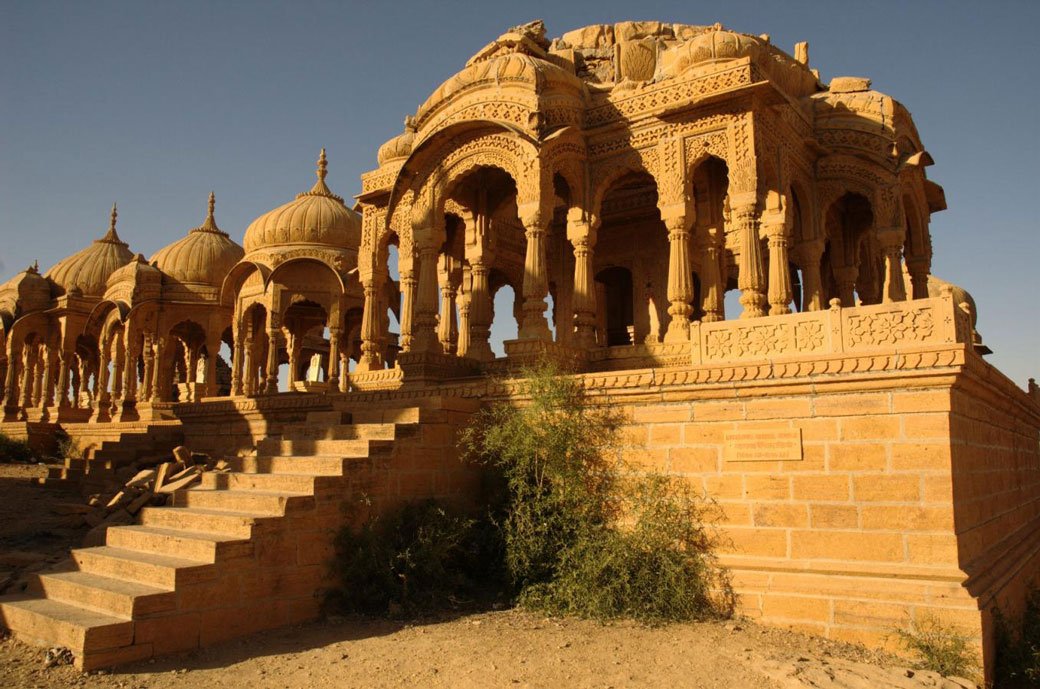
2. Bada Bagh
Figuratively ‘big garden’, the Bada Bagh is a cemetery with a number of cenotaphs built in here. This tranquil place can be visited for a fee of hundred rupees
3. Gadi Sagar Lake
The beautiful lakes have a same somewhat abandoned look as the fort but it is still a splendid sight. Beautiful temples sit on it appearing to be almost floating.
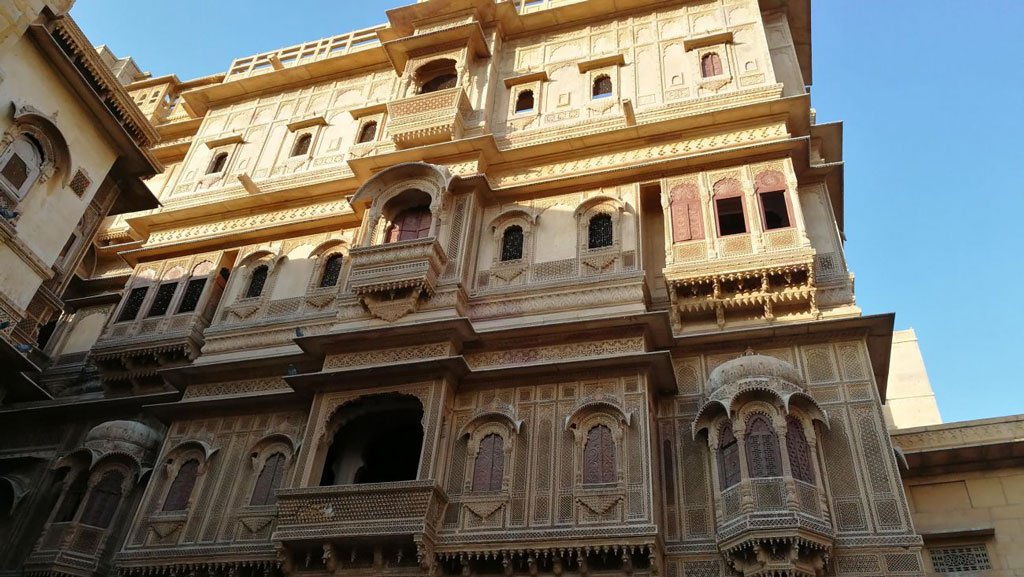
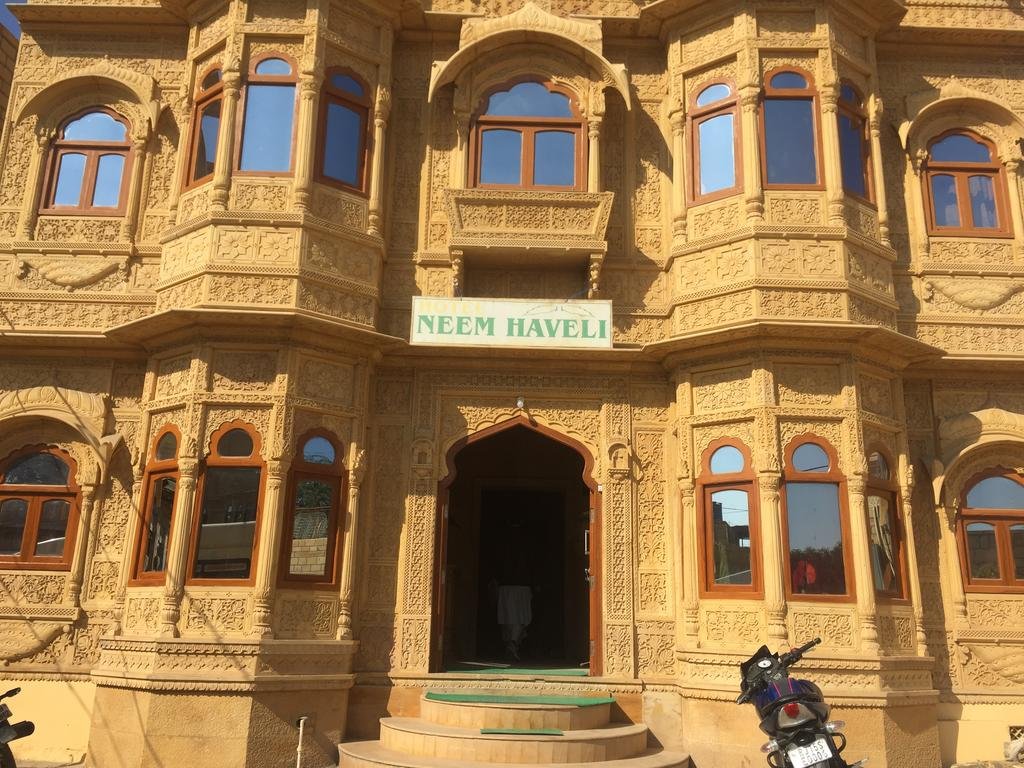
4. Haveli Hunting
Jaisalmer is known for its Havelis – traditional Rajasthani styled Mansions where very rich people live. We recommend exploring at least a couple of them.
5.Camel Safari in the Sand Dunes
There is no point of being in Rajasthan unless you have had a Camel Safari. Jaisalmer offers you this option at several places and the sand dunes in and surrounding the city offer the perfect place to go on a camel ride. They last from a few hours to several days – we recommend going for shorter ones unless you are sure of yourself for reason of weather conditions.
6.Try the traditional Rajasthani dresses
Another must-do when in Rajasthan is to wear Rajasthan dresses and get photographed wearing them. It is one of the most fun things to do in Jaisalmer.
Conclusion
This is all from us today. We hope you will consider visiting Jaisalmer this monsoon. 🙂
Madhya Pradesh is full of small cities and towns that are relatively less known among tourism lovers and are historical delights that often need a day or less to visit them. The walled city of Mandu is one of the most important of these towns
Mandu or Mandavgad is an ancient city located in the Malwa region of western Madhya Pradesh, India, at 35 km from Dhar city. It is located at a distance of 100 kilometers from Indore, the capital of Madhya Pradesh. It is a great option to consider for your next weekend getaway.
How we reached Mandu?
First, you need to reach Indore. Indore is nicely connected to the rest of the world via rail, road, and airways. From Indore, we took a bus to Mandu as railway connectivity leaves much for asking. You can also take a taxi from Indore.
When to visit?
The weather is most pleasant in monsoon. We will recommend avoiding both the coldest and, particularly, the hottest times of the year. If you are considering it as an add-on for a tour to Indore or Madhyapradesh, consider the local festivals or events you might be interested in.
Where to stay?
Mandu has several accommodation options catering to all pocket sizes. We stayed at Malwa resort though it was not too much to recommend, it met our most immediate accommodation needs
What to see in Mandu?
The Darwazas (Gates)
Madu is a walled city. It is surrounded by a 37-kilometer wall which is punctuated by 12 gateways. Naturally, these were too many to keep one’s interest in seeing them all in but the gates are probably the first thing you will see in Mandu as they are located at entrance themselves.
Roopmati’s Pavilion
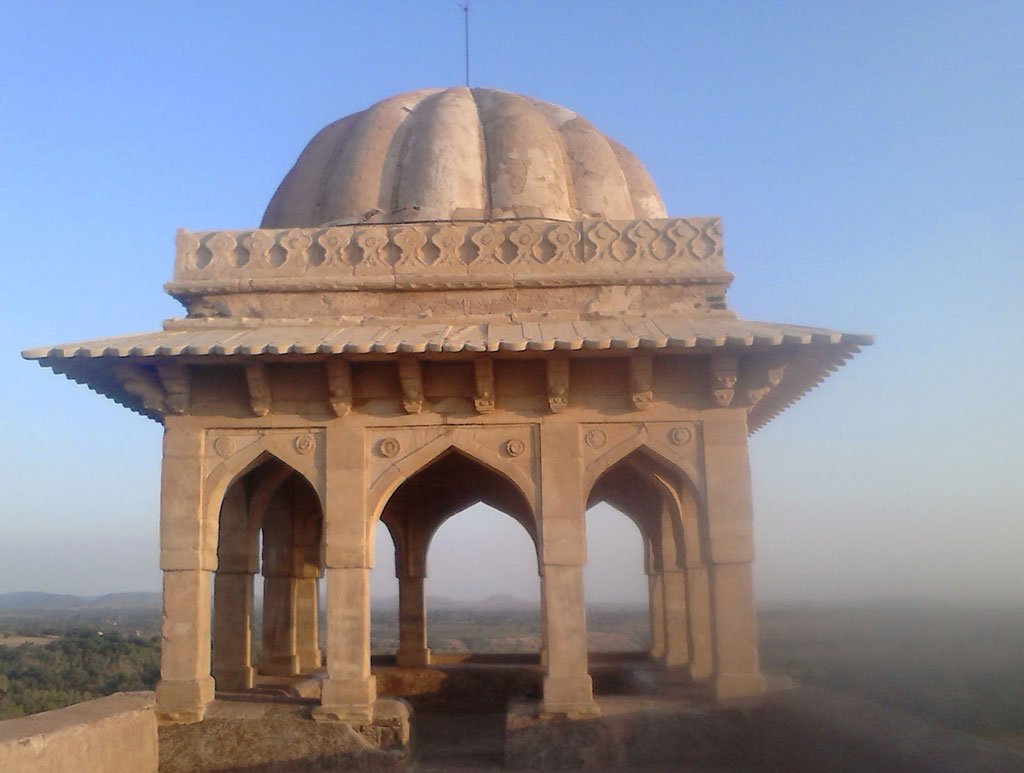
This pavilion is a large sandstone structure that was originally built as an army observation post. Rani Roopmati, who was the love interest of Baaz Bahadur, is said to have lived here. It is said she would often gaze at the Baz Bahadur’s Palace which is situated below (and next in our list of Mandu’s attractions) and also at Narmada river, flowing through the Nimar plains far below, a river which she revered.
Baz Bahadur’s Palace
Just next to Roopmati’s pavilion is Baz Bahadur Palace and can be seen from the pavilion. Baz Bahadur built this palace in 16th-century structure.
Rewa Kund
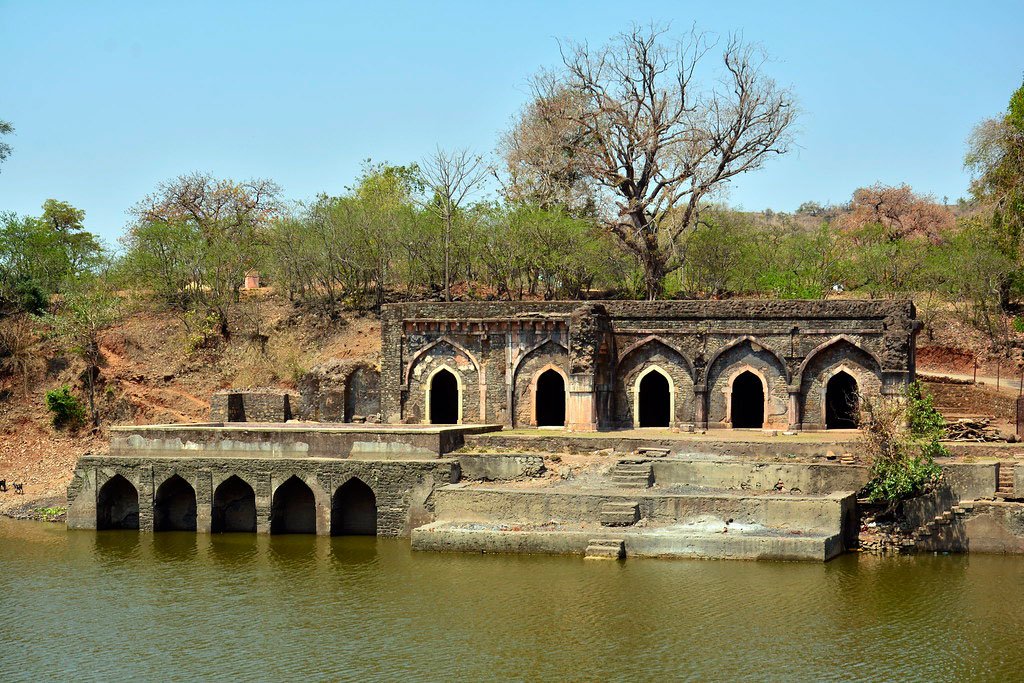
Rewa Kund was the reservoir constructed by Baz Bahadur for supplying water to Roopmati’s Pavilion.
Darya Khan’s Tomb complex
Darya Khan was an important minister in the court of Mahmud Khalji II, and his tomb lies in the walled complex along with another tomb, a mosque, a pond, an inn, etc. Hathi Paga Mahal (literally Elephant Leg Palace) is located on the south-eastern side of the Complex and is crowned with a massive dome.
Shri Mandavagadh Teerth
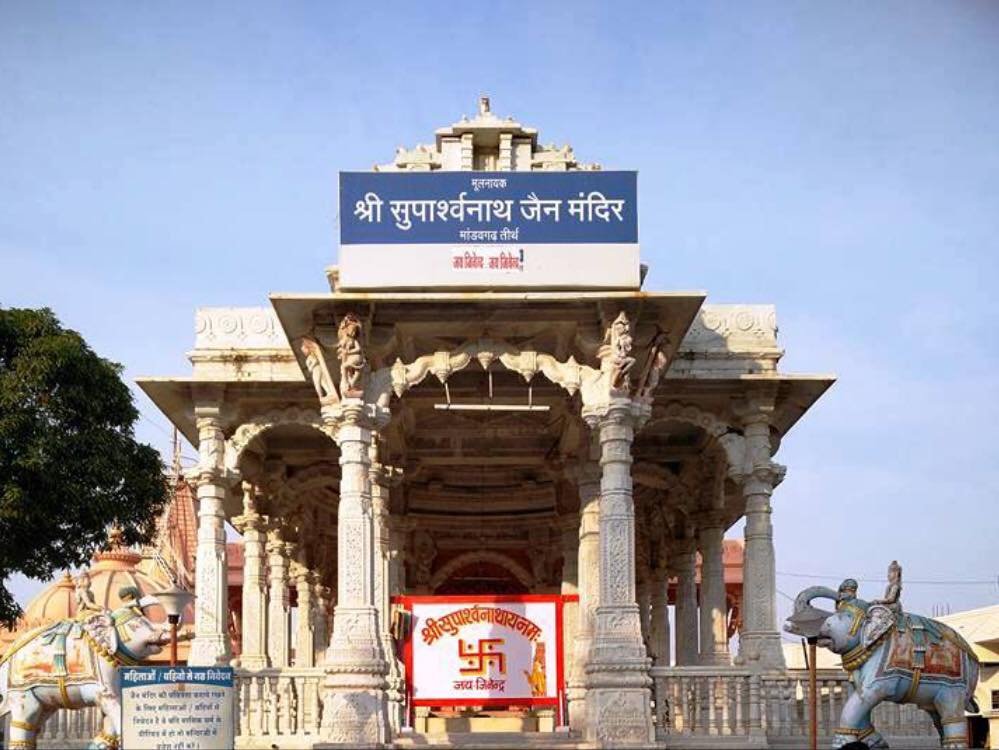
Next in our list of sites worth seeing in Mandu is Shri Mandavagadh Teerth. It is dedicated to Lord Suparshvanatha and belongs to Shwetambar Sect of Jainism. The 3 feet tall idol of Lord Suparshvanath is seated in a padmasana posture. The fort also has a smaller temple dedicated to Lord Shantinath and there are ruins and idols of several temples – according to one source, there were once as many 700 Jain temples here.
Chaturbhuj Sri Rama temple
This temple of Mandu is unique for feature a Lord Rama statue, the only one of its kind – that shows him with four arms.
Jama Masjid
Mandu’s Jama Masjid is said to be inspired by the great mosque of Damascus and tries to replicate the Damascus Mosque in its simplicity as well as architectural style-with large courtyards and grand entrances. In the front, there are ruins of Asharfi Palace. The complex of buildings has a seven-story winning memorial at the north-east of the palace as well as a Rama Temple, which was built by Maharani Sakarwar bai Pawar in 1769 AD.
Hoshang Shah’s Tomb
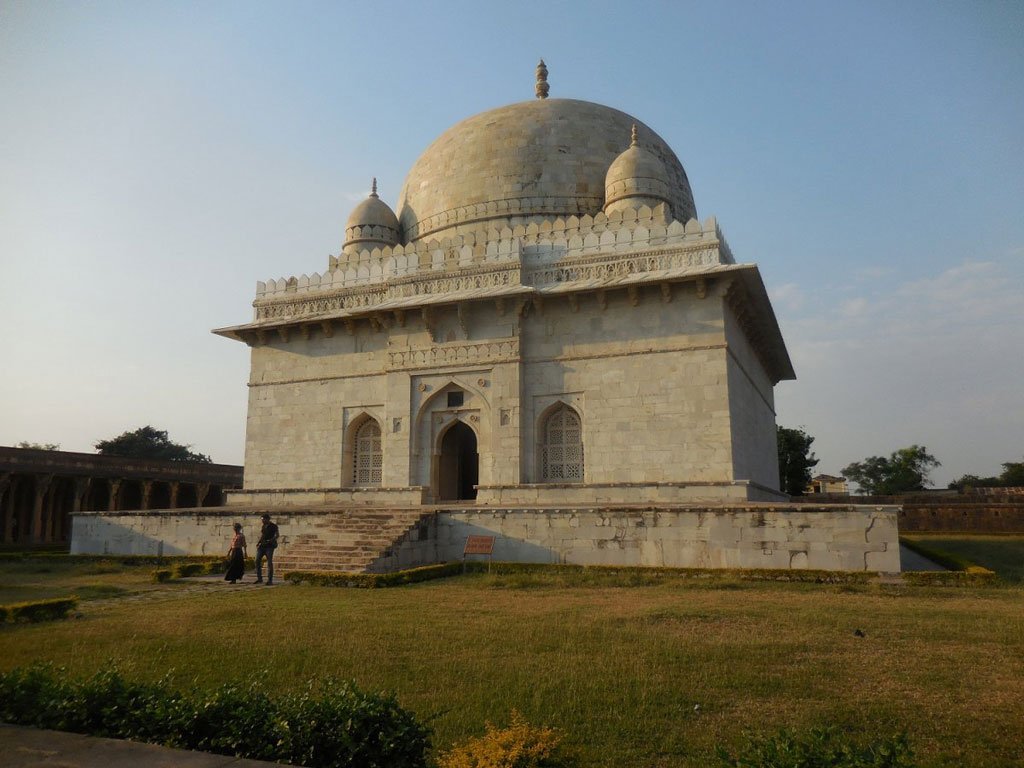
The tomb of Hoshang Shah is yet another important monument in Mandu as it is considered to be India’s first marble structure. Its dome, marble latticework, porticoed courts, and towers show the influence of Afghan architecture. It has been said that it served as a template for the construction of Taj Mahal.
Jahaz Mahal
Jahaz Mahal (literally Ship Palace) and also known as Water Palace of Mandu is a palace located between two artificial lakes and gives the appearance of being a ship floating in the water. This wonderful two-story architectural marvel was built by Sultan Ghiyas-ud-din-Khalji and served as a harem for him.
Hindola Mahal
Last in our list of sights to see in Mandu is Hindola Mahal. Hindola Mahal literally meaning Swing palace gets its name from its sloping side walls. Though the architectural splendor shows that this palace has enjoyed a rich past, historians are in no agreement as to the time of its construction or the purpose it served.
Conclusion
The best way to visit Mandu is either on a weekend getaway from Delhi or a one-day trip while being on an extended tour in Indore. A possible plan might involve visiting it after you are done with Indore and then head to Maheswar and/or Omkareshwar. The lack of tourists in this town will make you feel like discoverer or new tourist attractions. J
One of the most enchanting parts of our Diu trip was an exploration of Naida caves. Having done with walking around the fort and gates and churches, we ghoomophirosisters decided to rest for the day as there was nothing exclusive and quiet for the traveler. That is when we saw the board to Naida caves and decided to hop in to check. Believe it or not, it is indeed a pleasant surprise.
About Naida Caves History
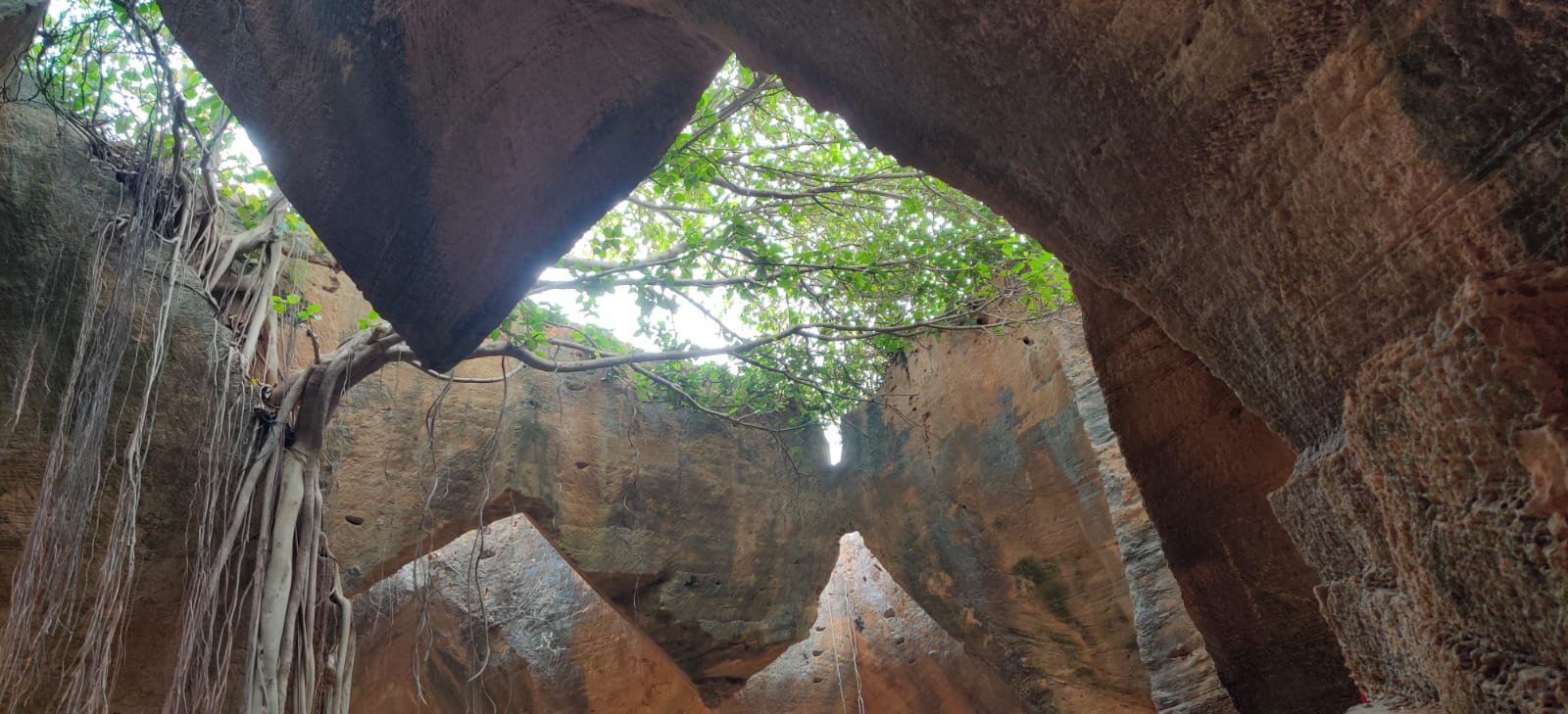
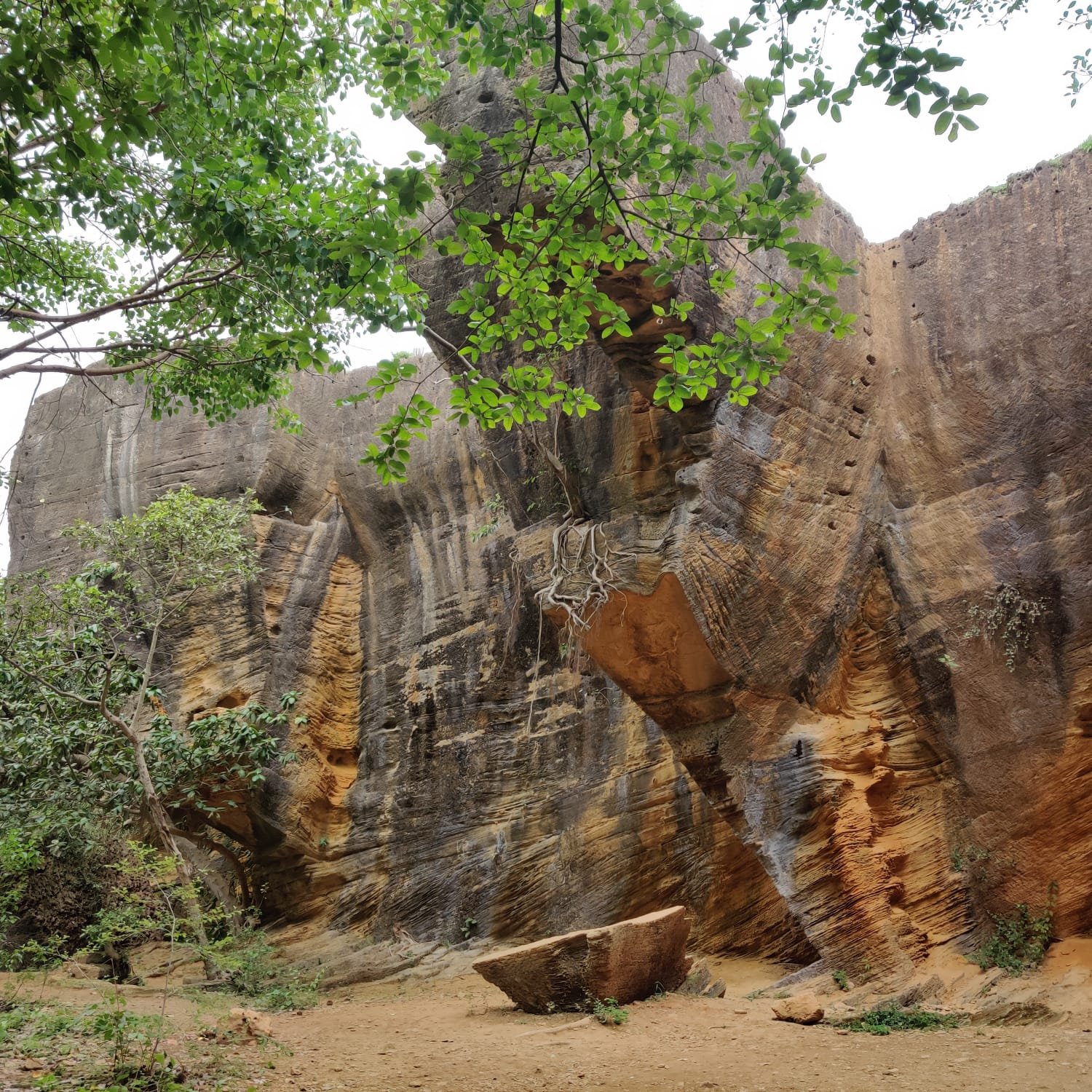
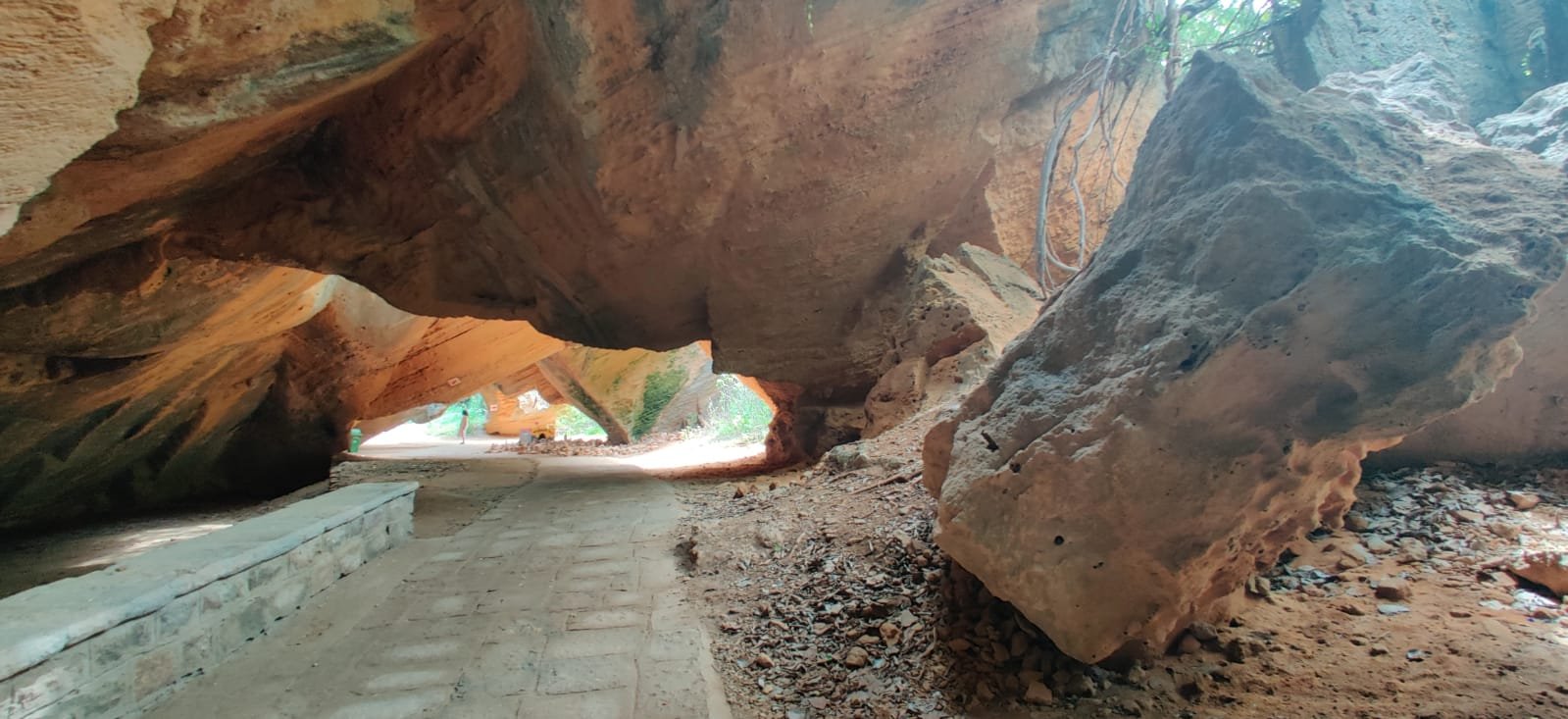
Naida caves is a photographer’s and an explorer’s paradise. It is open till 5.30pm since it starts to get dark after that. History says the Portuguese carved out the sand/rock from here to build the fort and hence the formation. However, it is also studied that the caves were formed due to geological irregularities and processes over a significant amount of time.
There wasn’t any information board around the cave so its history remains a mystery. Upon entering the cave the signboards direct you to walk around the cave. The caves are interlinked. And it is a little more than a half-hour walk around the cave. That isn’t all. There are a series of block-shaped staircases made of rock that lead to nowhere- peppered all over the caves.
Light dances around and beautiful rays pass through the crevices. Roots hanging on the wall were giving an eerie feeling. There was almost no one in the caves apart from security guy and it was one of the reasons to love the cave. We loved the shades of the cave wall and the texture.
How to reach there
These caves are pretty close to the city and autos ply to the place. If you love exploring, these caves should be on your to-do list while in Diu.
An amazing option for your next getaway if you are a resident of Delhi is Gwalior. This historic city of Madhya Pradesh has stunning forts and temples as well as an art and culture center. Located at a distance of mere 343 kilometers from Delhi it is an ideal weekend getaway and offers enough attractions for an extended weekend as well.
Gwalior itself is packed with attractions that, for the most part, can be visited on a 2 or 3 days getaway but if you can want an extended holiday, you can use it as your camping place for exploring attractions of several nearby towns.
How did we reach Gwalior?
The city has one of the cleanest railway stations you will find in India. Over 50 trains leave for Delhi and Agra. There are somewhat fewer trains for Mumbai though. Its location in the centre of the country ensures its connectivity to most of major cities of the country – Delhi, Mumbai, Kolkatta, Chennai as well as Bhopal, Nagpur as well as central India attractions like Indore, Jhansi, Shivpuri, Jhansi, Bhind, Morena, Dholpur, Etawah, Datia, Jaipur, and Indore.
National Highways connect the city to Delhi, Agra, Mumbai, Shivpuri, Jhansi, etc. Like with railways, Gwalior enjoys good road connectivity to many nearby cities including Bhopal, Indore, Jabalpur, Jhansi, Bhind, Morena, Dholpur, Etawah, Datia, Jaipur, etc.
Gwalior Airport or ‘Rajamata Vijaya Raje Scindia Airport’ is a local airport. It enjoys connectivity to Bombay, Bhopal, Indore, and Delhi
Locally, there are several public transport options – tempos, auto rickshaw taxis, Ola Cabs, and micro-buses.
We chose railways to travel from Delhi to Agra. We could easily reserve seats on a train that was about to leave at about the time we wished to start our journey without much trouble.
What did we eat?
Gwalior’ local cuisine offers a big variety of tastes. Boondi Laddoo, Cheela, Petha, Wale, Poha, dosa, Gajak, etc are some of the locally available food that we personally loved. If you are a prude and do not want to experiment too much, there are of course malls and international food options.
What is the best time to visit Gwalior?
The summers can be too hot and winters can be too cold. In terms of climate, October-November is the best months. We decided to be in Gwalior in time for Tansen Samaroh held in December and found weather pleasant enough (if it wasn’t the effect of classical music 🙂 )
Where to stay?
Gwalior has hospitality options catering to all budgets and you won’t face a problem in finding a hotel suitable for your needs.
Places to see in Gwalior – a 2-day itinerary
Here is what we did in two days.
Day 1 – Gwalior Fort
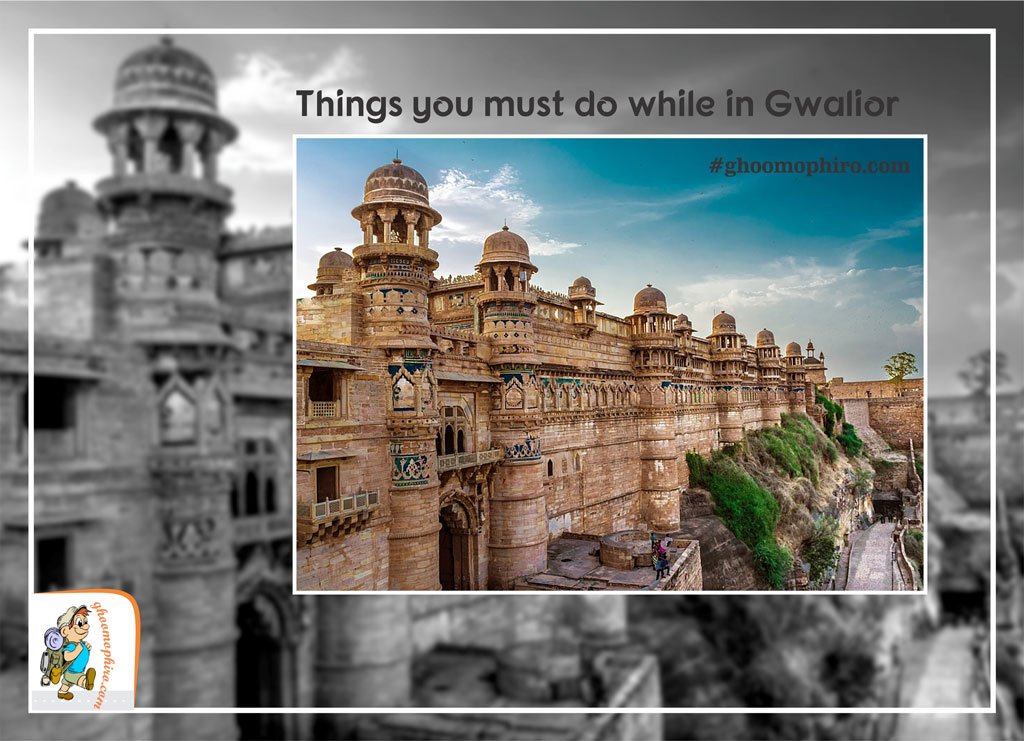
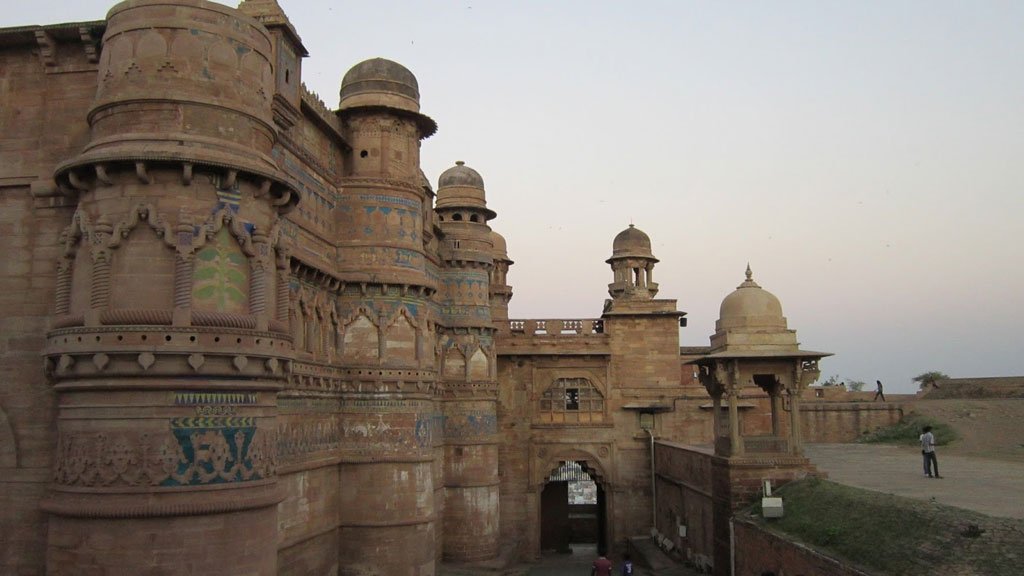
Gwalior’s biggest tourist attraction is also its most visible landmark – Gwalior Fort. The city was built around the fort and continues to thrive around it. It has unparallel importance in the history of India and has been popularly called “the Gibraltar of India”. The Mughal Emperor Babur famously described it as “the pearl in the necklace of the forts of Hind”.
Built somewhere between 6th and 10th century A.D. Gwalior fort also boosts of second-oldest record of ‘zero’ – in an inscription found in a small temple located on the way to top. This inscription is said to be about 1500 years old.
According to a local legend back in third century A.D., Suraj Sen, a local prince, once lost his way in the forest and ended up meeting an old man, the sage Gwalipa on a secluded hill. He asked the sage for some drinking water and led to a pond, the waters of which not only quenched his thirst but cured him of leprosy. Out of gratitude, the prince asked the sage to ask for something in return. The sage replied by asking him to build a wall on the hill which could protect the other sages from wild animals that so often disturbed their pujas or yajnas. Suraj Sen also built a palace inside the fort, which was named “Gwalior” after the sage, and that also became the name of the city that developed around the fort.
Ever since the fort has been ruled by a number of empires but we won’t bore you with details and will go straight to its several attractions.
Teli Ka Mandir
Teli Ka Mandir (literally Oil Merchant’s temple), a temple built within the fort is an architectural anomaly as instead of being square shaped as is the norm, the temple is rectangular shaped. According to a local legend, the temple was built by oil merchants instead of the royal or priestly class. It has also been claimed to be built by the famous Gurjara-Pratiharas emperor Mihira Bhoja.
To approach the temple, you climb a flight of stairs that lead to this stunning banded doorway containing sculptures of river goddesses Ganga and Yamuna. The waists are shown leaning towards the center, each with a boy and a girl on the lower part. Above them one see works showing amorous couples in different stages of courtship and intimacy (mithuna). There are also male and female dvarapalas along with the outer and inner doorways, each carrying weapons and kind expression of welcome. The doorway leads to the sanctum sanctorum or garbha griha.
The rectangular structure boosts of a tower that rises up to 80 feet. The doorway into the temple is itself 35 feet high and is ornamented with a relief of Garuda (we found it amazing), the vehicle or vahana of Lord Vishnu. Inside the doorway, there is another doorway above which is a Ganesha relief. There is a sculptor of Nandi and lingam inside in the sanctum. Several inscriptions ornament the temple showing a variety of influences.
Jain Temples
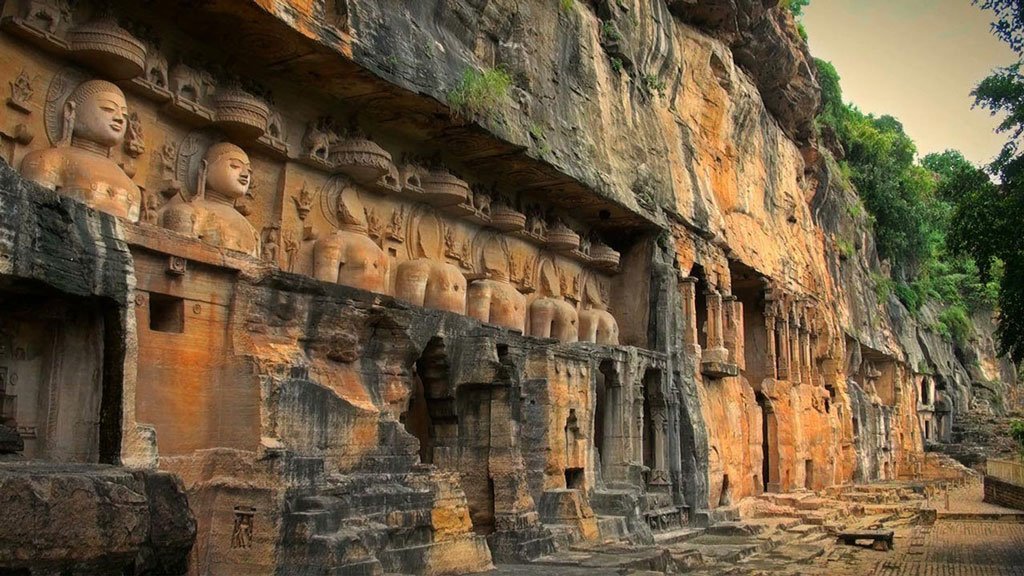
The fort boasts of several Jain temples dedicated to Jain Tirthankaras. Urvahi and Gopachal are the most important of them and boosts of hundreds of sculptures of Jain Tirthankaras. A 58 feet tall statue of Rishabhanatha or Adinatha is the tallest in these temples. The temples much like Hindu temples have suffered much damage due to invasions by Muslim rules but are still popular.
Gurdwara Data Bandi Chhor
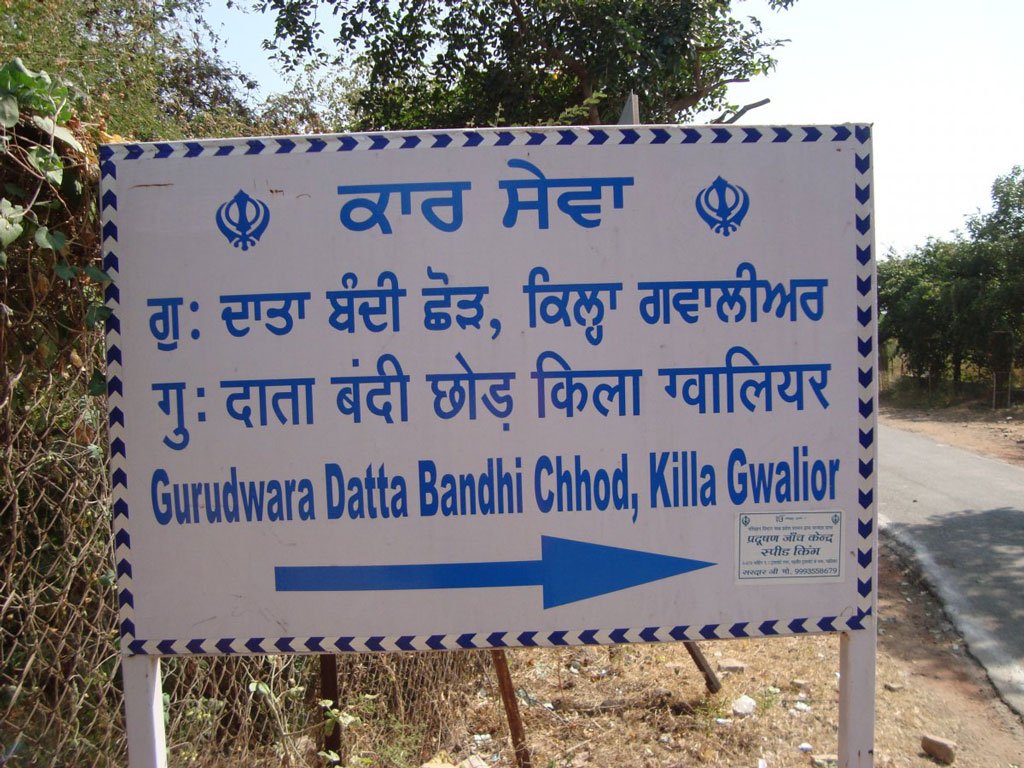
Another important religious landmark is Gurdwara Data Bandi Chhor. It was built at the place where the 6th Sikh Guru Hargobind Sahib was arrested and held captive at the age of 14 years by the fourth Mughal Emperor Jahangir in 1609 on the pretext that the fine which imposed on his father, the fifth Sikh Guru Arjan had not been paid by the Sikhs and Guru Hargobind. According to the legend, when the fine was paid, the 52 Rajas who were also imprisoned in the fort as hostages for opposing the Mughal empire were dismayed as they were losing a spiritual mentor. Guru Hargobind requested the Rajas too to be freed along with him. Jahangir allowed him to free as many rajas could hold on to the guru while leaving the prison. Guruji got himself a special gown stitched which had 52 hems. As Guru Hargobind was leaving the fort, the captive kings caught the hems of the cloak and left along with him.
Man Mandir Palace
Gwalior has several palaces but the most important one is Man Mandir Palace which is an architectural wonder. It was built by the King of Tomar Dynasty – Maharaja Man Singh in the 15th century for his favorite queen, Mrignayani. It is often referred to as a Painted Palace as it seems to have been painted due to the use of styled tiles of turquoise, green and yellow used extensively in a geometric pattern. It seemed so different from other palaces of India and we were simply awed by its beauty. This palace hosts a light-and-sound show which is the perfect way to immerse yourself in the historical journey of the city.
Gujari Mahal or Museum
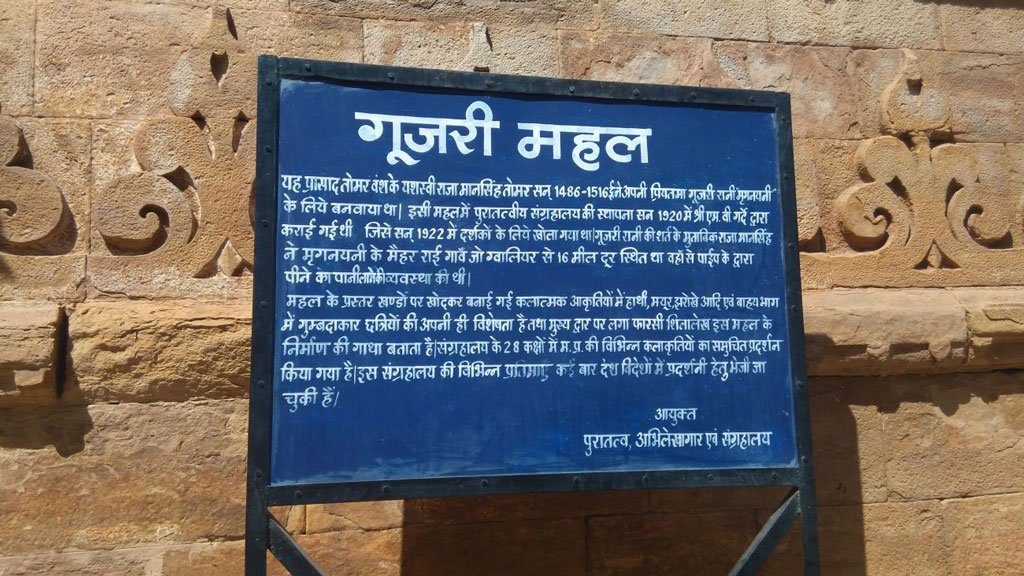
Gujari Mahal was also built by King Tomar, when Mrignayani, demanded a separate fort for herself with its own water supply. The palace is now an archeological museum and holds several artifacts. Karan Mahal and Vikram Mahal are some of the other palaces.
Day 2 – other attractions of Gwalior
Jay Vilas Palace
A palace built to welcome Prince Wales, Jay Vilas Palace is built according to European architecture. This stunningly beautiful palace which might stand in the election for Selfie-capital of the country was built by Maharajadhiraj Shrimant Jayajirao Scindia Alijah Bahadur, the Maharaja of Gwalior in 1874 and still continues to be the residence of his descendants the former royal Maratha Scindia dynasty. Its beauty evades all description and has to been seen.
Built by architect Sir Michael Filose, the interior of the Durbar Hall is decorated with gilt and gold furnishings and adorned with a huge carpet and gigantic chandeliers. According to a legend, eight elephants were suspended from the durbar (royal court) hall ceiling to check it could cope with two 12.5m-high, 3.5-tonne chandeliers with 250 light bulbs, which are the largest pair in the world.
Scindia Museum is an important museum in Gwalior built in 1964, within Jai Vilas Palace in Gwalior. Scindia Museum. It is dedicated to Jivaji Rao Scindia, the last ruling Maharaja of Gwalior from the Scindia dynasty. The highlight of the museum is the glass furniture. Apart from this, the Scindia Museum also exhibits manuscripts, sculptures, coins, paintings, weapons, from that period. The Museum is closed on Wednesdays and is open between 10 a.m. and 5:30 p.m. on other days. There is a nominal ticket fee required.
There are many amazing artifacts to be seen here. We particularly loved the idea of a mini silver train, still, in working condition, that would be used to carry salt, pepper, etc on the royal dining table.
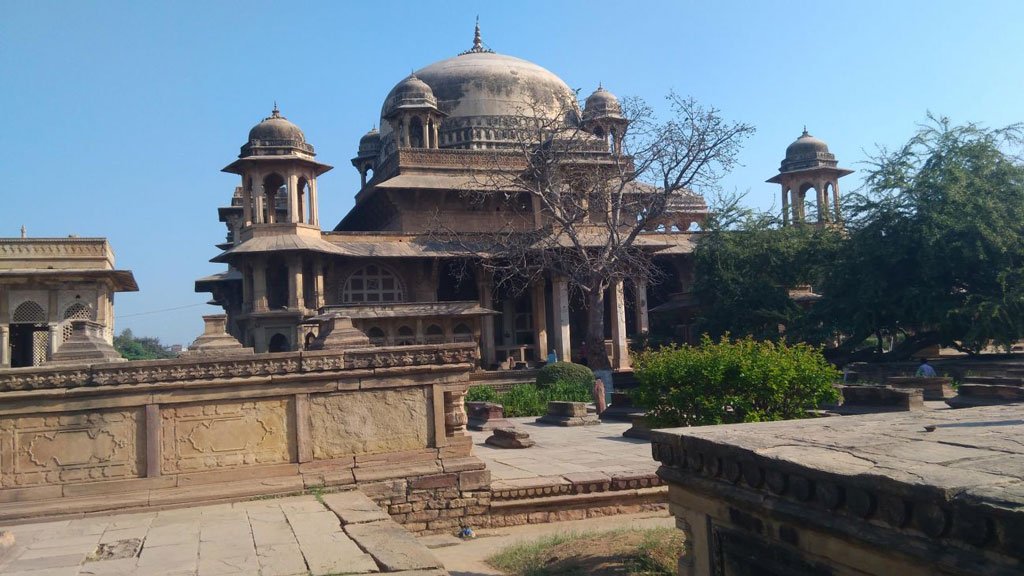
Tomb of Ghaus
Ghaus was a sufi saint who assisted Babur in his conquest of the Gwalior Fort and was the mentor of Musical legend Tansen whose tomb is also located in the city. The tomb of Ghaus is a small architectural wonder in its own right.
Gwalior Zoo
If you were not satisfied with National Park, Gwalior has its own zoo that was established by the Scindia family back in 1922. It is also known as the Gandhi zoo. It is home to a variety of rare animals like bison, hyena, spotted deer (which were adorable, a white tiger, sambhars, crocodiles, monkeys, some birds, etc. The zoo also features a Phool Bagh here which was inaugurated by the Prince of Wales.
Vivaswan Surya Mandir
Built by G.D. Birla, Vivaswan Surya Mandir is a sun temple which tries to replicate Konark sun temple in all its splendor – surrounded by a lush garden, having sandstone exterior and marble interior, it is one of most fascinating attractions of fort-city. The temple is opened between 6:30 am to 12:00 pm and 1:00 pm to 6:00 pm.
8. Suraj Kund
The Suraj Kund or ‘the lake of the Sun’ was built around the 10th century by King Surya Pal, a devotee of Sun god. The compound is located outside the Gwalior fort and also has a lush garden and another pool called ‘Siddha kind’.
9. Tansen Tomb
Like we mentioned earlier, Gwalior is a major art and culture center. The musical genius Tansen’s tomb is located here. It is a piece of architectural wonder and the place is also home to several other tombs. His tomb is near a tarmarind. According to a legend, Tansen chewed on the leaves of a tamarind tree and he proclaimed it to be the secret of his spectacular voice. Tansen died in Delhi but was brought here to find his final resting place near his mentor Mohammed Ghaus. The tomb of Tansen is a relatively small one and would be easy to miss if it were not for the board proclaiming it.
The Tansen Tomb is the place where Tansen Samaroh is held in December every year in form of musical extravaganza in which famous musicians from all over the world pay tribute to the great musical legend of the country.
A five-day itinerary – including nearby attractions for an extended Getaway
Gwalior itself might be seen in 2 days according to above place but if you have more time at your proposal, the way we did, you can consider spending 3 more days in Gwalior to make trips to nearby towns of tourist attraction. In that case, you might consider the following:
Day 3 – Padavali And Bateshwar
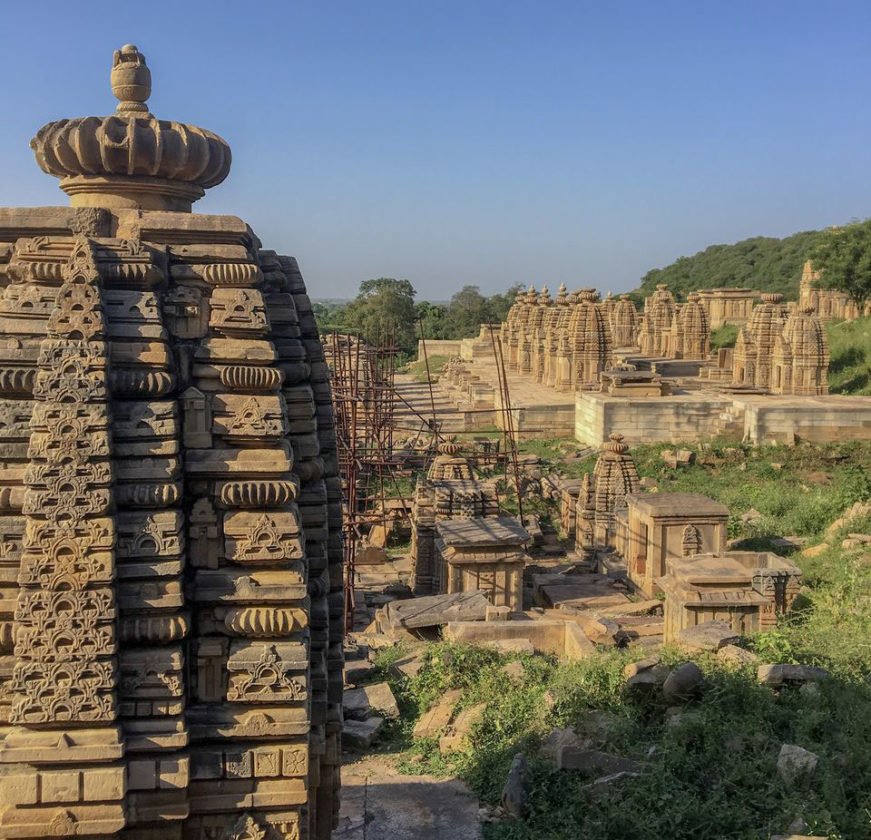
An ancient fortress located at a distance of about 40 kilometers from Gwalior city center, Pandava is perhaps most notorious for its erotic cravings which have won it a reputation as a sort of mini-Khajuraho. The fortress boosts of over 200 sandstone temples.
Day 4 – Mahadev National Park
Looking for a break of so much of history and culture, we decided to spend some time in Mahadev National Park. The park is home to several animals – blackbuck, nilgai, leopard and chinkara as well as some of the migratory and domestic birds like heron, kingfisher and more. The national park is opened from 6:30 am to 10:00 am and 2:30 pm to 6:00 pm and can be visited in 3 to 5 hours. The National Park is located in Shivpuri at a distance of 112 kilometers.
Day 5 – Orchha
Having served as a capital of Bundela Rajput, Orchha is home to several temples and palaces showing Bundela architectural genius. The town is located at a distance of 120 kilometers from Gwalior but has several attractions including a Wildlife Sanctuary.
Conclusion
It is amazing how Gwalior has not yet started attracting as many tourists as its attractions should suggest but that will make it all more attractive to those tourists who want to avoid too crowded cities. There is a caveat though that must be mentioned here. Gwalior is one of the most polluted city not only of India but of the world and so fresh air is not one of the perks it has to offer. It is a problem that the local government is trying to counter. That said it is one of the must-visit tourist attractions of central India in particular and India in General. Its temples, palaces, forts – and not to mention the train artifact is not easy to ignore. Cheers. J
Sun was once worshipped as a god all over the world– whether by name of Apollo in Greece, ‘Sol Invictus’ in Rome or Ra in Egypt. In India, the Sun god Surya or Aditya occupies as held a prominent place in Hindu faith.
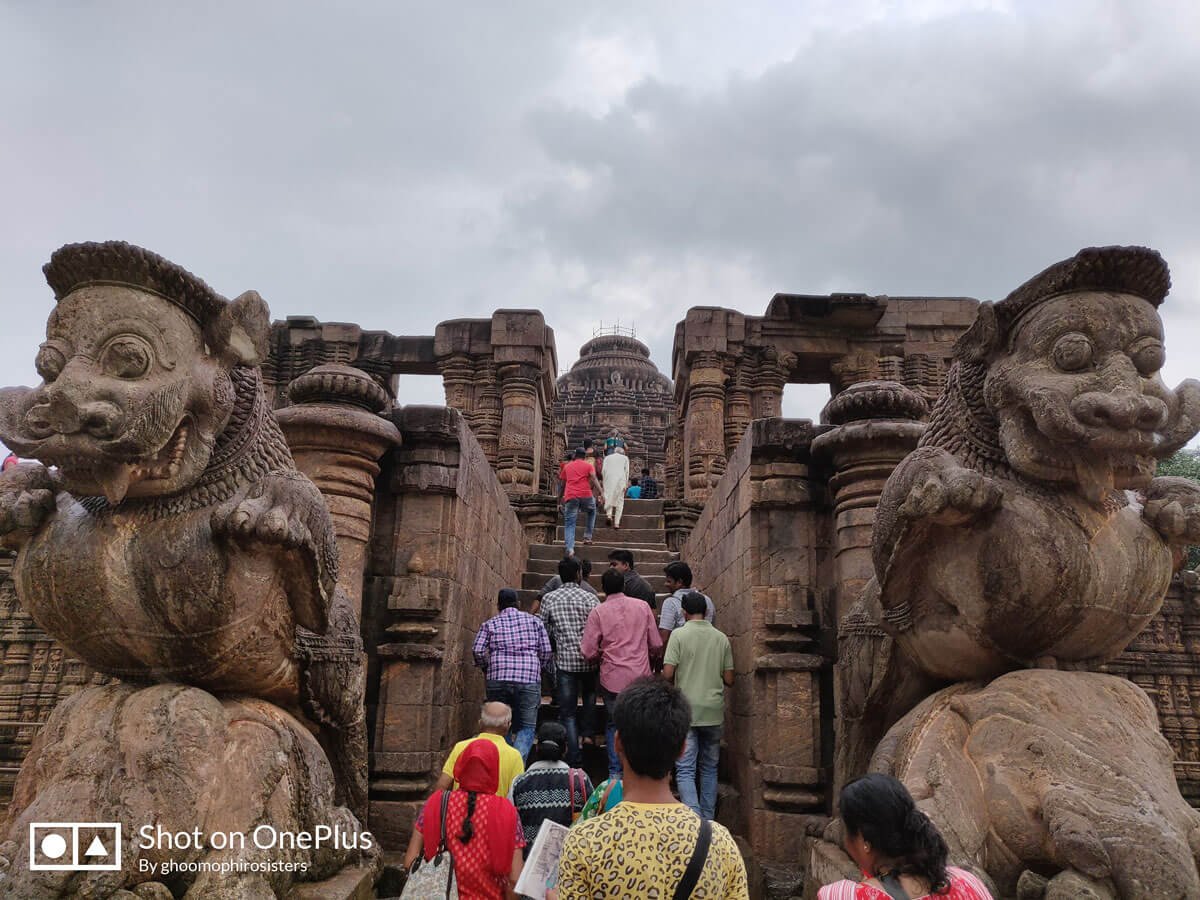
There are many Sun temples in India, but the Konark Sun temple of Odisha stands out from among them because its magnificent architecture which has earned it tile of a UNESCO world heritage site. It has also been listed among the Seven Wonders of India. The very name ‘Konark’ means Sun’s corner. This temple is the best tourist attraction of Odisha.
You need not be a fan of temples to fall in love with this one. What might amuse you is that besides worshipping Hindu deities, it celebrates the life of a king, people at large and also various stages of sexuality and courtship.
Location of temple
Konark is located on the Bay of Bengal in Odisha, just 35 kilometers from Puri and about sixty kilometers from Bhubaneshwar, the capital of Odisha. Bhubaneshwar is the nearest airport. Both Puri and Bhubaneshwar provide easy road and railway transport to Konark
History
Supposed to have been built in around 1250 A.D. by King Narasimhadeva I of the Eastern Ganga Dynasty, it is the grandest Sun temple of the country. The temple has been nicknamed the ‘Black Pagoda’ by European tourists because it’s great looked black as early as in seventeenth-century – just as Jagannath temple was nicknamed ‘White Pagoda’.
The temple complex was once two hundred feet high but, unfortunately, it is mostly in ruins now. The cause of destruction is not clear and even controversial. It might have been natural causes or it might have been brought by Muslim armies. The main idol of Sun god is said to have been stolen by Portuguese sailors. Though it has obviously seen the decline, it is renowned all over the world for its architecture and stone carvings. Despite having met so much destruction, it attracts tourism both religious and recreational.
Best time to visit
The best time to visit the temple is timeChandrabhaga Mela is held every year in this temple in or around February.
Architecture
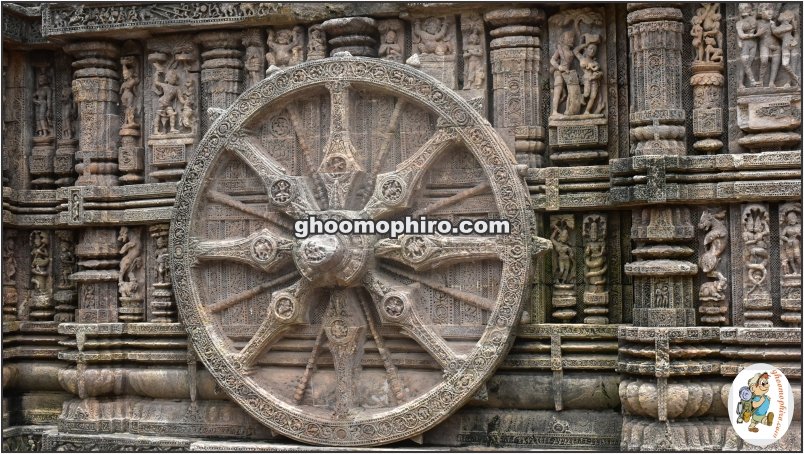
The Konark Sun Temple was built from stone in the form of a giant ornamented chariot of Sun god, Surya. In Hindu Vedic iconography Surya is often represented as a resplendent standing person with a lotus flower each in both his hands rising in the east and traveling rapidly across the sky in his chariot drawn by seven horses. The charioteer Aruna marshals the horses named after the seven meters of Sanskrit prosody, that is, Gayatri, Brihati, Ushnih, Jagati, Trishtubha, Anushtubha, and Pankti. Just behind Surya stand two goddesses of dawn, Usha and Pratyusha, shown to be shooting arrows, a symbol of their initiative in challenging darkness. The twelve wheels of the chariot would stand for 12 pairs months of Hindu calendar. Each pair having two wheels showing two cycles of a month – Shukla and Krishna.
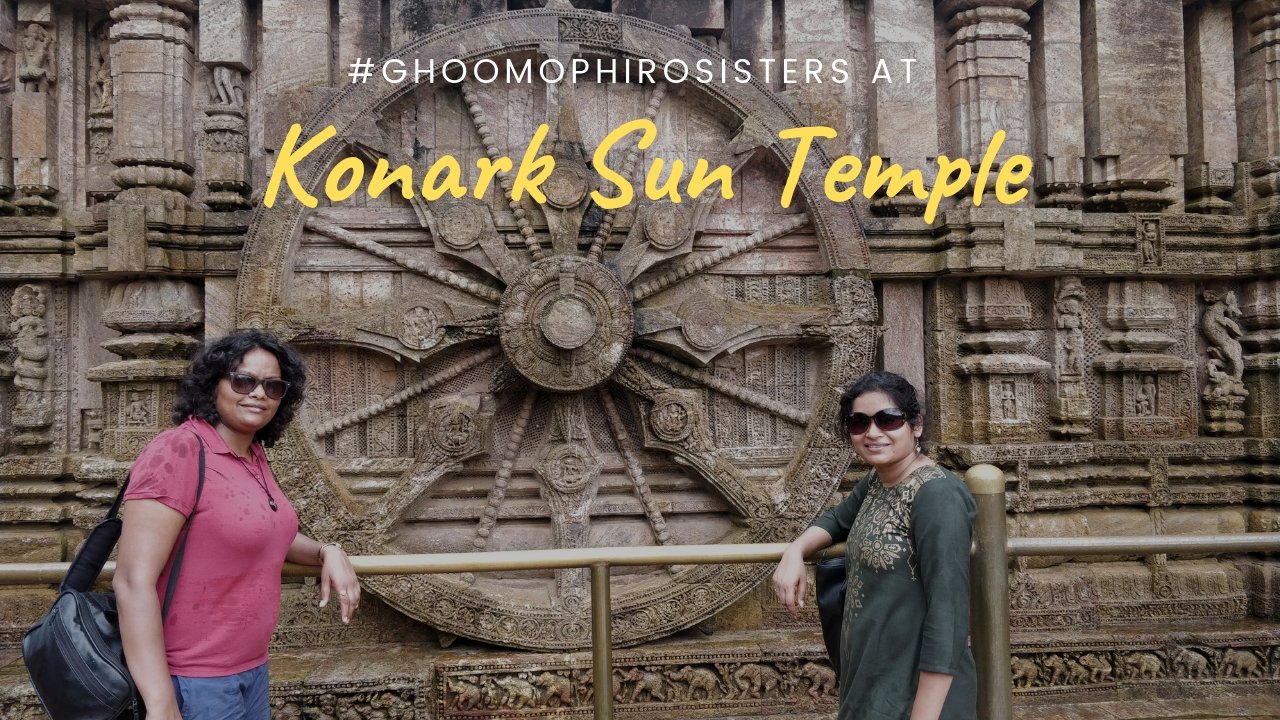
Konark Sun temple draws much from this design. What remains now is a hundred feet high structure – shaped like a huge chariot with gigantic horses and wheels. The huge chariot has 24 giant wheels symbolizing 24 hours of a day and 7 giant horses representing 7 days of a week. Each of these 24 wheels is 12 feet high and has eight spokes.
The Shikhar which was much higher than surviving mandap is missing. The artwork of this structure is iconic and of special interest to some are the themes like erotic kama and mithuna scenes.
The design of the temple is such that the first rays of the Sun strike the entrance of the temple. You must be in time to see this temple at the time of sunrise when viewed from inland, it will appear to be bringing sun from the sea.
The main temple at Konark,which is locally called the deul, is no longer there. It was surrounded by subsidiary shrines depicting Hindu deities, particularly Surya in his different aspects. The central projection of the temple, called the Raha, is far more pronounced than the side projections, called Kanika-paga. It uses interplay of sunlight and shade to add to the visual appeal of the structure throughout the day. You can find the design manual for this style in the Silpa Sastra of ancient Odisha.
The walls of the Jagamohana are 100 feet tall and twice as wide. The surviving structure of Jagmohana has three tiers of six pidas each which diminish incrementally. The pidas are divided into terraces, each of these terraces has statues of musician figures.
The main temple along with the Jagamohana porch consists of four main zones: the platform, the wall, the trunk, and the crowning head called a mastaka. Of these, the first three are square shaped while the mastaka is circular.
On the east side of the main temple stands the Nata mandira (literally dance temple).
Reliefs and sculpture
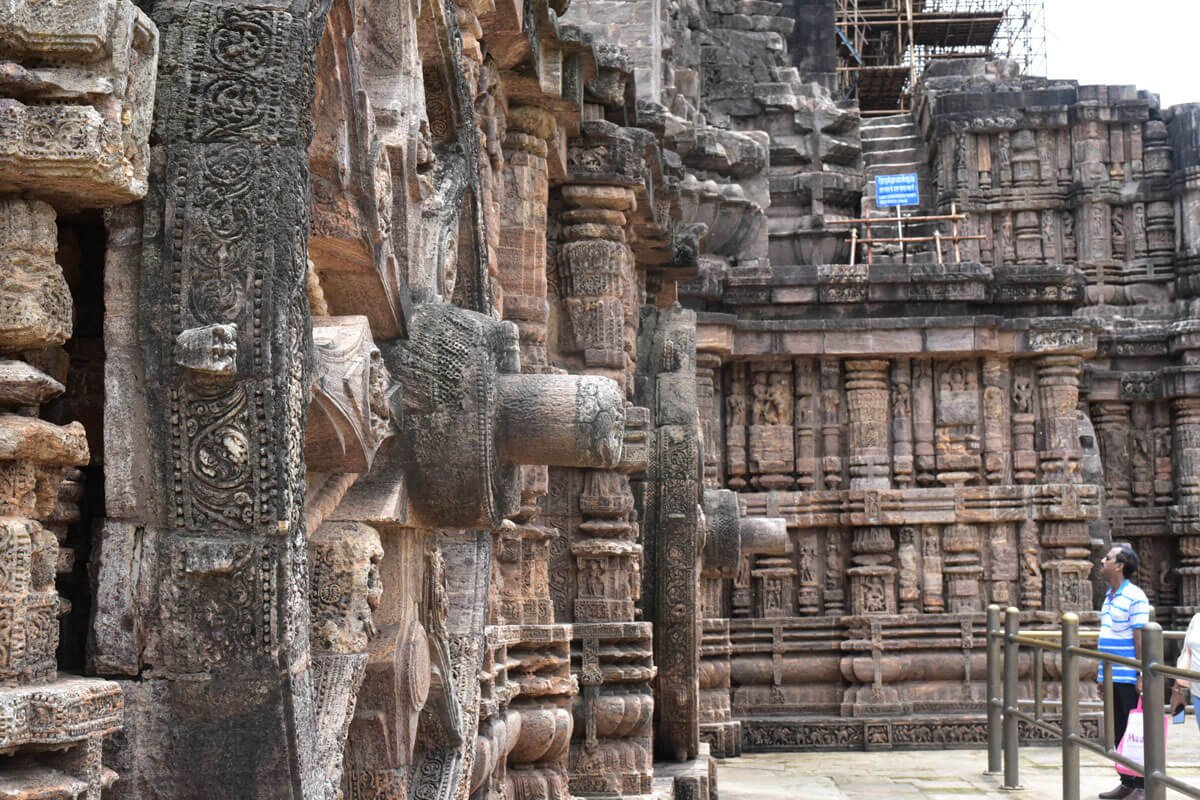
The architectural splendor aside, the temple is popular for its reliefs and sculptures.
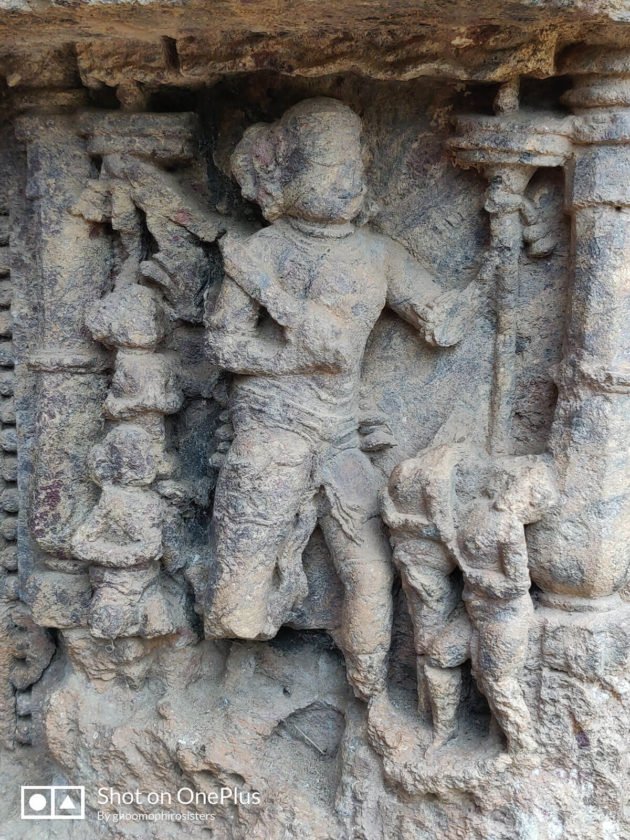
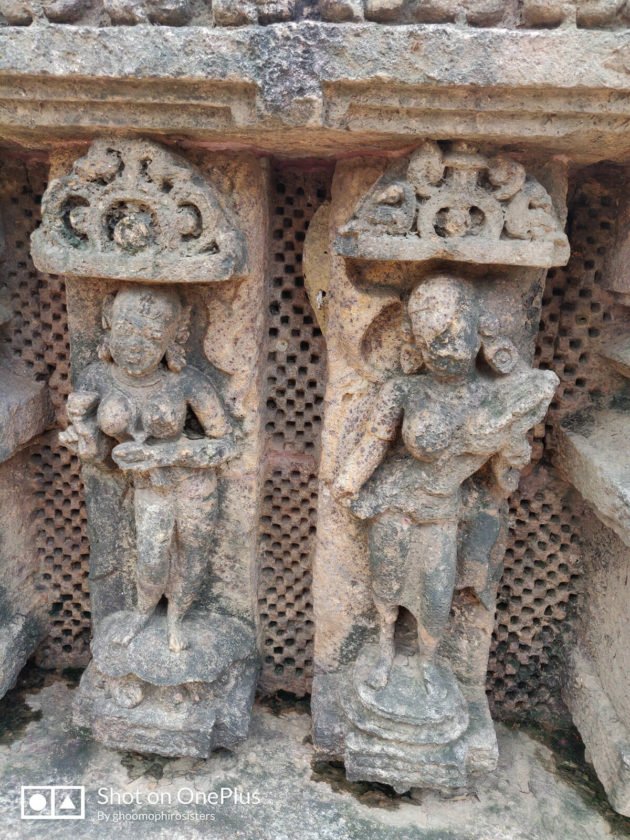
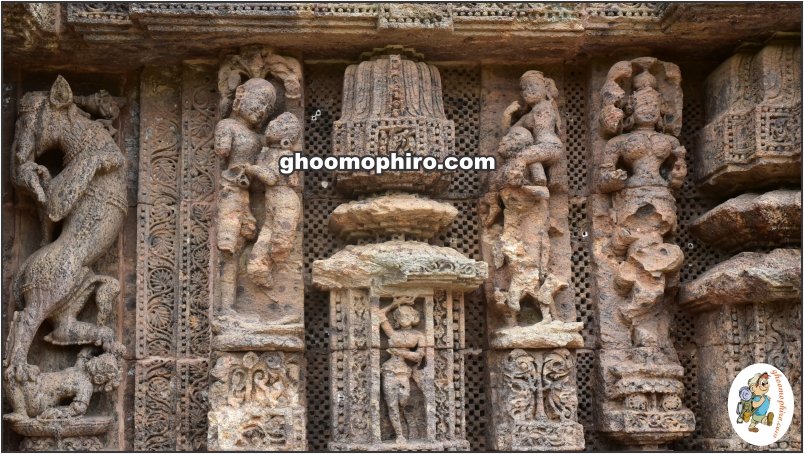
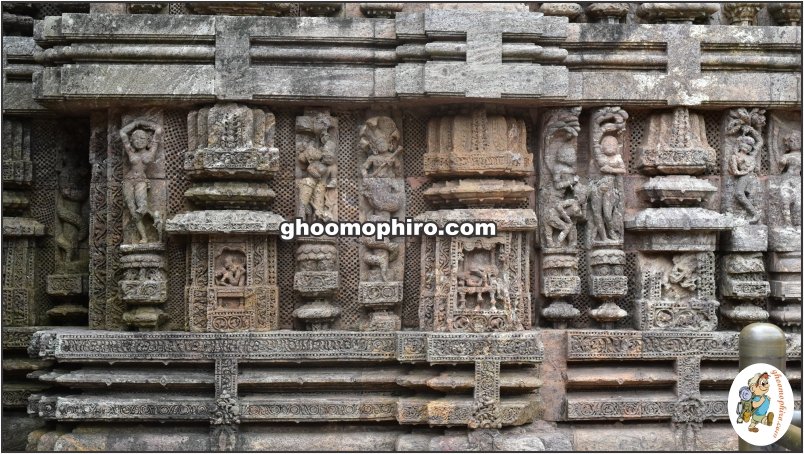
The walls of the temple are ornamented with reliefs finished with minute details. The terraces have stone statues of male and female musicians holding various musical instruments. Other major works include sculptures of Hindu deities, images from the daily life and culture of the people (artha and dharma scenes), animals – both land and aquatic, birds and mythological creatures. The carvings also include purely decorative geometric patterns and plant motifs There are also some panel showing Kings performing their functions.
The molding layer at the bottom of the platform show friezes of elephants, musicians,marching soldiers, hunting scenes, domesticated animals etc.
Again, imagery on walls is splendid showing – girls wringing their wet hair, standing by a tree, playing with pets,looking from a window, playing musical instruments; a mother blessing her son; a teacher with students; a yogi etc to name a few
The most popular of these sculptures though are maithunas and kamas showing couples at various stages of courtship and intimacy. Their uninhibited sexuality talks volumes against those who have narrow-minded views of Indian culture.
The erotic sculptures are found on the temple’s Shikhara, and these illustrate all the bandhas (mudra forms) described in the Kamasutra.
The upper levels and terrace of the Konark Sun temple contain largest and religiously most significant works of the temple. The craving here include images of musicians, mythological narratives, Hindu deities (Durga in her Mahishasuramardini aspect, Vishnu in his Jagannatha form,Shiva as a linga etc.
Conclusion
Konark sun temple is the best place to dip into the ocean of Indian ancient history. The mesmerizing experience should be your bucket list item.
Sun was once worshipped as a god all over the world– whether by name of Apollo in Greece, ‘Sol Invictus’ in Rome or Ra in Egypt. In India, the Sun god Surya or Aditya occupies as held a prominent place in Hindu faith.
There are many Sun temples in India, but the Konark Sun temple of Odisha stands out from among them because its magnificent architecture which has earned it tile of a UNESCO world heritage site. It has also been listed among the Seven Wonders of India. The very name ‘Konark’ means Sun’s corner. This temple is the best tourist attraction of Odisha.
You need not to be a fan of temples to fall in love with this one. What might amuse you is that besides worshipping Hindu deities, it celebrates the life of a king, people at large and also various stages of sexuality and courtship.
Location of temple
Konark is located on the Bay of Bengal in Odisha, just 35 kilometers from Puri and about sixty kilometers from Bhubaneshwar, the capital of Odisha. Bhubaneshwar is the nearest airport. Both Puri and Bhubaneshwar provide easy road and railway transport to Konark
History
Supposed to have been built in around 1250 A.D. by King Narasimhadeva I of the Eastern Ganga Dynasty, it is the grandest Sun temple of the country. The temple has been nicknamed the ‘Black Pagoda’ by European tourists because its great looked black as early as in seventeenth-century – just as Jagannath temple was nicknamed ‘White Pagoda’.
The temple complex was once two hundred feet high but, unfortunately, it is mostly in ruins now. The cause of destruction is not clear and even controversial. It might have been natural causes or it might have been brought by Muslim armies. The main idol of Sun god is said to have been stolen by Portuguese sailors. Though it has obviously seen the decline, it is renowned all over the world for its architecture and stone carvings. Despite having met so much destruction, it attracts tourism both religious and recreational.
Best time to visit
The best time to visit the temple is timeChandrabhaga Mela is held every year in this temple in or around February.
Architecture
The Konark Sun Temple was built from stone in the form of a giant ornamented chariot of Sun god, Surya. In Hindu Vedic iconography Surya is often represented as a resplendent standing person with a lotus flower each in both his hands rising in the east and traveling rapidly across the sky in his chariot which is drawn by seven horses. The charioteer Aruna marshals the horses named after the seven meters of Sanskrit prosody, that is, Gayatri, Brihati, Ushnih, Jagati, Trishtubha, Anushtubha, and Pankti. Just behind Surya stand two goddesses of dawn, Usha and Pratyusha, shown to be shooting arrows, a symbol of their initiative in challenging darkness. The twelve wheels of the chariot would stand for 12 pairs months of Hindu calendar. Each pair having two wheels showing two cycles of a month – Shukla and Krishna.
Konark Sun temple draws much from this design. What remains now is a hundred feet high structure – shaped like a huge chariot with gigantic horses and wheels. The huge chariot has 24 giant wheels symbolizing 24 hours of a day and 7 giant horses representing 7 days of a week. Each of these 24 wheels is 12 feet high and has eight spokes.
The Shikhar which was much higher than surviving mandap is missing. The artwork of this structure is iconic and of special interest to some are the themes like erotic kama and mithuna scenes.
The design of the temple is such that the first rays of the Sun strike the entrance of the temple. You must be in time to see this temple at the time of sunrise when viewed from inland, it will appear to be bringing the sun from the sea.
The main temple at Konark,which is locally called the deul, is no longer there. It was surrounded by subsidiary shrines depicting Hindu deities, particularly Surya in his different aspects. The central projection of the temple, called the Raha, is far more pronounced than the side projections, called Kanika-paga. It uses interplay of sunlight and shade to add to the visual appeal of the structure throughout the day. You can find the design manual for this style in the Silpa Sastra of ancient Odisha.
The walls of the Jagamohana are 100 feet tall and twice as wide. The surviving structure of Jagmohana has three tiers of six pidas each which diminish incrementally. The pidas are divided into terraces, each of these terraces has statues of musician figures.
The main temple along with the Jagamohana porch consists of four main zones: the platform, the wall, the trunk, and the crowning head called a mastaka. Of these, the first three are square shaped while the mastaka is circular.
On the east side of the main temple stands the Nata mandira (literally dance temple).
Reliefs and sculpture
The architectural splendor aside, the temple is popular for its reliefs and sculptures.
The walls of the temple are ornamented with reliefs finished with minute details. The terraces have stone statues of male and female musicians holding various musical instruments. Other major works include sculptures of Hindu deities, images from the daily life and culture of the people (artha and dharma scenes), animals – both land and aquatic, birds and mythological creatures. The carvings also include purely decorative geometric patterns and plant motifs There are also some panel showing Kings performing their functions.
The molding layer at the bottom of the platform show friezes of elephants, musicians,marching soldiers, hunting scenes, domesticated animals etc.
Again, imagery on walls is splendid showing – girls wringing their wet hair, standing by a tree, playing with pets,looking from a window, playing musical instruments; a mother blessing her son; a teacher with students; a yogi etc to name a few
The most popular of these sculptures though are maithunas and kamas showing couples at various stages of courtship and intimacy. Their uninhibited sexuality talks volumes against those who have narrow-minded views of Indian culture. These erotic sculptures are found on the temple’s Shikhara, and these illustrate all the bandhas (mudra forms) described in the Kamasutra.
The upper levels and terrace of the Konark Sun temple contain largest and religiously most significant works of the temple. The craving here include images of musicians, mythological narratives, Hindu deities (Durga in her Mahishasuramardini aspect, Vishnu in his Jagannatha form,Shiva as a linga etc.
Conclusion
Konark sun temple is the best place to dip into the ocean of Indian ancient history. The mesmerizing experience should be your bucket list item.
Odisha combines many kinds of tourist attractions in itself – the tribal culture, the ancient Hindu temple famous for both their religious importance and art and architecture, sea beaches, Wildlife spots etc.
I had a lot of fun visiting this tribal state and it is impossible to catalog all the fun things one can do here but here is a list of ten things I loved doing most.
1. Temples
Odisha’s popularity as a tourist destination lies with its golden triangle for the most part – Bhubaneshwar, Puri, and Konark. All these three cities are in turn famous for their temples. Thus we start off with these amazing temples
Konark Sun Temple
The Konark Sun temple has been declared UNESCO world heritage site and one of the seven wonders of the world. The temple is built in shape of a huge chariot with twenty-four giant wheels (showing either twenty-four hours of a day or two aspects (Shukla and Krishna Paksha) of twelve months and twelve giant horses. Though much of this temple is now ruins, the reliefs and sculptors of the temple still make it one of the most popular landmarks of Odisha. I couldn’t help feeling proud of the grandeur of Indian architecture when I visited this temple Kama craving on the walls of this temple has got a lot of attention during the British rule and gave me goosebumps.
Jagannath Temple
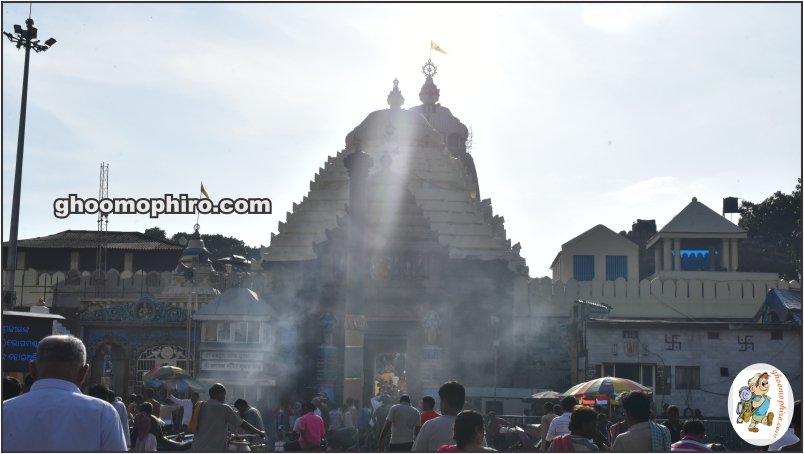
One of four Dhams of Hinduism, Jagannath Puri, is one of the biggest attractions for religious tourism in India. It is one of the four sacred Dhams of Hinduism. Though the temple was crowded, the architectural beauty and spiritual peace, the visit gave me made it more than worth it. I was at just the perfect time to see the Rath Yatra, an annual festival, though the occasion might have added to the crowd of pilgrims too
Temples of Bhuvaneshwar
Bhubaneshwar (literally ‘king of land’) is the capital of Odisha. Its old name meant ‘temple city’ and it really is the temple city of India. The city is divided into two part – the temple city and the more developed urban parts.
It has been said there are more than a thousand temples in the city. Now that was too many for me but, I wasn’t obviously going to miss the best ones. Lingaraj temple takes the cake of all the temples here – it is third best temple after Konark Sun temple and Jagannath Puri temple. However, there were some other temples that I will recommend if you got the time – Parashurameshvara Temple, Ram Mandir Rajarani temple, Mukteswara temple etc.
3. Sea Beaches
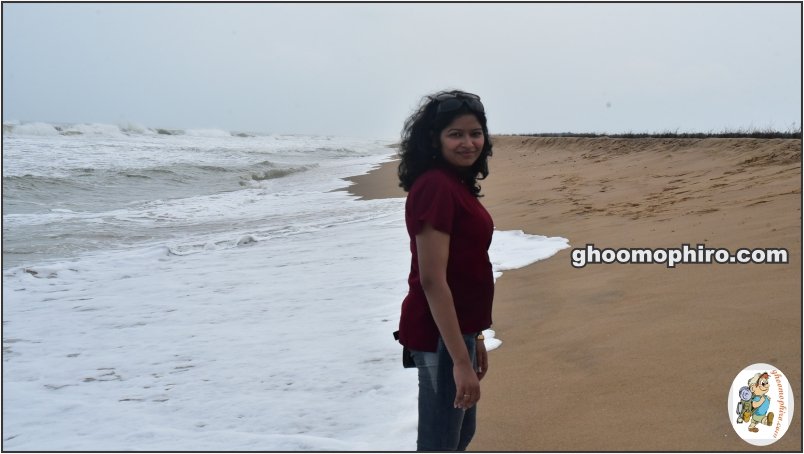
After having too much of humanity at Jagganath temple, I thought a sea beach evening was in order. And a sea beach was available only a few minutes away. The four hundred and sixty kilometers long coastline of Odisha have plenty of beaches to offer and Puri sea beach is one of the busier ones but it also offers all the comforts that come with commercialization.
If you are looking for a more quiet beach, away from commercialization and urban noises, there are a bunch you in Odisha you can try. Some of them are Balramgadhi Beach, the Astranga Beach, the Paradeep Beach, the Pati Sonalpur Beach and Gopalpur sea beach. I can not forget the experience which Astranga beach and Sonalpur, in particular, left me with.
4. Chilika Lake
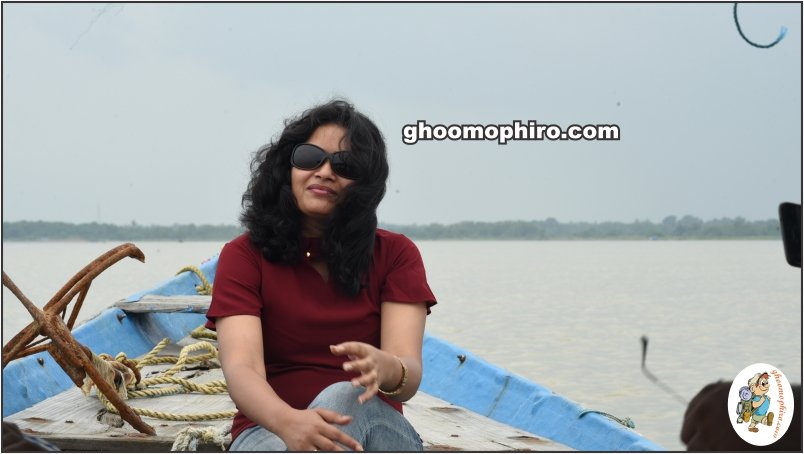
There are many lakes in Odisha like freshwater Ansupa Lak of Cuttack, Kanjia lake etc but all of them fade away when compared to delights that Chilika lake had to offer. It had dolphins!
Chilika Lake is the largest coastal lagoon of India and, also, the second largest lagoon in the World. It is home to several spices of migratory birds and rare and endangered Irrawaddy Dolphins, Looking at those pretty dolphins here was the best thing I did in all of my Odisha tours.
5. Exploring Wildlife
Orissa is just as much about wildlife as it is about arts, history, and temples. There are several venues to explore for wildlife enthusiasts – National Parks, Wildlife Sanctuaries, Animal reserves, Zoos Wetlands etc. Personally, I loved the Silipal National Park and Bhitarkanika’s wetlands.
Silipal National Park
Located in the Mayurbhanj districtSilipal National Park of Odisha is an elephant reserve. Several Royal Bengal Tigers,Wild Indian elephants, Indian Bison, Chausingha etc find their home in this amazing National Park.
Another thing that I enjoyed extremely is Barehipani Waterfall at Baripada. At about 400 meters, this is the tallest waterfall of Odisha and one of top ten tallest waterfalls in India
Another waterfall, Joranda Falls is located close to it. Khandadhar Falls of Sundagarh is also popular.
Bhitarkanika National Park
Created by river delta of the Brahmani and Baitarani rivers in Bhitarkanika National Park, Bhitarkanika Mangroves is one of the largest Ramsar vegetations in India. It is a mangrove swamp and home to several endangered species like Indian python, Saltwater Crocodile, White Crocodile, King Cobra etc. The sight of White Crocodile gave me goosebumps!
Nandankanan Zoological Park
There is also the Nandan Kanan Zoological Park in Bhubaneshwar. The zoo and botanical garden enshrine rare Asiatic lions, Indian crocodilians, big rock Pythons, White tigers etc. There is an aquarium too and a reptile park which is guarded by Tyrannosaurus Rex.
6. Caves of Khandagiri and Udaigiri
These caves, which are home to an ancient monastery, had some of the most splendid images that I have seen in Odisha outside of Konark Sun Temple and are much older than that belong to golden ancient ages of the country. The scenic beauty from the top of hills is itself splendid. Remember to beware of monkeys and carry your bottles. Start in time to be able to enjoy the sunset from the top of the hill.
7. Dhauli Giri
Visiting Dhauli Giri made me literally feel that I have time traveled to India’s ancient part. The site is historically important, as it is the place where the famous Kalinga war is supposed to have taken place. The war that melted the heart of King Ashoka, making him go all non-violent and Buddhist. The edicts of great Ashoka were the best things for me especially the Shanti Stupa.Among other attractions were Budha statue, Shiva temple, and white peace pagoda.
8.Museums
Odisha boasts of rich history and this history is celebrated in a number of museums here.
Odisha State Museum in the capital holds several treasures – Palm Leaf Inscriptions, paintings done in traditional style etc.
Tribal Research Institute Museum, which is also known as ‘Museum of gives you a chance to observe and study tribal art and artifacts, displayed in its five different parts. These parts are – Personal Adornments in first Hall, Belongings, Arts, Paintings & Photographs in second Hall, Hunting & Fishing Implements & Weapons of Offence and Defense in the third hall, Household Objects and Agricultural Implements in the fourth hall and Dance, Musical Instruments and Dhokra Items in the fifth hall.
If you aren’t old school, when it comes to art, we recommend the Modern Art Gallery which is full of little treasures of modern art.
All the above museums are in Bhubaneshwar. The capital city also has the Regional Museum of Natural History which displays taxidermy of different animals.
9. Hirakund Dam
There are a number of small dams in Odisha. A couple of them provide ready spots for a picnic with family and friends. Hirakund Dam though has a grandeur of its own. I was left awe-struck by its vastness. It stands on Mahanadi river at fifteen kilometers distance from Odisha. The surrounding vegetation combined with vast amounts of water stored in the dam creates a very awesome view.
10. Go Shopping
Bhubaneshwar is one of the first planned cities of India. And its urban half has a lot of awesome shopping points. There is the phrase I market, which is most popular among the middle-class shop alcoholics for its cheap products. You can buy clothes, electronic accessories, makeup products, cosmetics etc here at the cheapest rates. Another market for budget customers would be Station Square. There is also a market specifically for sarees – ‘Saree Mandir’. When shopping in these markets, be prepared to bargain – as the shopkeepers put high prices anticipating that you will bargain. Also, be extra careful with your valuables.
Handicrafts Villages
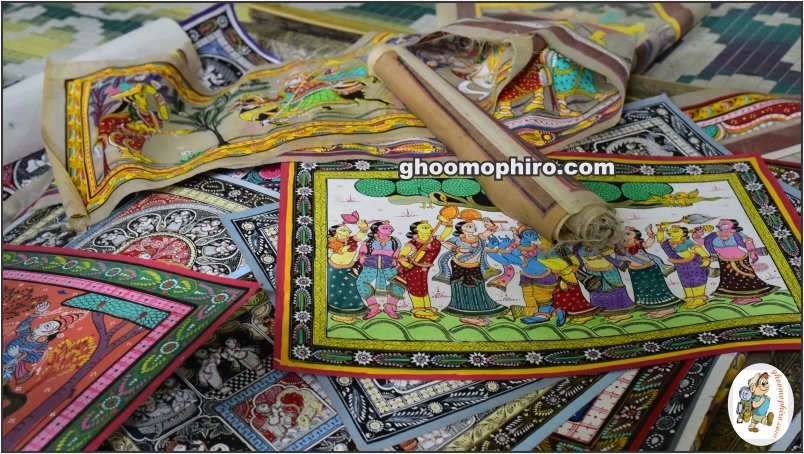
If you are looking for souvenirs let it be something artistic – Patthachitra paintings or palm leaves carvings or other such handicrafts. Raghurampur, a village just fourteen kilometers drive from Puri is devoted to making the most beautiful handicrafts – from Palm leave inscriptions to Stone and wood carvings to wooden toys. It is definitely worth a visit for every art lover. Shop for something – and spend some time window-shopping the handicrafts on display. Another village Pipli, thirty-eight kilometers from Puri, is devoted to colorful applique work. This can be a good place to get beautiful decorative items, handicrafts, personal accessories etc. We recommend a visit to these villages as it will also give you a chance to look into the village life of the state.
And of course:
Try Street Food
I can not visit a place without trying its street food, it just won’t feel complete. For a foodie, there are delights of seafood available at sea beaches and pure vegetarian cuisine offered at major restaurants. But streets food everywhere is just yummy! And Odisha has several of its own local delights to offer in this regard.
There are several other amazing things that I did there, so many amazing places to see – Sishupalgarh-a ruined fortification, Lalitgiri-a Buddhist complex, Second Mahanadi Rail Bridge to name a few. And of course, you can go shopping as well. There is a flea market in a phrase I, a great place for budget shopping. There is also a saree mandir, market devoted entirely to sarees. I so, so, so wanna talk about them but I had resolved, it was a stupid thing, to go on a word diet and so am limiting myself to merely those ten things.
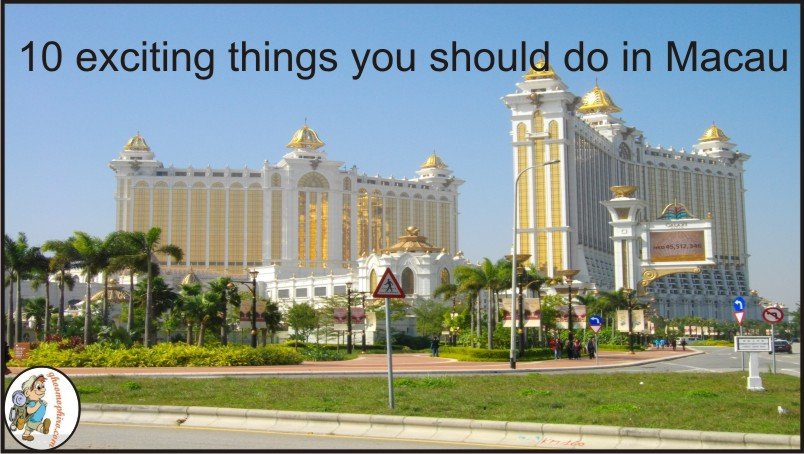
Macau also is known as the ‘Las Vegas of Asia’ is brimming with casinos and high-end shopping centers. An hour away from Hong Kong, it is another administrative region of China. But there is more to Macau than just gambling till you go broke.
Here’s a list of exciting things to do in Macau:
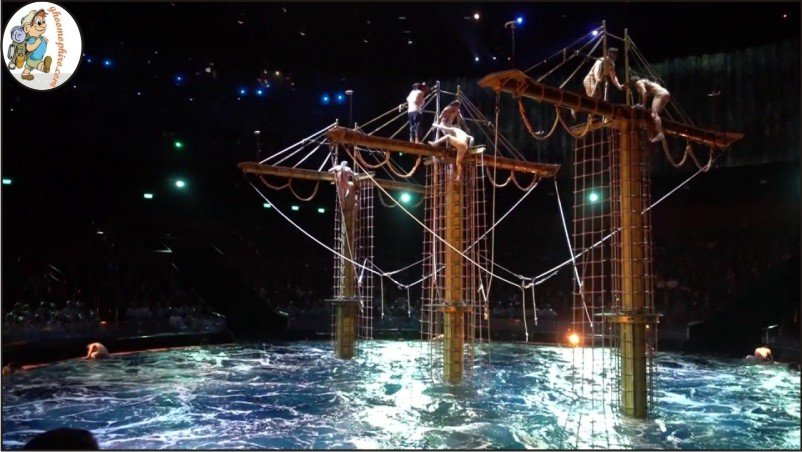
The House of Dancing water show.
You will be dazzled by the extravagant performance of acrobats, dancers and the visual and musical effects. This stage show is stunning and something you must not miss if you are in Macau.
Visit St Paul’s ruins
The best time to visit is after sunset. Since there is huge crowd during daytime and the place looks even better with the sun setting and the city lights turned on. But if you do visit during the day, you can also see Macau Museum and Monte Fort.
Macau Tower convention and entertainment center
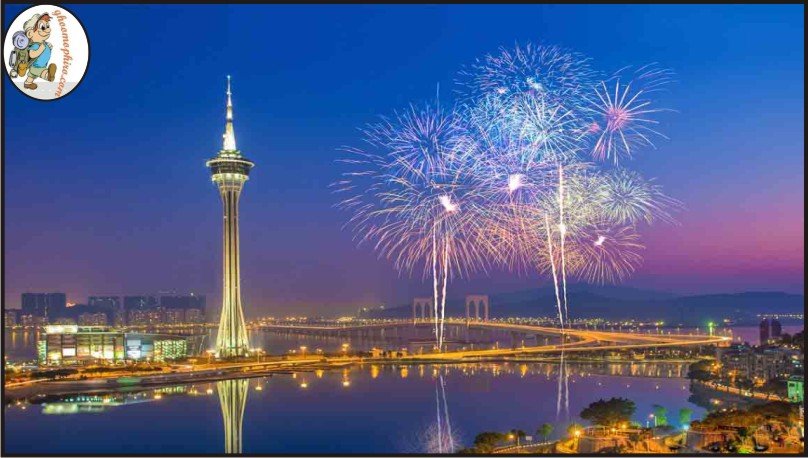
This has to be the most exciting place in all of Macau. As soon as you step into the glass elevator, it takes you to 223 meters above ground in 60 seconds. You can watch the beautiful Skyline from the Observatory that gives you the 360-degree view. Get something to munch on at the snack bar and if you feel daring, take an outdoor skywalk or go bungee-jumping.
Try the Portuguese egg tart
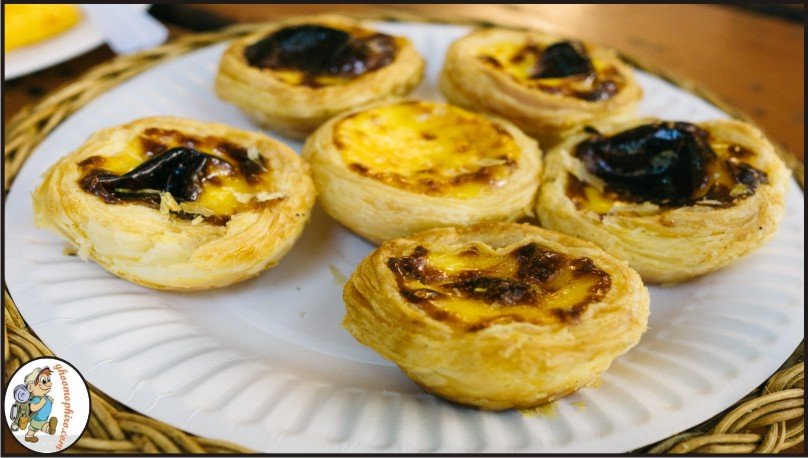
This is the most common street food you’ll find and it is absolutely delicious. Though the prices may vary from place to place, you will not be satisfied with buying just one.
Walk around Senado square
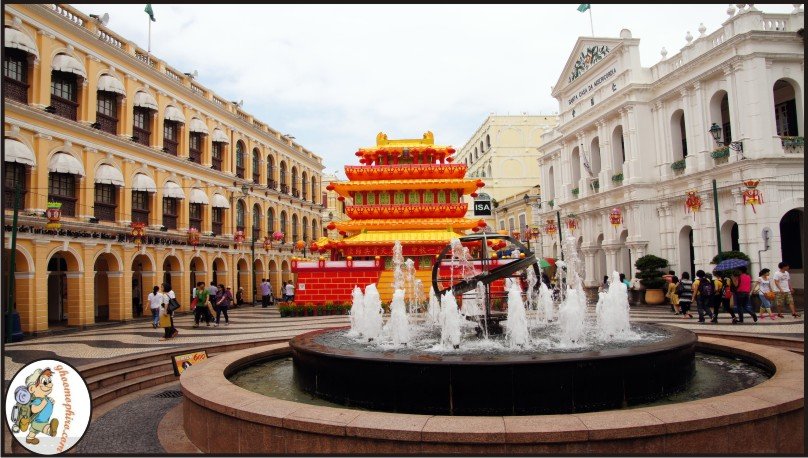
Look at the great views from Senado square and walk around the courtyard garden as well as the nearby library. Go up to the Leal Senado building to click the perfect picture of the place.
Revisit history at the historic center of Macau
This place shows you the real Macau, a blend of oriental and Portuguese. There are lots of old buildings and shops where you can get souvenirs. Try various street foods like Pork Buns and Custard Tarts. Fair warning though, it can be really crowded here.
Go on a sightseeing tour in Macau
Go on a full day tour led by experienced guides to show you all of Macau. You can grab a shuttle from Macau Casinos and enjoy the day looking at UNESCO World Heritage sights and new modern wonders.
Visit churches
If you are at the Historic city center and on your way to St Paul’s, do stop by at the churches in the way like St Dominic’s church. It has an admirable architecture and beautiful exterior. Built more than a hundred years ago, it has amazing artifacts. You are allowed inside free of cost and can enjoy the tranquillity and peaceful environment. There’s also a small museum near the back.
View an authentic Chinese garden
Lou Lim Leoc garden is a perfect place for a quiet stroll or relaxation. Amidst the beauty of flowers and friendly locals, you can sit near the water or stand on the bridge for a perfect photo shoot.
Tashi Square
This square is a treat for old souls. Take a good look at Macau’s colonial architecture or go to art museums and library or simply walk around the old alleys.
Despite Macau beng popular for its Casinos, it has a rich history and many other places tourists can visit without burning a hole in their pocket. Don’t let the high-end hotels stop you from experiencing the real Macau. If you take a trip to Hong Kong, do visit Macau.
The Bandhavgarh forest in Umaria district in Madhya Pradesh has a rich history. The Bandhavgarh fort that lies inside the forest dates back to the 10th century. It is mentioned in old epics of Hindu Mythology as the Fort that belonged to Lord Ram’s Brother Lakshman and that is why it is called “Bandhavgarh”, ‘Bandhu’ meaning brother. It is believed that after defeating Ravan, Lord Rama stopped at this place and asked Nar and Neel to build a fort, to keep an eye on Lanka, since it is on the highest hill in Central India. The fort is built on 811 meters above a hilltop. On the hilltop, atop a plateau of 4sq km, that fort is built. The Bandhavgarh Fort lies in the Tala region of Bandhavgarh Forest. After the fort was made, Lakshman became the resident deity of the fort.
Around the forts, there are caves dug in sandstone which are 2000 years old with Brahmi scripture on the walls. These caves are said to be the meditating place of a lot of sages, until the 12th century when Baghels laid a claim on it. The Fort was also ruled by the Royal family of Reva who still owns the fort. We could see the traces those royal families left behind when they vacated the fort. We saw the treasury, the horse stable, and the temple.
We entered the fort through the main gate called Karn Pole and came across Lord Vishnu’s Dashavatar statues and the lakes inside the fort. The Vishnu statues are not alone and are accompanied by Shivlingas as well. The legend goes that this lake emerges from the Charan Ganga that flows from Lord Vishnu’s 32 ft statue at Shesh Shaya. Firstly, the tall statues of Narasimha, Tortoise idol took us by awe and then we got to know about the man-made pond at the top as well.
We were told that the renowned mystic poet and saint also stayed and preached here. There’s a Kabir hermitage inside the fort and our guide showed us the escape place that Kabir used to move out from the Fort, to Kashi, where apparently he met with his Guru.
Till date, there is a two-day festival for Kabir Panthis when they accumulate inside the fort. It happens in the month of December and there’s a huge gathering of Kabir followers worldwide who come barefoot.
But we need to specifically mention one thing though, despite the rich history of the Fort, what makes our trip to Bandhavgarh fort truly worthwhile was the view of the forest from the fort. It was breathtakingly beautiful and that was a sight like no other.
The present priest of the Fort is employed by the Forest department while the earlier priest was in an alliance with the Maharaja of Rewa. During the festivities, the population surrounding are allowed free access. The climb to the fort may be hard but once you reach there, it will be a great feeling. Once ruled by Kings, now the Fort is ruled by Tigers who walk in the surrounding areas, unafraid and there are myths about these Tigers accompanying Temple priest to the Fort and even fighting a sloth bear for their protection.
Walking around the fort gave us the impression that it contained many more untold stories and the rich history we were told about was barely a part of the real story. There is so much to see and experience in there that we were glad to have gotten the chance to visit.
Time to Visit:
Though entry into Bandhavgarh is prohibited for a while, that decision may be revised. Keeping that in mind, the best time to visit would be November to April.
There are plenty of accommodations available in the Tala district, Bandhavgarh.
How to reach: The place is well connected by road, air, and railways. You need to get down at Umaria station which is overnight from Delhi.