Categories
Beaches Travel Tips Travel Trends

Safety Travel for Solo Women Travel in Goa

Goa has a laid back culture which attracts both international tourists as well as the nation’s youth – thus making it tourist capital of India.  Still, it presents some challenges to solo familiar travelers. For one thing, there are drug and excessive drinking issues. For the second, there is news of increasing frequency of crimes against women. There are also some reported cases of burglary.

Goa is worth all those risks especially since most risks can be put off if you take measures against them and the risks mentioned above are no more prevalent than any other major international tourist destination.

We have already shared some tips that can come handy for a female solo traveler in general. Today Ghoomophiro brings you some safety tips for solo female travelers in Goa in particular:

Smile, be nice but also be assertive

While we must never forget to smile and be nice to those we talk; we must also be assertive about our rights. A foreknowledge of our rights help. Do not be taken by the aggressiveness of others who might try to intimate you.

 Airport and taxis

Goa’s airport is as safe as you might expect an airport to be. Taxi services are readily available at the airport and can be considered fairly safe. That said, we recommend using the Uber app to order a taxi. The charges for such taxis are fixed and they have taken safety precautions of their own. Google has recently launched a new service which will warm you if your driver was to get off his route.

Beaches and Beach Huts

Goa’s beaches are it’s the biggest attraction.  As far as female safety go, the beaches are the safest one can find in India. Women can roam around in two-piece without getting stares or get far fewer stares than elsewhere. There might though be robbery issues. We recommend putting your belongings in custody of some friend you made at the place. Avoid carrying too many valuables to the beach.

Beach Huts are one of the biggest attractions of the beaches of Goa. These pretty houses are made of a variety of materials including bamboo or banana leaves, wood or concrete. However, there might be chances of theft if safety measures are not taken. If you are a solo female traveler, we highly recommend avoiding huts made entirely of bamboo or banana leaves. We recommend sticking to ones that are made of harder material like wood or concrete and that can be locked properly. We recommend traveling lightly – such facilities as ATMs are readily available in Goa.

Night Life

While Goa has the best of night Life you can find anywhere in India, this also means lots of drinking and drugs. We recommend making friends at your hotel or guest house and enjoy your nightlife with them. Do not accept drinks except those served by the stuff at the club – as people are in habit of putting stuff into drinks. Avoid arguing with drunken men as they tend to grow aggressively. Don’t get into a taxi if you find that the driver is drunk.

Rentable scooters

Rentable scooters are the best way to roam around in Goa. They cost about 300 bucks for a day and if you rent them for multiple days 150 bucks a day. However, if you are a solo woman traveler or foreigner or both, you might be considered an easy target and the renters might try to charge you more.

Make sure to use helmets or you are liable to be penalized by local police.

Mobile phones

Mobile phones are the biggest weapons in the hands of solo female travelers. We recommend keeping them sharpened, metaphorically speaking.

We recommend getting your hands on a local sim and use it. The local telecom services offer cheap plans giving free unlimited local calls and good amounts of daily data quota. Use the internet to make your international calls.

Keep apps like Google Maps and Uber Service on your mobile. Use mobile banking to do your transactions as far as possible.

Some useful telephone numbers are given below:

100 police

102 Ambulance

1091 Women Crisis Response

1078 Coast Guard Control Room

1033 Emergency Relief Center on National Highway

Make sure your mobile devices are always charged. You can carry power banks for additional support.

Don’t accept invitations to unknown places

Don’t accept invitations to beach parties and clubs from unknown people if you are not too sure.

Conclusion

There have been rumors declaring Goa unsafe for women after crimes against women in Goa have recently hit the news lines, but we find Goa as safe a place as an international tourist destination with a laid-back lifestyle. The state has dedicated government bodies trying to make it even safer. With a bit of caution, Goa can be safely enjoyed.  We hope these safety tips will help you gain confidence and consider traveling alone to Goa. J

Categories
South India Travel Trends

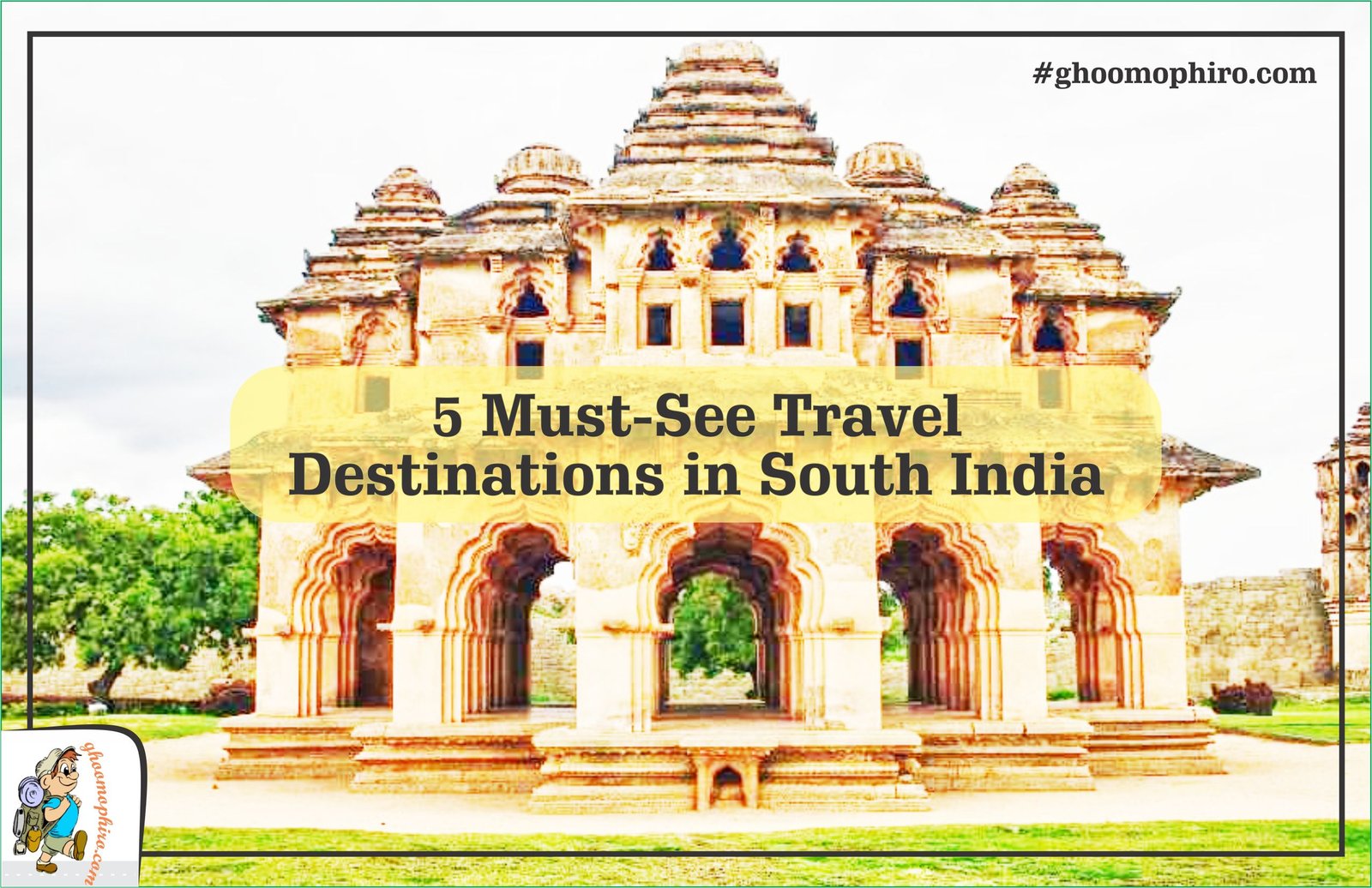
5 must-see places in South India during Monsoons

South India is one of the most gifted lands when it comes to natural beauty – whether it be in its beautiful Ghats offering Panoramic views or places of spiritual importance like Rameswaram, Puri or Omkareshwar. Mumbai, Goa, State of Kerala, Bangalore, Pondicherry, Omkareshwar, Puri, Konark, Coorg, Hyderabad, Kanyakumari, Hampi, Andaman, and Nicobar islands, Rameswaram, Kochi, etc the list goes on and on. Today, we will bring you a list of 5 must-see destinations in South India.:

1.    Goa

Goa has been rightly dubbed as the tourism capital of India and thus another item that we can not ignore while compiling our list of 5 must-see Places in South India. And its popularity is owed to.it laid back lifestyle,  its sea beaches that offer pristine natural beauty and its cuisine. All the seaside adventures and sports like boat riding, sailing, scuba diving, etc are easily available. And it has the most nightlife you will find in the country. It is also the favorite destination among international tourists who find the laidback lifestyle very much like the one they have back home.

How to reach Goa?

Goa is well connected by rail, road, and airways to major cities of the region especially to Mumbai that sits in its neighbor

2.     Mumbai

You just don’t compile a list of 5 must-see Places in South India without including Mumbai, the financial capital of the country. Besides the unique chance to meet Bollywood stars and other celebrities, Mumbai offers you one of the most diverse cuisine available in India, some of the most awesome sea beaches, a nightlife paralleled by only a few in India and a bunch of historical spots like the Gateway of India, Marine Drive, Elephanta caves etc to name a few.

How to reach Mumbai?

Mumbai’s international airport connects it to the rest of the world. The city also enjoys roadway and railway connectivity to all the major cities of the country.

3.    Pondicherry

Rightly dubbed as French city of India, Pondicherry is full of fun adventures for travelers whether it be the water sports like yachting, boating, scuba diving, sailing canoeing or just the plain old school evening spent at sea beach or city’s nightlife of clubs and bars or if you have a spiritual bent, yoga classes in Sri Aurobindo Ashram. Thus Pondicherry is a natural choice to make it to our list of 5 must-see places in South India.

How to reach Pondicherry?

City’s airport received flights only from Bangalore and Hyderabad both of which are well connected. The nearest railway station is at Villupuram is 35 kilometers away and you must hire a taxi from there to the city. The best way to reach Pondicherry is by roadways as the city received regular buses from all the major cities surrounding it.

4.    Kerala

We intend to end this list of 10 Best Places for Group and Family Travel in India on a high with Kerala. We know that Kerala is a state whereas the others in our list are all cities but we just can’t help but give in to the pristine natural beauty of Kerala. Considered one of ten paradises on Earth, Kerala’s natural beauty is so awesome that you won’t believe it is real if you weren’t seeing with your own eyes. Riding houseboats is fun. Though you can find houseboats in Kashmir too, first they are stationary and, second, the tourism experience to Kashmir is heavily damaged by threats of terrorism and curfews. Thus it is Kerala instead of Kashmir making it to our list.

How to reach Kerala?

Kerala is well connected to the rest of the country by rail, road, and air.

5. Coorg

Coorg has become the adventure capital of India for a wide range of adventures it offers including many which are unique including microlight flying, Barapole river rafting, rock climbing, kayaking, quad biking, trekking, hiking, etc to name a few. It also has lots to offer for nature lovers, wildlife lovers, and history freaks. It is thus a natural favorite to be included in 5 must-see places in South India.

How to reach Coorg?

The best way to enjoy Coorg is roadways as it is well connected by public roadways to the surrounding cities like Bangalore, Mangalore, Chennai, etc. The nearest airport is Mangalore at a distance of 135 kilometers while that at Bangalore is 250 kilometers away. The nearest railway station (the one at Mysore) is 120 kilometers away. The best way to take a bus from Bangalore which in turn is well connected with the rest of the world.

Conclusion

How did you like this list? What places will make it to your list of 5 must-see places in South India? Do write to us in comments below. 🙂

Categories
Beaches Culture Festival Relax Travel Trends

Cashew Trail in Goa

In many ways, Goa is a fragment of West dislocated to the shores of India. The state has a culture as diverse as it’s cuisine – finding its inspiration from the Portuguese that once ruled it, Hinduism which was once prominent religion here, Christianity which has dug its roots deep inside its soil, the English speaking world which the youth here or the tourists have adopted themselves into.

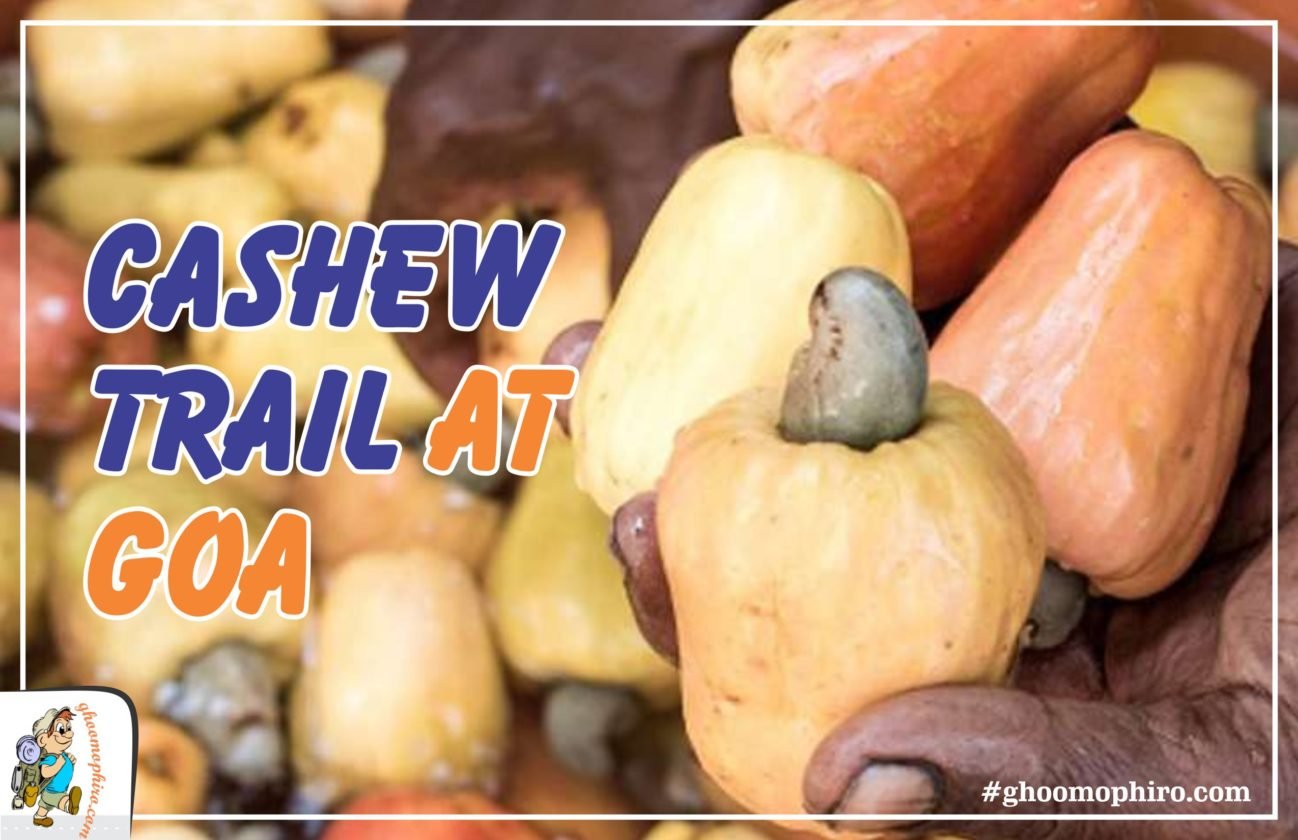
There are many unique things in which this unique mixture of culture and values shows itself. One of them is increasingly popular Cashew Trail festival. If you have been to Goa, you probably would have drink feni, Goa’s national drink. Feni is made out of cashew.

Cashew Trail Festival is a 10-day festival organized by Park Hyatt Goa Resort & Spa. The festival celebrates cashew and drinks created from it – and their rich history.

Cashew tree was brought to Goa by Portuguese over 500 years ago. The impact of this fruit, well, technically it is not fruit but you know what I mean, Cashew’s impact on local culture has been so strong that it has inspired Thomas Abraham, general manager, Park Hyatt Goa to trademark the phrase ‘Cashew trail’ and initiate efforts to turn the harvesting time into a cultural event.

Launched in 2017 in collaboration with Vazs — Valentino, Mac, and Cedric of Madame Rosa Distillery, which Goa’s largest feni maker; Cashew festival refuses to be just another encyclopedic or museum activity. Instead, what we got to experience here was a diverse range of activity – cooking classes, cocktail lessons, cycle rides, barbeques.

You do however get to see the entire process from harvesting of cashews to the creation of Feni. The cashew orchids are a world apart from the rest of the Goa, suddenly you are in a place that doesn’t look like Goa or for that matter anywhere in India. The orchids present amazing sights of tranquil beauty to feed one’s eyes upon. And you can just pluck a fruit straight from the tree and start sucking on it! (Yummy!)

The cashew fruits are only used when ripened, they are thus picked from ground Instead of being plucked. A long stick with a pointed end is used for the purpose which is called Kanta

The feni-appreciation is probably the biggest highlight of this annual festival. With 42 percent liquor content, it tastes delicious and can easily make you tipsy if you drink too much of it which you probably will because like we said … Delicious. Just one sip of any of countless variations it comes in will help one realize that no other drink deserves to become a cultural symbol of Goa than Feni.

It is thus natural that the 10 day festival of Cashew Trail should make one forget all about everything else, the rest of world simply must lose itself to irrelevance as Goa gets high on its Feni lust.

There are two more drinks that we must mention. One of them is Urrak – formed at first distillation of Cashews. It has lower alcohol content (about 15 percent) and goes well with lime or lemonade substitute. If you were looking for a stronger drink, Goa’s special brew King’s bear beats them all.

Where to stay?

Park Hyatt Goa is a natural favorite for residence. The hotel is expensive but the experiences it offers are more than worth it, especially during this festival. The rooms are spacious, clean and full of all kind of amenities and there is also a spa facility available.

In so many ways, it has an experience you can’t put into words – a ‘you have to be there to know about it’ thing and we do hope that this article inspires you to be in Goa in time to experience this unique festival.

Conclusion

Cashew Trail festival is a uniquely Goan experience and something that, because of its amazing combination of experiences must be a part of everyone’s bucket list items. Are you already considering it to ornament your next trip to Goa or not? J

Categories
North east Rejoice Rejuvenate Relax Travel Trends

Reasons to plan the visit to north-east India

North-East India is the one-stop destination for all travelers. There are several places to visit in North-east IndiaStill untouched by the bustling city life, the region of Assam, Meghalaya, Nagaland, Arunachal Pradesh, etc still have natural scenic beauty that has not been destroyed by the umbrage of travelers yet. There is a lot to be explored in North-East India which is why it becomes the best offbeat place to travel to for all those who have already seen or have no interest in seeing the “popular” places. The top 5 things that will compel you to visit North-East India are: 

The Tribal communities

North-East India is brimming with unique tribal communities. Even in the modern age, these tribals live completely cut-off from the outside world and whether it is the Apatani Tribe in Arunachal Pradesh (fascinating because of their tradition of facial tattoos) or Head hunters in Nagaland, or Galo tribes, each tribe has a unique and fascinating culture that one would love to get familiar with. But it is best to find a local guide who would inform you about the tribes and their behavior beforehand. While generally, they are welcoming to tourists, you must not do anything that they find offensive.

Rare cuisines

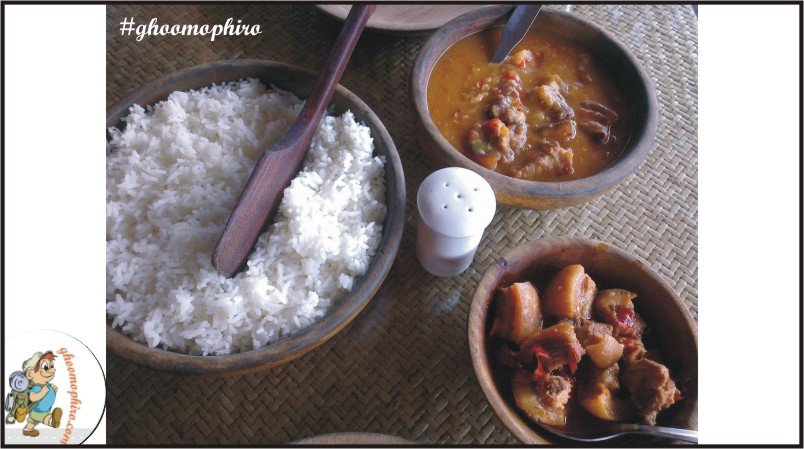
Being in North-East India would make you feel like you are not in India at all since the seven sisters have a unique identity. While cuisines in the rest of the country is identified by the rich use of spices, in North-East states, different ingredients like bamboo shoots are used to flavor the cuisine. Moreover, in certain areas, the cuisine is inspired by Tibetan or Nepali style of cooking. Some of the must-try dishes are Narasingha masor jhol which is a specialty of Assam, Smoked pork with bamboo shoot and Gundruk in Sikkim.

Rich scenic beauty

The beauty of North-East India is beyond what one can imagine. There is no shortage of challenging treks that one can go on, there are many offbeat destinations that make for a memorable road trip and waterfalls, pristine forests and tea gardens are a common sight to be enjoyed. You can go on The Bailey Trail Trek in Arunachal Pradesh for spectacular views or Tawang or living root bridge.  Moreover, the natural landscapes are credited with making travelers grow spiritually after their visit to North-East India.

Endangered wildlife to be seen

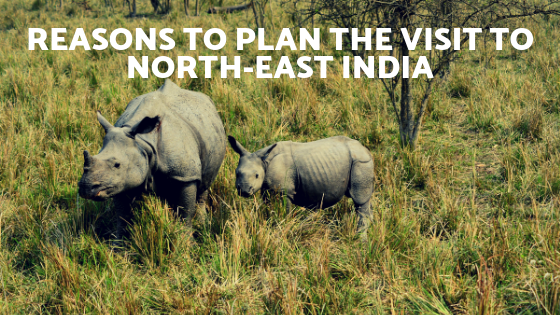
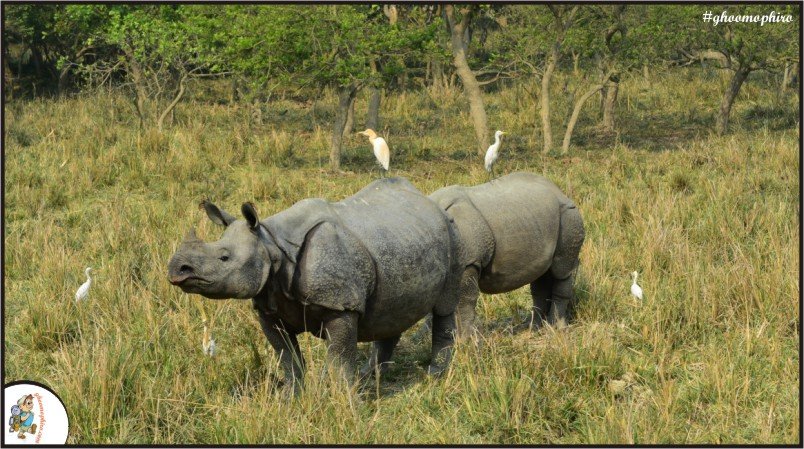
Along with magnificent views, North-East India is also home to endangered wildlife species like the one-horned rhino. North-East India has many National Parks where travelers can go on Safaris to see endangered animals. One of the must-visit parks is Kaziranga National Park situated in Assam. Nokrek National Park is also a good option for travelers in Meghalaya.

It is a spot that highlights diversity in India

Though a part of India, the seven sisters differ from the rest of the country in all ways. The culture is closer to that of Tibet and Nepal while the cuisines are also completely different. The people of North-East India resemble people from China or Burma in their appearances and the hassle-free atmosphere adds a fascinating element to the beauty of North-East India. Not only this, it boasts of places like Kamakya temple, which has religious importance too. And the people respect their natural surroundings a lot. Sikkim, a part of North-East states is the first state to be completely organic.

Therefore, North-East India is a crown jewel of the country and makes one feel like they are visiting a completely different country altogether. Apart from all the things mentioned above, there is a lot to be seen in North-East India. One can see the Tibetan culture reflected in people’s lifestyles and enjoy the rich handicrafts.   

Categories
Central India National Parks Travel Trends

A White Tiger Safari in Mukundpur, Rewa

Tigers are majestic. The word ‘royal’ is redundant in name of Royal Bengal Tigers, our national animal. However, another class of tigers perhaps outdo even the Bengal tigers – the white tigers who gave the title to Arvind Adiga’s Man Booker award-winning book ‘The White Tiger’.

Theoretically speaking there is not much difference between white tigers. They live, love and bread in similar conditions and habitat and very much similar nature. And yet white tigers are loved far more – perhaps because of their rarity … or perhaps it is absurdity of their existence, you almost get the sense that they should not exist, nature defies its own rules in letting them come into existence, perhaps breaking away from its own set, rigid ways to create something beautiful.

It is this majesty of white tigers that infatuated us with a strong desire for white tigers. And there was one and only place to do it – Mukundpur where the world’s first white tiger safari was held. And Munkunpur very well deserved the honor of being the place where maiden tiger safari should be held as it was also the very place where first white tiger of the world was spotted by Rewa king Maharaja Martand Singh in 1951.

About Mukundpur

When speaking of tigers, Madhya Pradesh quickly comes mind – especially when the subject is white tigers. It is perhaps one of the most gifted places when it comes to being home to most royal of all creature

Mukundpur is a village in Satna District of Madhya Pradesh State, located at a distance of 478 km from the state capital, Bhopal. The beautiful village is surrounded by water bodies on one side and by the forests on the other. It got its name from Maharaja Mukund Dev, since whose birthplace it was and attracted the attention of wildlife enthusiasts for first time in 1951 when the first white tiger was spotted here by Mahara Martand Singh.

The tiger that was sighted by Maharaja Martand Singh was named Mohan. Mohan was probably a result of genetic mutilation, however, the mutilation was so beautiful that Maharaja encouraged breading via Mohan to produce more white tigers. It is from Mohan that all white tigers of the world have descended.

How to reach Munkunpur?

By Air:

The nearest airport is at Rewa which is located at a distance of 15.6 km. You can hire a taxi from there.

By Rail

Rewa located at a distance of 15.6 km has the nearest railway station. You can hire a taxi from there.

By Road:

You can hire taxis from several of nearby major cities including Rewa and Lalitpur.

The White Tiger Safari

The white Tiger Safar at a Mukundpur was one of the high priority items on our itinerary during our tour to Bhopal. We took a long detour just in order to enjoy it first catching a train to Rewa and then hiring a taxi from there. We reached Mukundpur a bit tired but what was held in there can freshen up any wildlife enthusiast.

We started by visiting the zoo first. We took a golf car to see the zoo and we got a chance to see the white tigers as well as several other animals – such as bears, black bucks, lions, etc. The sight of all the exotic animals was thrilling but white tigers stood in their own league.

The safari was opened from 11:00 a.m. to 4:30 p.m. The tickets were very reasonably charged. We seated ourselves in the safari van and let ourselves enjoy the mesmerizing view of tigers. Within the very first hour, we got a chance to see a deer who passed by the van though we failed to click it.

But after that, nature seemed to have turned it back on us for next few hours as we roamed around in the beautiful sights created by natural vegetation but our eyes starved for a sight of the grand prize. Even near the pond where tigers were most likely to be sighted – given the love of all wildlife for drinking water and tiger’s best chance of finding his prey there, we achieved no success.

At a little of 3 p.m. when we were already at the end of our hopes, someone in the van started screaming in excitement. And yes, it was a white tiger lying a few feet away oblivious to the excitement his sight has caused among us, lesser mortals, in the van.

It seemed to be lazying about, but even that was enough for us to go click happy (a rare privilege granted to us). We clicked its pictures, in one he was yawning and even in that picture it seemed so cool. Perhaps tigers just can’t help being cool.

It was a majestic sight. And it stayed there – for what? like fifteen minutes, letting us admire him and his royal indifferent ways before getting up and walking away in the direction away from us. Our guide told us it was named Raghu and was one of the first tigers to be brought to the reserve.

And this was the highlight of the safari. Nothing much happened after that.

What to take back home?

We highly recommend buying some locally handcrafted goods made of bamboos as the perfect souvenir one might get from Mukukndpur.

Travel Trips:

  1. Please note that photography is not generally allowed during the tiger safari.
  2. Follow the rules of the tiger reserve and the instructions given by the staff of the reserve

Conclusion

It was a 478-kilometer distance we had to travel on trains and buses just to reach Mukundpur from Bhopal and then an equal distance on our way back but the unique experience which was waiting for us there was more than worth it. We are even considering going for another safari there soon.

We hope you loved reading our memories. J

Categories
Staycation Travel Tips Travel Trends

5 key Yoga Ashrams in India

Yoga is an integral part of Indian culture that has been practiced since centuries to free the mind, body, and soul. With its centers all over the country, it now reflects its prominent presence in the West as well. Traveling in India to delve deeper into the realms Yoga and its rich culture can be one of the most liberating experiences ever. There are plenty of Yoga Centres in India that offer a combination of in-depth classes and flexible drop-in courses. They are a perfect medium to find solace. As there are a huge number of Yoga Centres and each has different approaches and results, it’s important to know which is the best suited for you. Therefore, a listing of key Yoga Centres with their offerings can help you have a better idea about what they offer.

Parmath Niketan: Located in Rishikesh, with a stunning setting of scenic beauty covering mountains and serene lakes, this is a great spiritual place for Yoga. The ashram comprises 1000 rooms on its eight acres campus. It has an extensive program of Beginner and Advanced Yoga, Vedic Heritage, Spirituality and Teacher-oriented courses. The duration of the courses differs from two weeks to three months. The students are also provided with inexpensive accommodations during their stay. A popular attraction to the tourists is the International Yoga Festival held every year in the month of March. The ashram also performs the holy Ganga Aarti every evening and sacred wedding ceremonies. This center is open to everyone, including tourists from abroad.

Ramamani Iyengar Memorial Yoga Institute: If you are looking for a  full-on short-term and serious Yoga classes, then this is for you. Located in Pune, this renowned Institute attracts serious students of yoga from all over the world. It conducts regular classes in Iyengar Yoga (a form of Hatha Yoga which focuses on postures) for all levels. Special classes are also held for women, children, and those with medical problems. Not only that, the students need to have some substantial prior experience in practicing Iyengar Yoga for in-depth training. The courses are held for a month and you can attend 5-6 classes per week at ease.

Ashtanga Institute: This spiritual Gurukul is located in Mysore and run by descendants of the revered guru Sri Krishna Pattabhi Jois, who taught yoga there from the 1930s up until his death in 2009. The Ashtanga Institute offers ongoing intensive ​ashtanga yoga classes throughout the year. The classes are for serious students only and every batch continues for six months. It’s necessary to apply at least two months in advance. Accommodation isn’t provided but there’s plenty to be found close by.

The Yoga Centre, Mumbai: This is one of the oldest Yoga Centres of the world. This coastal Gurukul was founded in 1918 by Shri Yogendraji, a disciple of Shri Paramhamsa Madhavadasji (a renowned yoga master from Bengal). The main motive of this Yoga Centre is to alleviate the health problems of people. As a result, its therapeutic camps are quite famous in the city. This Centre offers a wide range of excellent Yoga Courses, workshops, and camps. There are also special programs for women and children. They aim to help students overcome specific ailments including heart and respiratory problems, hypertension, diabetes, orthopedic conditions, and stress-related issues. Their courses range from 2 to 21 days. A major benefit is that regular classes are also held here.

The Bihar School of Yoga Ashram: Located in Bihar, this Ashram was founded in 1964 by Swami Satyananda Saraswati, a student of Swami Sivananda Saraswati (one of the greatest yoga masters of the 20th century). This Yoga Centre mainly focuses on a full yogic lifestyle. Satyananda Yoga incorporates traditional postures, breathing, and meditation. Normally an educational institution focuses solely on academic goals, whereas a yoga institute in this ashram environment combines both intellectual and experiential learning, aiming towards the holistic growth of the student. Emphasis is laid on both the mental and spiritual development of the student. Each year, a four-month residential course from October to January is held on Yogic Studies.

Categories
Adventure Himalayas Travel Trends

Is Climbing Mount Everest Worth it?

The growing appetite for climbing the highest mountain of the world brings with it, tons of pros and cons. The ones who make the dream come true are the unsung heroes who attain the trophy of lifetime – eternal glory. To climb the Mt Everest is a mighty undertaking and not only does it take enough courage and confidence but also an intense amount of prolonged training.

In 1953, Edmund Hillary and Sherpa Tenzing Norgay became the first explorers to reach the summit of Mount Everest and, encouraging the mountaineering community spirit of the time, they agreed not to reveal who actually set foot on the top first.

Tenzing’s legacy is that about 10,000 Sherpas are employed in Nepal’s mountaineering and hiking industry, earning wages well above the national average. They have solely devoted themselves to plan routes, prepare meals at the harshest of situations, and help their clients achieve the biggest dream of their bucket list. They also save the lives of numerous people, carrying them and assisting them during sickness and injuries.

However, as adventurous as it seems, climbing Mt Everest is nevertheless, not a bed of roses. According to estimates, 2019 has become one of the deadliest climbing seasons in history on the world’s highest mountain – with inexperienced adventurers, bottlenecks and climbing firm cutting corners.

Pros of climbing Mt Everest –

  1. Sense of Achievement: One of the mightiest benefits of Climbing Mt Everest that come with the completion of this expedition is the sense of achievement – an accomplishment of one of the biggest challenges. This totally gives an outright boost to your self-esteem and encourages you to try new adventures in life.
  2. Fitness increment: To climb Mt Everest, one needs a great intensity of patience, perseverance, and training. It takes months and years to prepare for the day, hence, you would need to have the excellent physical fitness to complete the expedition. This is like an add-on to your accomplishment as you will prefer to keep your fitness intact even after you go home.
  3. Life-Changing experience: If you succeed in this expedition of yours, your entire outlook of the world is bound to change. Climbing Mt Everest is one of the hardest things in the world and with its accomplishment, you will start to believe more in your capabilities and accept even harder challenges of life with a smile. So, if you love challenges and extremely open to prolonged hardcore training and preparation, this is for you.

Challenges of climbing Mt Everest-

  1. Intense traffic: Due to the overwhelming quest for Climbing Mt Everest, there have been ‘intense traffic’ of crowds lined up to reach the summit. Due to prolonged lining up amidst snow, people often fall victim to altitude sickness, frostbite and many more.
  2. Bad weather: Avalanches, frostbite, extreme weather, sudden falls and lack of oxygen have led to the huge number of deaths last year. However, this year, fatalities have been blamed on too huge crowds and inexperienced climbers. So, perfect preparation and training are highly necessary.
  3. Lack of support: The rise of “low-cost” domestic firms, that in some cases offer expeditions at less than $35,000, half the price of more established rivals, creates incentives for cost-cutting, climbers said. They offer inadequate food and stay options which can be harmful too.

The debate on climbing Mt Everest as an ‘adventurous experience’ is nevertheless divided into two groups – pro-climbers and anti-climbers. Not to mention, climbing Mt Everest has greater threats to life than anything else on this world and the cons are never-ending, but it is not impossible. If you are trained, confident, well-equipped and determined, you can achieve your lifetime accomplishment. Every single person to climb Everest will tell you that it has been the adventure of a lifetime, and one that they would uptake again gladly.

Categories
Travel Tips Travel Trends

Four lessons solo travel teaches you

In many ways, organizing your travels has never been easier. In the US for example, 48% of smartphone users in the US would be happy to research and book their entire holiday straight from their device. Nothing could be easier! But imagine finding an irresistible bargain to far-off climes, but no one’s available to go with you. Would you go alone?

Many people feel instantly put off by the idea of traveling solo. The notion of negotiating stressful airports and hotel transfers all alone may feel like anything but fun. But many have discovered that traveling alone turned out to be the perfect tonic for the soul and that a solo excursion worked wonders for their character. Here are just four fantastic things traveling by yourself may do for you.

1. Boost your confidence

Traveling solo boosts confidence. Heading off alone shows that you don’t have to depend on others for your own happiness. Encountering situations and dealing with them all by yourself works wonders for your self-confidence and you will begin to discover latent abilities within yourself.

It’s not about becoming an isolationist or a hermit, of course, but it is about tapping into your own inner powers of independence. As an added bonus, these new-found powers may draw more like-minded people into your life.

Image: unsplash.com

2. Find out who you are

You can more easily rediscover who you are deep down when you travel independently. Usually, in the company of our friends and acquaintances, we tend to follow expected patterns of behavior – and we may have been doing this for so long we don’t even realize we’re doing it.

Traveling alone in unfamiliar surroundings surrounded by unfamiliar people somehow lifts the burden of having to conform to expectations. You may realize while on your solo sojourn that you have been acting a part for most of the time. Perhaps you’ve been playing the extrovert so long you don’t notice how exhausted it makes you feel because you’re really an introvert, for example.

Traveling alone puts you back in touch with who you are at your core, giving you the freedom to explore different aspects of your personality without worrying what others may think of you.

Image: unsplash.com

3. Get creative

Traveling on your own gives you the perfect opportunity to tap into your creative powers. Often, creative thinkers find their most inspiring ideas in moments of solitude or when they’re least expecting it.

Remember that creativity isn’t the sole preserve of writers and artists. We all need to think creatively; whether it’s to come up with solutions to personal problems or to work out what we want to do with our lives. Traveling alone offers the perfect opportunity to think beyond the obvious. It even makes us into a more savvy traveler as we recognize we are responsible for our own spending and other actions. Solo travel is a great education in the art of living.

Image: unsplash.com

4. See people in a different light

Very often you will see people in a different light when you travel alone. Traveling solo makes you that little bit more vulnerable, which isn’t always a bad thing. Being that little bit more vulnerable often brings out the best in people around you and will often show you just how helpful people can be when you need it.

While it’s definitely not a great idea to trust everyone, traveling solo will undoubtedly show you that most people are genuine, giving you a brighter view of the world. Of course, balance this bright outlook with research about your destination beforehand, always stay vigilant and precautions.

Image: unsplash.com

Categories
Asia Travel Accessories Travel Trends

Top 10 Souvenirs to pick in Singapore

The lion city of Singapore is one of the biggest tourist magnets of Asia – and very rightly so, its rich history has made it a salad palate with ingredients of many major Asian as well as European cultures. One of the city’s major tourist attractions is, thus, the souvenirs you can buy in it.

Here Ghoomophiro brings you a list of top 10 Souvenirs to pick in Singapore:

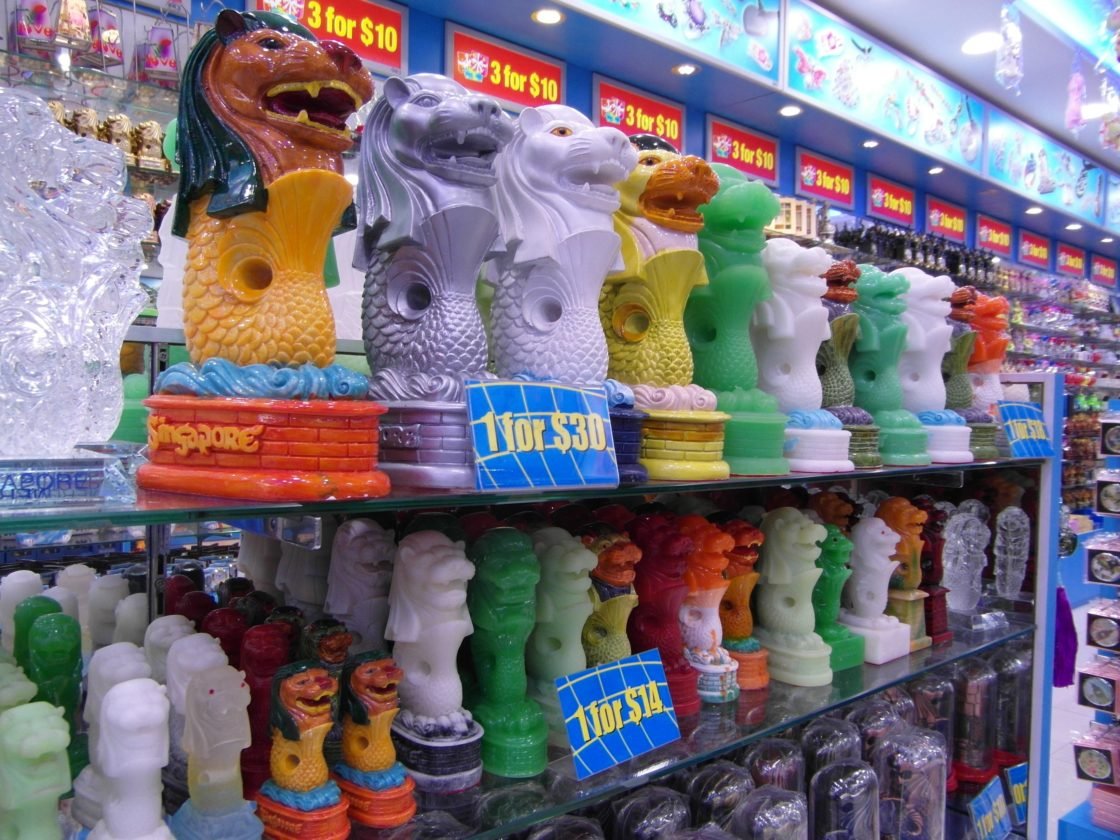
1. Souvenirs that comprise of miniature Merlin

Singapore is anglicized version of city’s original Sanskrit name ‘Singha Pura’ which literally means Lion city. Thus, we don’t think we will surprise anyone that the official mascot of lion city’s tourism department has the head of a lion. Merlin is a man-made creature that has the head of a lion and the body of fish and the obvious choice for being the first in our list of Top 10 Souvenirs to pick in Singapore. While the lion head of Merlin is representing the city’s original name, its fish body shows the city’s origin as a fishing village.

You can find miniature Merlin statuettes both as individual objects as well as products that are shaped like Merlin – key chains, picture frames, can openers, lighters, fridge magnets, ashtrays, cigarette boxes,  coasters, chocolate, sweet, snow globes etc. You can find them almost anywhere in the lion city and they are also one of the cheapest items on this list.

2. Kaya

If tasting Kaya once doesn’t turn you into a hoarder than see a tongue doctor. There is something wrong with your taste buds! Kaya is a delicious coconut jam and is widely used in the lion city as in making Kaya toast – the most popular breakfast dish among Singaporeans and thus the natural choice for being the second in our list of top 10 Souvenirs to pick in Singapore.  Kaya toast is made by filling a sandwich made of two toasted slices of bread with butter and Kaya. Kaya jam is made of a combination of eggs, coconut milk, sugar, and pandan leaves. This flavored jam can also used as a topping for some desserts and cakes. You can buy kaya jars at most supermarkets in Singapore. Kaya jam bottles are inexpensive too and we, Ghoomophiro sisters, made sure to buy a dozen of these bottles while returning from Singapore

3. Bakkwa

Another souvenir for foodies to bring back home from Singapore is Bakwwa or BBQ meat. It is made of pork or beef with a seasoning of sugar, soy sauce, and spices and grilled over charcoal. A favorite among locals and tourists alike. Its local popularity can be gauged from the fact that it has become the gift that locals give to their parents and friends on Chinese New Year. Bakkwa is a bit on the expensive side in our list of top 10 Souvenirs to pick in Singapore but this only makes it a gift to bring to your foodie friends back home.

4. Laksa Paste

Another yummy souvenir for the foodies among us. Laksa Paste is another traditional Singapore food item. Laksa is a noodle soup creating by coming together of Chinese and Malay styles of cooking. Locally it is made of coconut milk, prawn paste, lemongrass, and laksa leaves. What helps it in making it to our list of top 10 Souvenirs to pick in Singapore is that you can find bottles of Laksa Paste – the ready-to-cook paste made of frozen Laksa soup base. Like other food items on the list, they can be easily found all over the island and they are inexpensive too.

5.  Orchid products

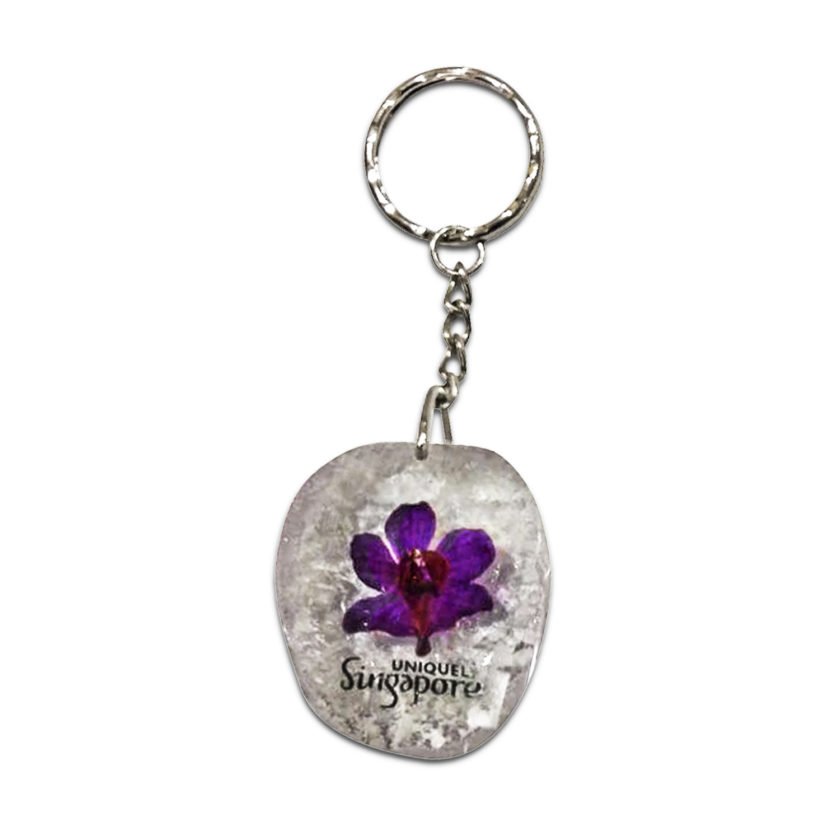
The hybrid purple Orchid is the national flower of Singapore. And this is the inspiration behind the fifth of our list of top 10 Souvenirs to pick in Singapore. In fact, you will find it on display in the form a bright flower shining through a framed glass in most souvenir shops.

Besides the flower itself, there are several other Orchid-inspired products you can find in Singapore. Orchid Perfumes from Singapore Memories can be a perfect souvenir for your dear ones back home – or for yourself. They are created by blending several native varieties of Orchid flowers. The perfumes are available in male, female and unisex varieties. And these perfumes have captivating names that remind one of their origins – Orchid by the Bay, One Degree North (Singapore is located at one degree North of Equator). We recommend buying them from Orchard road.


Or you can buy Orchid framed jewelry for a loved woman at Changi airport. The jewelry includes these cute earrings that have a glass molding with a real flower inside them. A weakness for a woman. And an inexpensive way to please a woman for men – priced as low as twenty Singapore dollars.

If you are willing to spend more money, consider buying gold plated orchid products from RISIS – made of 24k gold.

6. Singapore Sling

If your tourist destination has given its name to a drink than your tour can’t be complete without tasting it, Singapore Sling is the world popular drink and it is also the national drink of Singapore. It was originally created by bartender Ngiam Tong Boon at Raffles Hotel’s Long Bar in the 1930s.  Originally it included a combination of gin, cherry brandy, lime juice, orange juice, and pineapple juice. Now though you can find all kinds of varieties. The bottled version of Singapore Sling is the perfect item to appear in our list of top 10 Souvenirs to pick in Singapore

7. Peranakan Souvenirs

Next in our list of top 10 Souvenirs to pick in Singapore is Peranakan products. Peranakan is a local community that gives its name to Peranakan prints – the prints worn by, for example, Singapore Airplane. All kind of fabrics can be made from this print – dresses, bags, pouches etc for both men and women. You can also buy beaded head weaved beads slippers. We recommend Peranakan crockery and cutlery but there is going to obvious trouble with packing or delivery etc – as is often the case with such things.

8. Souvenirs from China Town

China has a major influence on Singaporean culture. So next in our list of top 10 Souvenirs to pick in Singapore is Paper cut outs. Paper cutting is an old folk art form of China. As far back as third century BC, the paper cut designs were used for ancestor worship. And people still decorate their homes and workplaces with paper-cut designs for good luck and prosperity. Another souvenir to be bought from China Town is flavored nuts.

9.  Souvenirs from TWG

The famous TWG stores offer all kind of souvenirs that are centered on the theme of tea – tea-flavored cookies in different colors, teacups, handcrafted Tea Pots (including ones with a layer of silver, gold or platinum on them), tea jelly etc

10. Pressed Pennies

The last in our list of top 10 Souvenirs to pick in Singapore is a collection of Singapore pennies. The pressed pennies are elongated pennies that are then engraved with iconic designs. You can make your own pressed pennies by using automatic penny flattening machines that can be found at all popular tourist destinations of the lion city.

We hope you liked the list. Is there anything we miss?

Categories
Asia Travel Tips Travel Trends

Countries that allow visa-free tourism to Indians

International travel is often considered a luxury holiday. The holiday is expensive and there are all the visa formalities that have to be met. However, there are several amazing international tourist destinations that allow visa-free entry for Indians and can thus be visited without needing a license as long as you have an Indian passport. Here we take a look at some of the best of these tourist attractions. :

1.    Maldives

The honeymoon capital of Asia, Maldives, is the first in our list of countries that allow visa-free tourism to Indians on the back of its stunningly beautiful and romantic sea beaches.

2.    Mauritius

The island nation of Mauritius is second in our list of countries that allow visa-free tourism to Indians. The island nation is popular for aesthetically pleasing shores – even rewarded for having best sea beaches. It has two UNESCO World Heritage Sites – Aapravasi Ghat Aapravasi and Le Morne Brabant. Ghat (immigration depot) is a building complex located in Port Louis on the Indian Ocean island of Mauritius, it was used by the British Empire for migration of Indentured labor from India throughout the empire. Le Morne Brabant, on the other hand, is a reminder of other evil of the colonial era,  slavery. It was a refuge for runaway slaves. Wildlife enthusiasts will love Black River Gorges National Park famous for Mauritian flying fox which is also the home to island’s endemic birds: pink pigeon, Mauritius kestrel,  Mauritius parakeet, Mauritius bulbul,  Mauritius cuckoo-shrike, Mauritius fody, Mauritius olive white-eye, Mauritius grey white-eye etc.

3.    Indonesia

A list of countries that allow visa-free tourism to Indians won’t be complete without Indonesia. Indonesia is increasingly becoming a popular travel destination. Besides its large coastline with numerous sea beaches, Indonesia also has the ancient Prambanan Temple Compounds (dedicated to Lord Shiva) of value for their Hindu festivities, which have been a source of attraction for Hindu tourists of India. Borobudur Temple Compounds, a thousand-year-old Buddhist temple, is a UNESCO World Heritage Site. Komodo National Park is a UNESCO World Heritage Site that wildlife lovers won’t want to miss, it gets its name from giant aggressive lizards that go by name of ‘Komodo dragons’. Cultural Landscape of Bali Province: the Subak System as a Manifestation of the Tri Hita Karana Philosophy of India –  a philosophy that brings together three realms, i.e., that of nature, spirit and human world. These are the only tip of that giant iceberg of a list of attractions that is Indonesia. You don’t need a visa for a trip to this country as long as you have a valid Indian passport return back in 30 days

4.    Fizi

A favorite tourist attraction among Australians and New Zealanders, Fizi is next in our list of countries allowing countries that allow visa-free tourism to Indians. You can get a tourist visa of Fizi for up to 4 months. The island nation has stunning sea beaches to offer that go well with its active nightlife, scuba diving, and sea sports. The Botanical Gardens of Thurston in Suva, Sigatoka Sand Dunes, and Colo-I-Suva Forest Park are some of its other attractions

5.    Nepal

When it comes to countries that allow visa-free tourism to Indians, Nepal is the country that has gone further than any other. There is complete freedom of movement for Indians. No visa is required and you can stay as long as you like. Amazing Himalayan mountains are the biggest attraction of the state. Kathmandu has many beautiful Buddhist and Hindu temples. Hanuman Dhoka, aka Durbar Square, is an important historical site that attracts tourists. Swayambhunath, aka Monkey Temple, is home to numerous monkeys and has images of several gods including, of course, the monkey god Hanuman. Boudhanath is an important Buddhist temple.

6.    Jordon

Next in our list of countries that allow visa-free tourism to Indians is Jordon. Make sure to book hotels, carry 30 dollars per person and a valid Indian passport, and you will be welcomed to historical country Jordan.  You can get an electronic visa permit for a maximum of 30 days. Jordan is famous for its world historical sites.

It is a part of the promised land. Petra and Jerash have historical ruins that will attract history lovers.  Al-Maghtas is the place where Jesus had his baptism. There are shrines here of Mohammad’s companions. It is thus an important place for followers of all three Abrahamic religions. Also consider visiting Alimatha Island, Veligandu Island Beach, and Manta Point.

The tourism industry is severely affected by turbulence that has become common in the Middle East. The Arab spring, for example, had a bad effect on tourism. But Jordan is now recovering and is considered a safe country to visit. The nightlife to has started emerging during recent times.

7.    Qatar

Qatar is next in our list of countries that allow visa-free tourism to Indians. This is the Arab state that has shown the highest rate of human development. It is also the richest country in terms of per capita income. It is also the biggest buyer of art in the world. Its biggest USP as far as this list goes is a chance for tourists to have a taste of prosperous life. Doha’s Museum of Islamic Art will attract art lovers. Tourists with Valid Indian passports can stay in Qatar for up to 30 days.

8.    Trinidad and Tobago

If you are smitten by Caribean, the twin-island city of Trinidad and Tobago is the place to be. One of richer Caribian island nations, Trinidad and Tobago is the last our list of countries that allow visa-free tourism to Indians – a place it has earned on the back of its beautiful sea beaches which have attracted a lot of tourism from USA and Canada. An Indian passport holder can stay here for as long as 90 days. Perhaps the best time for a cricket lover would be when an Indian team is visiting the West Indies.

9.    Haiti

You do not need a visa to tour Haiti as long as you hold an Indian passport and return within 3 months making it the last in our list of countries that allow visa-free tourism to Indians. Its dazzling sea beaches overlooking the Caribbean sea and amazing mountain ranges are its main attractions. It is also home to three UNESCO World Heritage sites – Citadelle Laferrière, Sans-Souci Palace, Buildings of Ramiers, all of them in Milot.

Conclusion

This is by no means an exclusive list. Bhutan, Haiti, Dominica, Jamaica, Micronesia, El Salvador, Ecuador, El Salvador, and Grenada are some of the other countries that allow visa-free tourism to Indians. You can read through another follow-up article from #ghoomophiro If formalities of getting a visa are too much of a bother for you, we hope you take the opportunity presented by relative freedom of movement by these destinations. In fact, many Indian tourists have already been taking advantage of the same. Did we miss an attractive tourist destination that allows visa-free travel for Indians? Do write to us in comments below.

Exit mobile version