Categories
Culture

Famous Sarees from the heartland of India !!

Are you a saree lover? Then Madhya Pradesh is a state for you to visit. There are lots of things Madhya Pradesh is growing to be a favorite among tourists – religious places, places, forts, festivals, handicrafts, wildlife to name a few. One very big attraction of Madhya Pradesh, especially for the fairer gender is its sarees. Madhya Pradesh has several towns famous for their sarees.

Maheshwari Sarees, Maheshwar

The first in the list of our list of three towns saree lovers should visit in Madhya Pradesh, Maheshwar is a household name among many communities because of its sarees.

It is one of the most important tourist attractions because of several reasons. Ahalya Fort, Sahasradhara, over a hundred temples, being the location of shouting of one of our favorite movies ‘Pad man” and not to mention Maheshwari Sarees.

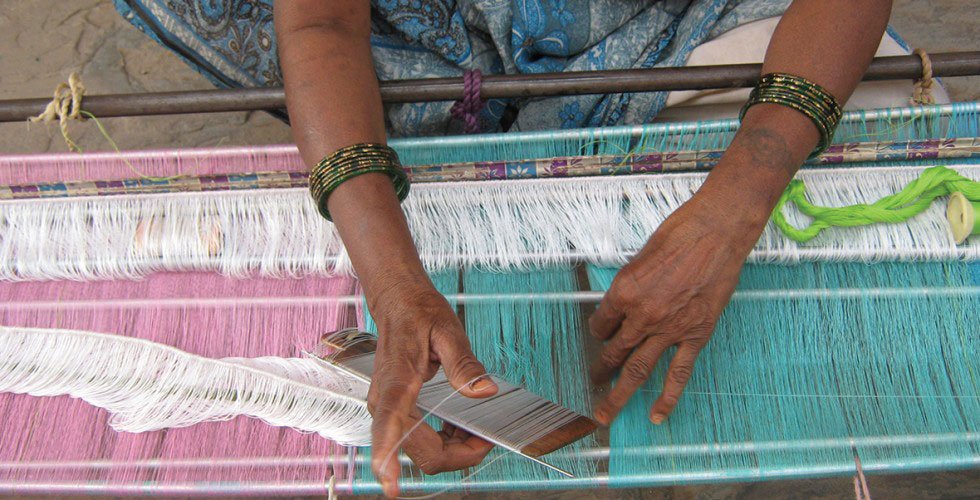
Maheshwari sarees are woven by using wooden looms and are traditionally colored using vegetable dyes which make them expensive (the ones using chemical dyes though less costly are in no way as attracting as far as we are concerned). The popular colors for Maheshwari sarees include dalimbi (deep pink), angoori (grape green), tapkeer (deep brown)  gul bakshi (magenta),  jaamla (purple), aamras (golden-yellow), etc. The pallav or aanchal of the Maheshwari sarees have five alternating stripes of which three are of different colors but two are always white. The zari and the kinari are used to embellish the ones which often have a very rich golden border with two gold bands on the pallav. Mostly, designs of floral and geometric patterns are weaved on saree.

The Maheshwari sarees have a reversible border which makes it possible to wear them both sides. The sarees always have a light cotton cloth which floats on the body thus making them perfect wear in Indian Summers – especially in a place like Madhya Pradesh where summers can be really hot.

The best place to obtain Maheshwari sarees is within Ahalya Fort where Maa Rewa Society has a weaving center. ‘Maa Rewa’  is the name with which people of Madhya Pradesh call the Narmada out of love. Though handloom industry was always prosperous, Maheshwari sarees can trace their popularity to the reign of Queen Devi Ahilya Bai who can be seen donning a beautiful Maheshwari saree in a painting in her fort there. The industry was dying in the 20th century before Richard Holkar and his wife Sally started this weaving project in order to revive the industry of Maheshwari sarees and give employment to the local women to save the dying industry. The sarees have now regained their old popularity. And in fact, the weavers have now diversified into other forms of clothes – dupattas, scarves, shawls, etc. A Maheshwari saree might be a perfect souvenir from the town of Maheshwar. You can find an original saree starting from the price of 3000 rupees


Bagh Print Sarees, Dhar

Located just 70 Kilometers west of Indore, Dhar district is second in our list of three town saree lovers should visit in MP thanks to its tremendously popular Bagh print sarees.

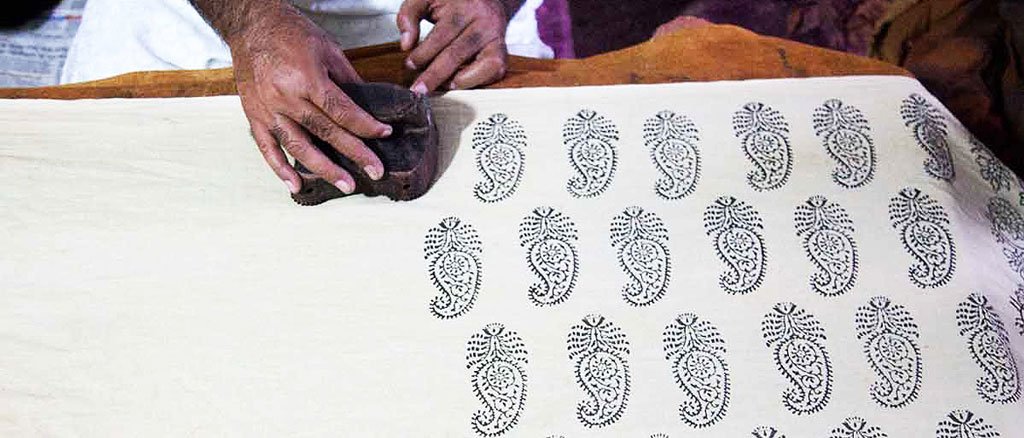
Bagh Print is a traditional styled hand block print that uses natural colors and originated in Bagh town on the shores of Bagh river (hence the name of the sarees), Dhar District. The sarees printed used cotton and silk cloth. Bagh print texture most popularly comprises of repeated geometric and botanical pieces using vegetable shades of red and dark over a white foundation.

The sarees can also be brought from TribesIndia a government of India organization. The prices of original Bagh Print sarees start from 2000 rupees which is nothing if one was to understand the exhausting process the sarees have to go through before they hit the market.

Besides the sarees, the town itself is full of historical spots that make it a minor tourist attraction – a Fort, the tomb of Shaykh Changāl, Pillar Mosque, Kamāl Maulā Campus, Bhoj Shala, Cenotaphs and Old City Palace, a Museum, an Agency House and Jheera Bagh are some of the historical monuments that might interest tourists
Chanderi Sarees, Chanderi

Third, in our list of Three town saree lovers should visit in Madhya Pradesh is Chanderi, a town in Ashoknagar district and location of shooting of Bollywood movies like Stree and Sui Dhaga. A 108-kilometer journey on National Highway 44 from Jhansi will land you in the historic town of Chanderi. Chanderi offers countless attractions to tourists who are looking for an offbeat destination – mesmerizing views of hills, lakes, forests, as well as Bundeli Rajputana monuments and Jain temples, are among its attractions. Its chief attraction though is its Chanderi sarees.

The Chanderi sarees trace their beginnings as far back as the around the 13th century. Made by using silk and cotton as its material, these sarees famous for its gold embroidery Zari and Brocade. Traditional coin, floral art, peacocks and geometric designs are woven into different Chanderi patterns. It is a lightweight sari with a luxurious feel to it. The cost of original Chanderi saree starts from Rs. 5000.
Don’t forget to pick the above while in Madhya Pradesh.

Categories
Culture Solo Women Travel Spiritual Hubs

Amarkantak : The Spritual hamlet in Madhya Pradesh

Amarkantak is one of the most beautiful tourist attractions of Madhya Pradesh. Besides being a beautiful hill station with mesmerising views of natural vegetation, being home to wildlife and a place of pilgrimage, the place is also of importance because it is the place where the fifteenth century poet Kabir whose couplets have grown proverbial at many places all over Indian, is said to have used it as the place of his meditation. Kabira is, in fact, not the only saint who used this place for meditation. Several other sages have used this place for purposes of meditation – Bhrigu, Darvasa, Kapil to name a few. And even after centuries of civilization, the place continues to hold a great deal of peace to it, as if it still continues to live in its golden age.
How to reach Amarkantak?

By air

The nearest airport is at Jabalpur which is located at a distance of nearly 300 kilometers

By rail

Located at a distance of about 40 km from Amarkantak., the Pendra Railway station is the nearest railhead.

By road

The best option to reach Amarakantak is via road. It enjoys good public transport connectivity with nearby places like Shahdol, Umaria, Jabalpur, Rewa, Bilaspur, Anuppur, etc. We recommend coming here by taking your bus from Pendra road which is just 17 kilometers away or Anupur which is located at a distance of 48 kilometers.

Where to stay?

Though there are no hotels worth special recommendation here, there are options enough that will help spend your time with ease. We recommend trying staying at Mrityunjay Ashram. The Ashram offers free accommodation with an option to donate any sum you may be inclined to. The peaceful atmosphere of the ashram was what attracted us to it. It is clean and had a serene atmosphere to it. However, you must adhere to the spirit of the Ashram and live in a relatively disciplined way during your stay here.

Places of attraction

Amarkantak is full of several major attractions. Let us take a look:

The Narmada Temple

The Narmada is considered the holiest of all the seven holy rivers of India. It is said that even the holy river Ganga takes a form of a black cow and takes a dip in the Narmada every once in a while in order to cleanse itself of sins of sinners that it has absolved.

According to Hindu Mythology, the Narmada, which is also affectionately called Maa Rewa in Madhya Pradesh, was born of the sweat of Lord Shiva when he was performing the great celestial dance of destruction of worlds – the Tandava Naritya. Thus it has been called the daughter of Lord Shiva or Shankari.

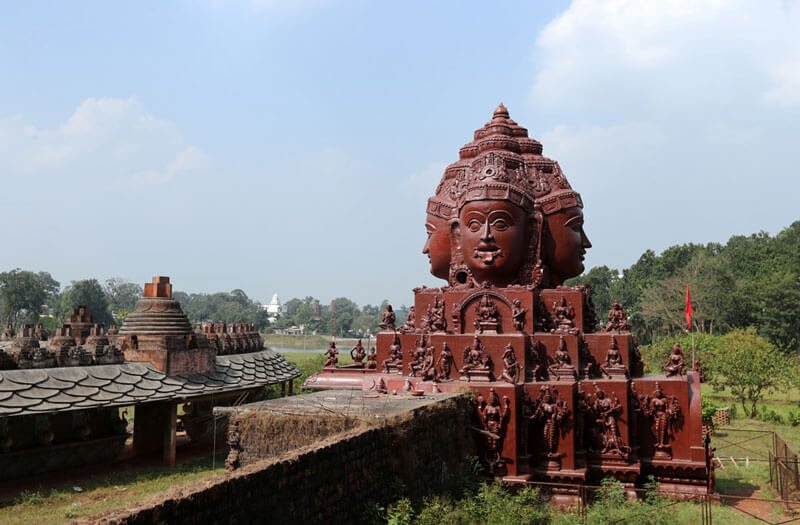
Amarkantak is the birthplace of river Narmada, Narmada Kund, is located and thus the Narmada Temple of great prestige among Hindu and an important place for pilgrimage among local Hindus.

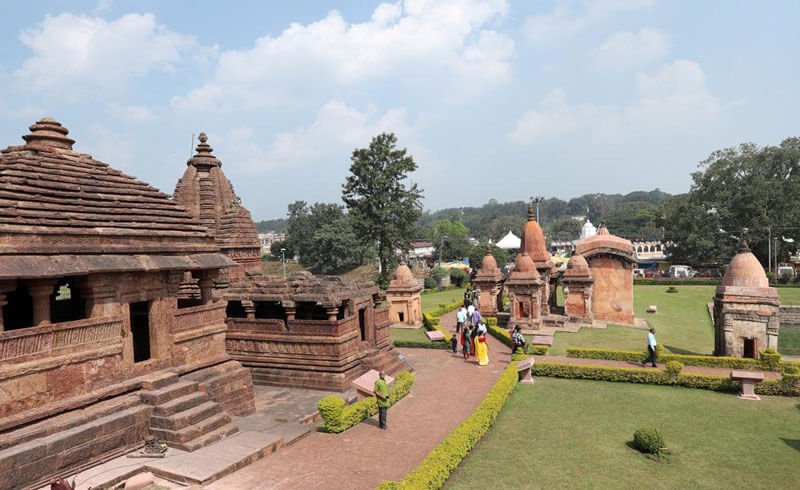
The temple is surrounded by several other temples in the region. These temples are called Kalachuri temples – named after Kalachuri kings who constructed them.

Achanakmar-Amarkantak Biosphere Reserve

Amarkantak is a part of Achanakmar-Amarkantak Biosphere Reserve whose extents entail Achanakmar Wildlife Sanctuary on one end and Kanha Tiger Reserve on the other hand.  Tropical Moist Deciduous fill this reserve with rich vegetation and Teak and Bamboo are some of the recurring plants. Achankumar Wildlife Sanctuary is just 19 kilometers away from here.

A number of animals roam freely in this region including the royal Bengal tiger, Indian leopard, gaur, Indian jackal, chital, striped hyena, Ussuri dhole, sambar, nilgai, chinkara, blackbuck, Indian muntjac and wild boar, four-horned antelope, sloth bear,  four varieties of monkeys among other species.

Kabir Chaubartra

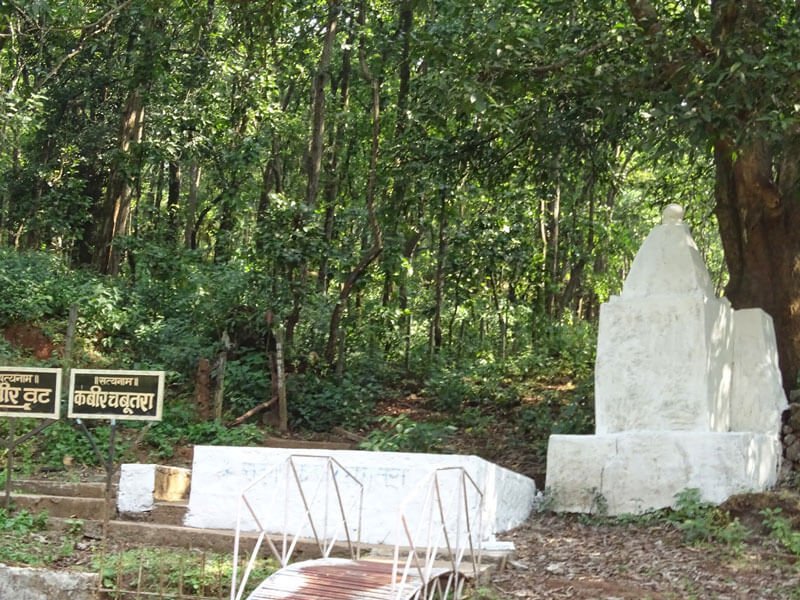
One of the biggest attraction of Amarkantak for tourists is Kabir Chaurbarta. This relatively peaceful place is where the great saint-poet Kabir, the author od couplets called Dohas that have got the proverbial reputation in India, meditated. The place is a little unkept but overall a serene peace surrounds one here. Its location within jungles also offers a good trekking opportunity.

Kapil Dhara

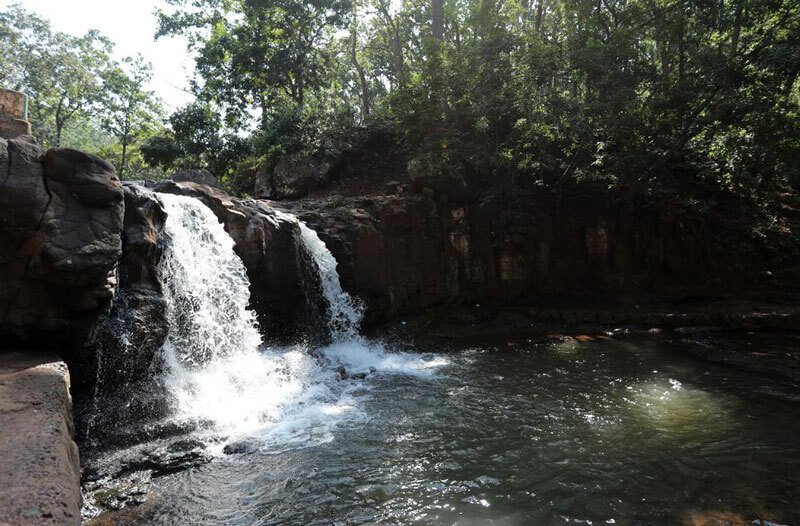
Kapil Dhara is a waterfall located at a distance of mere 7 kilometers from Narmada temple. The serene beauty of this waterfall which got its name from Sage Kapil, from whose meditating place it was born, is what makes it worth seeing.

Dudh Dhara

Dudh Dhara is another waterfall located at a distance of about a kilometer from Kapil Dhara and is said to be located at the place where saint Durvasa meditated. It is a nice little spot, great for a family picnic.

Son Ungam Temple

Son Ungam literally means the origin of Son river. It is thus a small Shiva temple located at the source of Son river. The experience of some of the visitors can be pestered by monkeys. We recommend you only visit it if you are a Hindu devotee

Amareshwar Mahadev temple

Amareshwar Mahadev temple is a really big temple dedicated to Lord Shiva. What makes visiting this temple a memorable experience is the 11 feet long shivling. This temple like many others in the region is still under construction.

Bhrigu Kamandal

Bhrigu Kamandal is a deceptively small cave where, according to the legend, Saint Bhrigu used to stay during monsoon. He needed water for Pooja so he requested water from the rock. The rock gave him a hole and you could put your hand in it to get a bit of water. You can then pour this water on Shivling here. This rock that gives water is still there and is of great spiritual importance to Hindus. Even reaching here will involve some trekking experience

Conclusion

Amarkantak has the rare blessing of being unknown to much of the world. And thus, despite its countless attractions, it continues to enjoy the peacefulness missing in most attractive tourist spots. Thus if you are looking for a quiet holiday – especially if you are a devoted Hindu, we highly recommend a trip to Amarkantak. This is all from us today, we hope this helps you add Amarkantak to your travel plans. J

Categories
Culture North India Spiritual Hubs

Everything you would want to know about Vaishnodevi !!

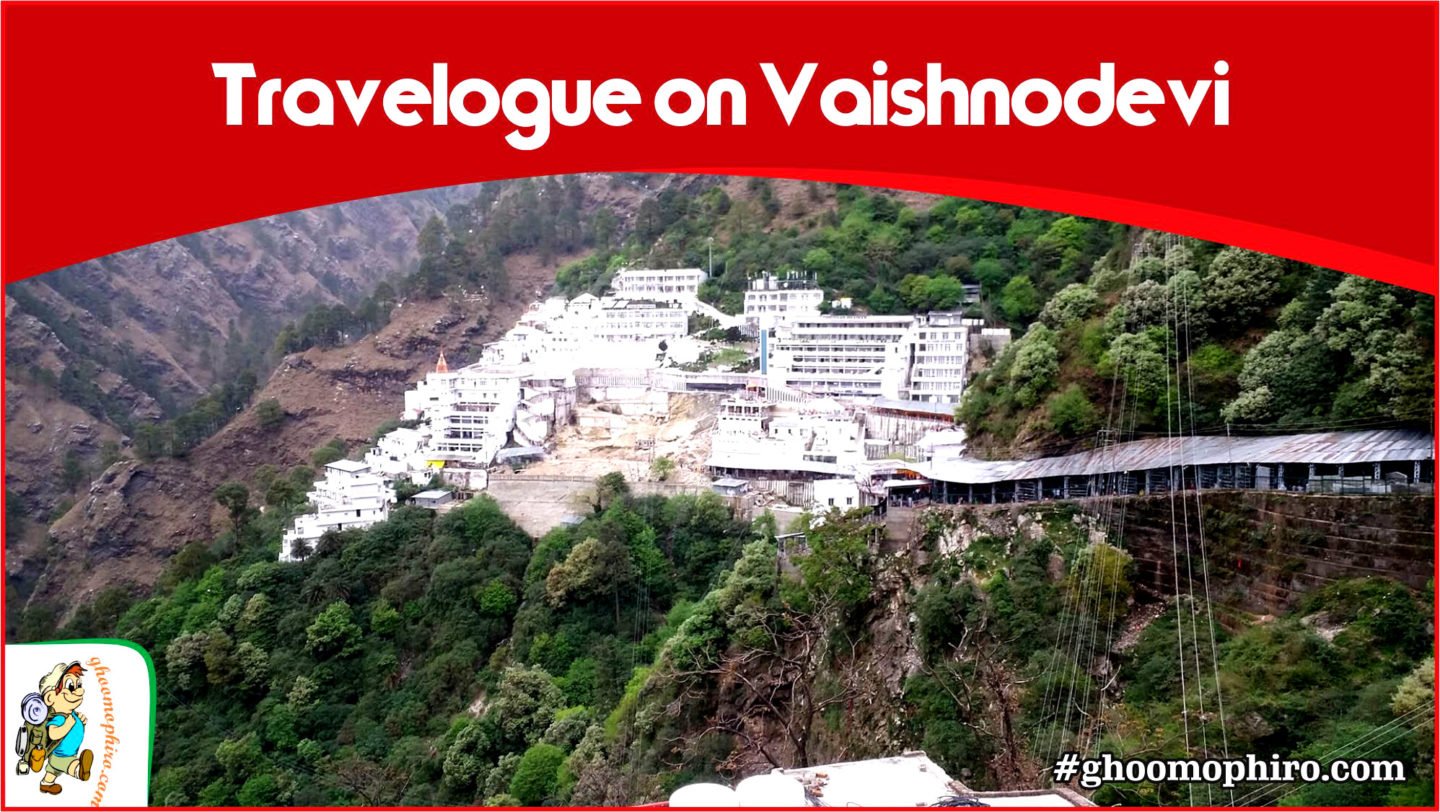
Maa Vaishno Devi temple is one of the most important of several manifestations of Adi Shakti. Its temple in Katra at the Trikuta Mountains in the Indian state of Jammu and Kashmir is of great spiritual importance to Hindus. In December last year, we Ghoomophiro sisters decided to go on a pilgrimage and have Darshana (that is enjoying the privileged sight of), Vaishno Devi. Here we bring you an account of our journey along with all the details you will need to smoothen up your travel plans if you, too, intend to visit this glorious temple.

The location of the temple

Mata Vaishno Devi temple is located at a height of 1,560 m above sea level in Himalaya’s Trikuta hills in the Indian state of Jammu & Kashmir. The nearest town to the temple is Katra which is in the Reasi district of Jammu and Kashmir State.

What is the best time to visit Maa Vaishno Devi temple?

The Maa Vaishno Devi temple is opened throughout the year and meteorologically speaking the best time to visit is Summer (when the region offers a cool break from the heat of summers) and, in case you wish to enjoy the snow, around the new year. However, the temple is immensely popular among the North Indians and these are also times when the temple is too crowded and you might be asked to wait and this wait has been know to go up to 20 hours. This is because the capacity permitted for yatra is 30 to 35000 yatries and this capacity is easily reached during the peak seasons and no new registrations are made during the waiting period. The experience itself might feel rushed.

Thus, in our opinion, avoiding the crowds, in this case, should be a bigger consideration that choosing times of a good climate. The crowds peek during times it is likely to be school holidays – summer breaks, winter breaks (Christmas to the first week of the new year), end of the school year breaks, as well as the weekends of the peak summer season. Thus those are the times you should avoid if you wish for a smooth and comfortable journey. The best time to visit the temple is to check the shrine’s site (https://www.maavaishnodevi.org/) and check the yatries (pilgrims) visiting that day. If the number falls below 18000, you can expect a smooth journey.

We visited the temple within the first week of December. One of the major advantages of visiting the temple in the winter is that original Ma Vaishno Devi Cave is also opened in the winter and this cave offers a unique mystical experience.

Where to stay?

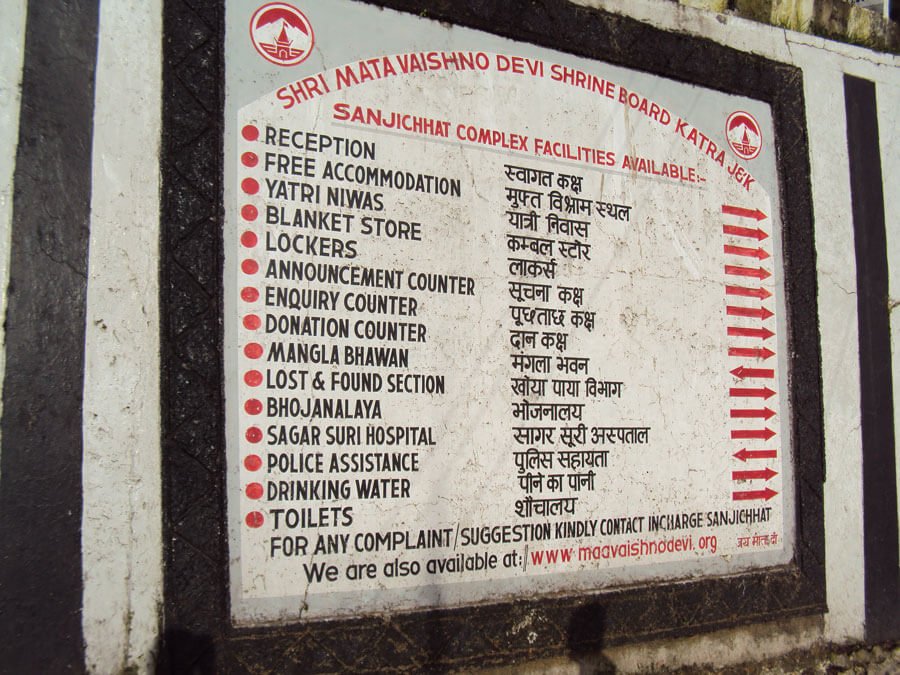
Katra has a number of accommodation options for pockets of all sizes. You can also get a rented accommodation at Enquiry and Reservation Counter at Niharika Complex near bus stand for staying at Katra, Adkuwari, Sanjichhat or Bhawan – and it is this option we took.

What to wear?

Wear the clothes according to the climate – bring raincoats and umbrellas in winters and warm woolen clothes in winters. An important point here is that you bring along good hiking shoes and, if need be, walking stick to assist you through the hike to the temple. These accessories (umbrellas, raincoats, walking sticks, etc) are also readily available in Katra and along the hiking route.

We made our trip in the first week of December

How to reach Maa Vaishno Devi temple?

By road

There is a 13.5-kilometer hike from Katra. If you are physically fit enough, we highly recommend making this hike on foot because that is how you lose yourself to the spirituality of the place. Anyway, this is what we did.

Katra is well connected to  Jammu, New Delhi, etc (as well as many other parts of India) by bus service and Jammu, in its turn, is connected to major cities of India

By Rail

The nearest railhead is at Jammu but Katra’s railway station is well connected too.

By air

The nearest airport to Maa Vaishno Devi Temple is the Jammu Tawi airport. The airport is 46.7 km away via NH 144. Taxis on hire and Public Bus services are available from Jammu Tawi to the temple.

Commuting within the proximity

Please note that if you are traveling by air or rail, you will have to change the mode of transport from Jammu but in case you are traveling on road whether by public, owned or hired vehicle, the journey is shorter there is an option of taking a by-pass from Kunjwani which is nearly 10 km. off Jammu and head straight to the base camp in Katra. But that said, you might be interested in landmarks within the temple.

The Myth Behind the Holy Cave Temple

According to legend, a priest named Pandit Sridhar of Hansali village had organized a Bhandara as a religious offering to the goddess. The goddess Maa Vaishnavi was pleased with his devotion and gave her a Darshana before disappearing again.  Pandit Sridhar was saddened by her disappearance and so he vowed to fast until death hoping for another Darshana. The goddess appeared again in his dreams and gave him instructions on how to reach her abode in the cave at the Trikuta Hills. Pandit Sridhar found the Holy Cave and was there met by Goddess Vaishnavi who appeared in her true form and blessed him with four sons. She also made him the official custodian of the Holy Cave and,  it is his successors who continue to hold custody of temple.

The Hike

We reached Katra bus stop at 3 p.m. on a Thursday afternoon. We registered ourselves at Registration Counter near the Katra bus stop. The registration is done by Shri Mata Vaishno Devi Shrine Board which is the only authority legally permitted to register yatris. Upon registration, we are given Yatra Access Card/yatra slip/yatra parchi which is the written permission to start the yatra. Please note that you can not do the yatra without this permission.

The permission also includes a travel insurance against accidental death (a rare possibility) – for amounts up to 3 lakhs for grownups and 1 lakh for children. As you can see, Shrine is really thoughtful about pilgrims. It has also established information booths throughout the trek to assist pilgrims.

The time allotted was two hours later which was just enough time for us to check in at the accommodation we had rented and freshen up a little. Checking in now will save us from losing for a place of accommodation later when we come back from yatra tired after hours of hiking. It also helped to rid of extra luggage so we could hike lightly. You could also deposit your unnecessary luggage in a room kept specifically for the purpose and recollect them on way back.

Within allocated time, we were at Yatra camp and the atmosphere that is a common characteristic of all Hindu Devi pilgrim places greeted us. The Temple or Bhawan is 13.5 km from Katra. This hike is done by many of pilgrims on foot often wearing a head clip saying ‘Jai Mata Di’ – we wore those too, and singing devotional songs and sometimes even dancing a little. We hiked by foot and highly recommend you do the same – to have the full experience of the yatra.

However, if you still wish otherwise, there are a number of alternatives available –  ponies, electric vehicles, ropeway, palki, etc. You can hire a Helicopter service which will cover 9.5 kilometers of the distance up to Sanjichhat.

At Ardkunvari, which is the midway point of the trek, you can take one of two paths. The first is a normal like like before or you can take a detour which will take you through Garbhjoom, a tiny cave which is said to symbolize the journey of a fetus in the womb of the mother.

Darshana

The hike lasted 5 hours for us (the time is variable depending on the speed with which you walk). Because of moving in the company of so many pilgrims, it doesn’t seem so long. The Maa Vaishno Devi temple that greeted us at the end was a sort of cave – which is rather narrow and thus it is not possible to visit it in groups – rather you take Darshana in a sort of perpetually moving queue.

The goddess appears in the form of three Pindies which stand for goddesses Mahakali. Mahasaraswati and Mahalakshmi. They are always adorned with fresh flowers and gold crowns. I offered my prayers and exited the cave, collecting Prasad on my way out.

The Darshana last only a short time but to a devoted mind that is enough.

Nearby sights – Bhairon temple

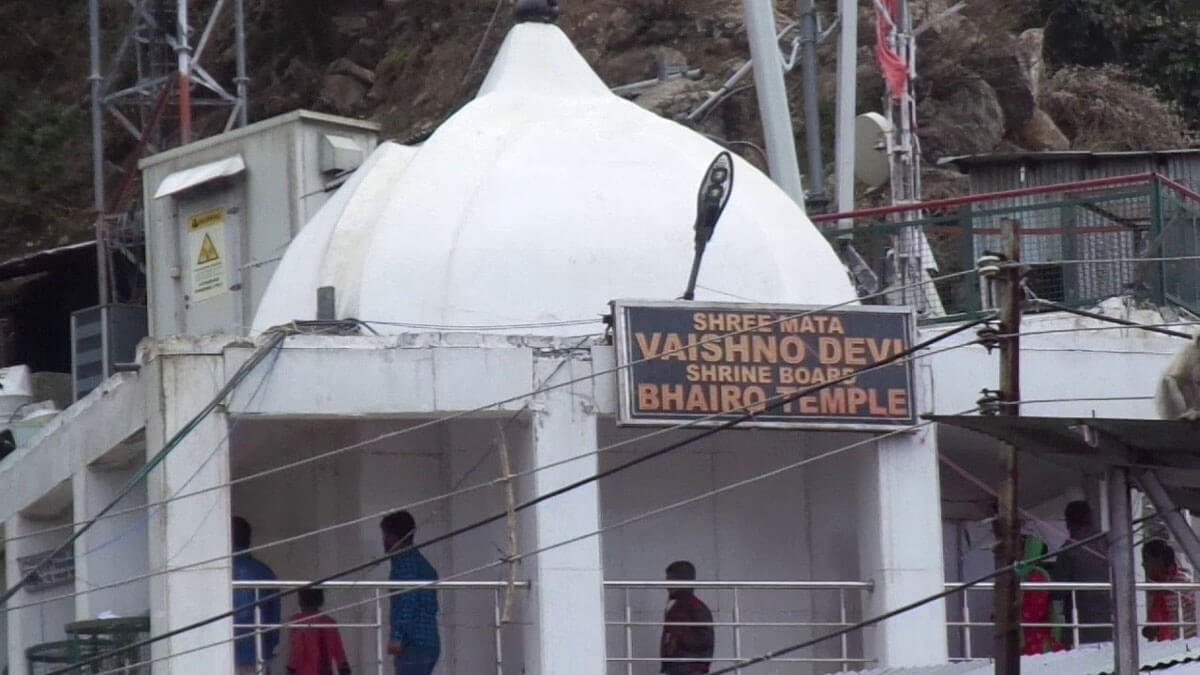
The Bhairon temple, dedicated to Lord Bhairava, a form of Lord Shiva, is further 1.5 km away from the Vaishnavi Devi shrine. It too is built inside a cave and some pilgrims consider their yatra incomplete without a visit here. After visiting Bhairon temple, we made our way – hiking down is quicker but it still needed us three hours.
Traveling tips

  1. Confirm the rates of the Porters, Ponies, Palanquins, etc before hiring them and make sure that they carry a valid registration card – note down their registration number if you are entrusting them with your valuables.
  2. Video cameras and other electronic equipment are not allowed on the track.
  3. Respect the sanctity of the pilgrimage and respect the sentiment of fellow pilgrims. Avoid loud dresses, vulgar language or offensive talk or gestures.
  4. Respect the sentiments of co-pilgrims.
  5. Cooperate with the security agencies.
  6. Avoid resting near landslide-prone areas.
  7. Avoid smoking, chewing tobacco or betel leaves, spitting, spreading litter, playing cards, etc.
  8. Consumption of liquor, intoxicants and non-vegetarian food is strictly prohibited.
  9. Do not litter
  10. Beware of thieves and pickpockets. Don’t carry too much cash, jewelry or valuables.
  11. Report unclaimed objects to security personnel.
  12. Don’t encourage begging.
  13. Obtain cash receipt for any cash paid at the Shrine Board outlets.
  14. If you have high blood pressure or heart or asthmatic problems, you must first get clearance from your doctor before starting the journey. In that case, you should also avoid stairs
  15. Proceed for Darshans only when the Group number is announced.
  16. Don’t use soaps, shampoos, oils, etc while bathing at Ghats.
  17. Wear clean clothes before leaving for the Darshans.
  18. Maintain silence within the cave.
  19. Make donations in boxes kept for the purpose only and not in front of idols or some person.
  20. Do not offer or pay any tip or Dakshina to any employee of the shrine.

So when are you packing bags to the holy shrine?

Categories
Culture North east Spiritual Hubs

Why visit to Ma Kamakhya temple, Guhawati is special?

India is the land of temples. A number of spectacular temples are of religious importance and, even if you are of a secular orientation of mind, amazing architectural works and sites that boost of amazing legends. Ma Kamakhya Temple of Guwahati in Assam is one such temple. It is one of the most important tourist attractions in Guwahati.

Ma Kamakhya Temple is one of the oldest of the 51 Shakti Pithas and an important place of pilgrimage, especially among Tantric worshippers.

Today, Ghoomophiro is going to tell  you all there is to tell you about this amazing temple:

Location of Ma Kamakhya Temple

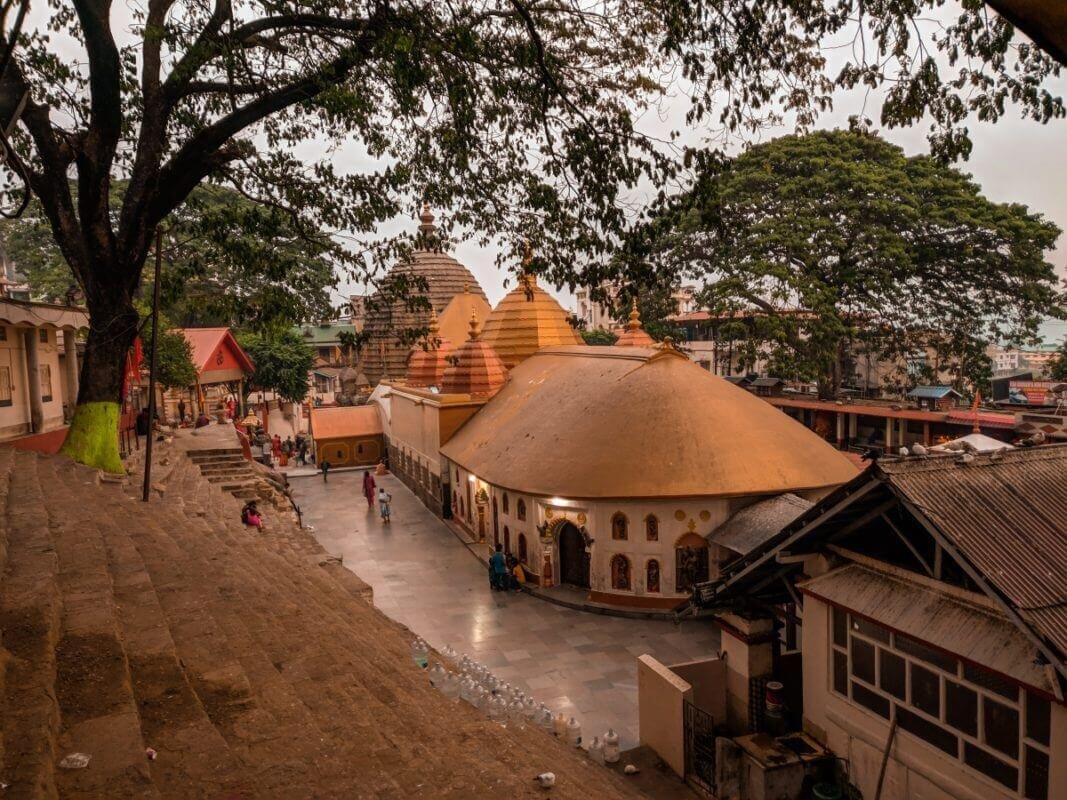
Ma Kamakhya Temple is located in a temple complex on Nilachal Hill in the western part of Guwahati city in Assam, India. The complex has ten individual temples dedicated to the ten Mahavidyas of Saktism: Kali, Tara, Kamakya, Sodashi, Bhuvaneshwari, Matangi, Bhairavi, Chhinnamasta,  Bagalamukhi, Kamalatmika, and Dhumavati.

Best time to visit Ma Kamakhya Temple?

An important event is Ambubachi Mela which is celebrated during the monsoon season around the middle of June. It is thought of as the celebration of the yearly menstruation course of goddess Kamakhya. Another important event is the navratras when Durga Pooja is held during a five-day long festival. However, the monsoon might cause transit problems. Guwahati has the most pleasant weather during the winter months from October to March. The temple is open all days of the year from 08:00 A.M. to 1:00 P.M. and 2:30 P.M. to 5:30 P.M. The temple is less crowded during the afternoon hours.

How to reach Ma Kamakhya Temple?

Guwahati boosts of its own international airport – Lokpriya Gopinath Bordoloi International Airport. It also enjoys brilliant rail and road connectivity. Once in Guwahati, you can catch a bus from the main bus stand of the city that takes you to the temple. The city also has good taxi services.

Where to stay?

Guwahati offers hotels and accommodations services of all budgets and forms.

The mythological importance of Ma Kamakhya Temple

According to an important legend of Hinduism sourced from Kalika Purana, this was the place where Sati and Shiva held meetings for amorous relations.

The origin of worship ‘Shakti’ at the site is associated with the tragic end of GoessSati, the wife of the ascetic god Shiva and daughter of the Puranic king Daksha. Daksha, who was not pleased with his daughter’s choice of husband, did not invite Shiva or Sati when he performed a grand Yajna for all the deities. Enraged, Sati threw herself into the fire, knowing that this would make the sacrifice impure. Griefened and enraged by the loss of his wife, Shiva put her body over his shoulder and began his tandava  – Shiva’s great dance of cosmic destruction. The other Gods, afraid of the destruction of the world, implored Lord Vishnu to pacify Shiva.

Vishnu sent his discus Sudarshana chakra to cut off, one by one, 51 parts of the corpse of Sati until Shiva was left without a body to carry. Upon noticing this, Shiva calmed down and settled to do Mahatapasya (great penance). ]Shive would later marry reincarnation of Goddess Sati, Parvati.

The places where each of 51 pieces of Sati’s corpse are known as ‘Shakti Peeth’. Ma Kamakhya temple is one such Shakti Peeth. It is the peeth where Sati’s yoni (‘womb’) fell to Earth. The name ‘Kamakhya’ figuratively means ‘renowned goddess of desire’.

Kalika Purana counts Ma Kamakya temple among one of the four primary shakti peeths. The other three include  –  the Vimala Temple within the famous Jagannath Temple complex in Puri, Odisha; Tara Tarini, Sthana Khanda, near Brahmapur, Odisha (that originated from the breasts of the Corpse of Mata Sati) and Dakshina Kalika in Kalighat, Kolkata, in the state of West Bengal, that originated from her limbs.

In other legends, the temple has been associated with the goddess Kali.

History of Ma Kamakhya Temple

Though the site might have attracted the pilgrim much earlier, the earlier part of the architecture dates back to ninth century A.D. It is in tenth century A.D. that the temple grew in prominence under later Palas, especially gaining the popularity among the tantric worshipers. Kalika Purana was composed around this period too. The temple was destroyed by invaders in the 16th century and was reconstructed by rulers of Koch density.

Entry Fee

The entry is free of cost but you can get a VIP ticket for some fee if you wish to avoid long queues.

The architectural design of Ma Kamakhya Temple

The Ma Kamakya temple consists of the following four chambers: one garbhagriha and three mandapas. These madapas are locally called calanta, pancharatna, and natamandira aligned from east to west.

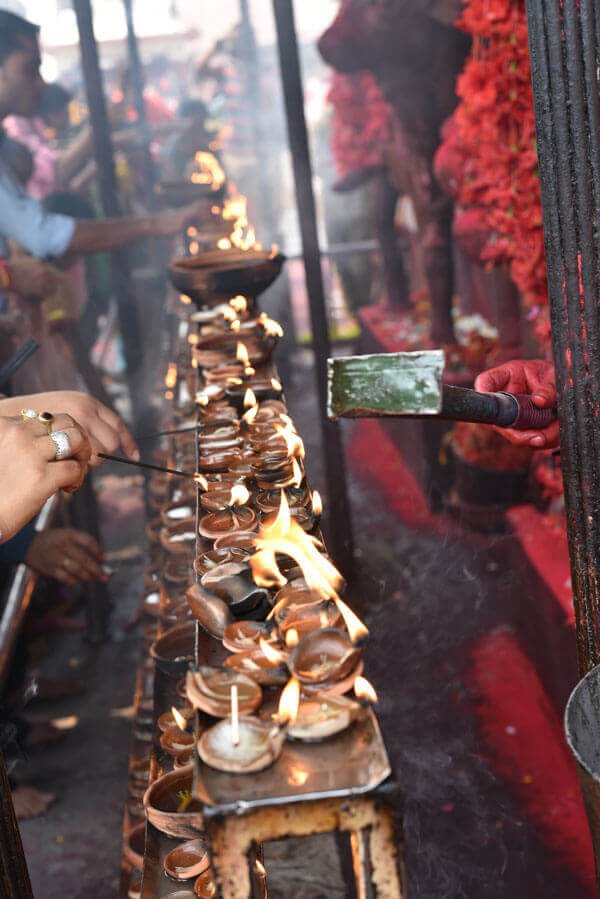
The garbhagriha is the main part of the temple. It is a sort of cave below the ground level. It is rather small and dark (only a couple of lamps provide the light) and is reached by narrow steep stones starting from the main hall.  The path is very narrow and no more than two or three people can pass it side by side.

The garbhagriha has no image or sculpture. All it has is Yoni or a vagina-shaped rock fissure about 10 inches deep, It usually remains covered with the flowers and other offerings, that is considered as the main deity This fixture keeps getting filled again and again with an underground water spring which pilgrims often carry back as a sort of prasad.

The temple is just one of several in the complex all of which are devoted to goddesses.

Food and Souvenirs

Like all major Hindu temples, Ma Kamakya temple boasts of shops outside its premises which sell souvenirs and different kinds of Prasad.

Things to remember

Though cameras and mobiles are allowed, photography is strictly forbidden. And of course, like most Hindu temples, shoes are not allowed. Though there is no dress code and you can wear western clothes, too much show of skin might attract frown from some of the narrow-minded pandas. Pandas, by the way, are the priests in orange-colored robes who offer their services at the place. Also, it might be disturbing to many, including Hindus, buts sacrifices of goats are regularly made in the temple complex and it can be a gruesome sight.

Conclusion

In a time where feminism of the country has finally learned to question the taboos surrounding the mensuration, a temple devoted to the ‘bleeding goddess’ (as Ma Kamakya is locally called) and that celebrates through a mela the annual mensuration cycle of a goddess gains great importance. One is forced to wonder whether the temple authorities forbidding the entry of mensurating women citing their ‘impurity’ are coloring Hinduism according to their own narrow-mindedness.

That is all from us regarding the most famous temple of Guwahati. We hope you enjoy this post.

Categories
Culture Historical

#ghoomophirosisters visit to Lumbini

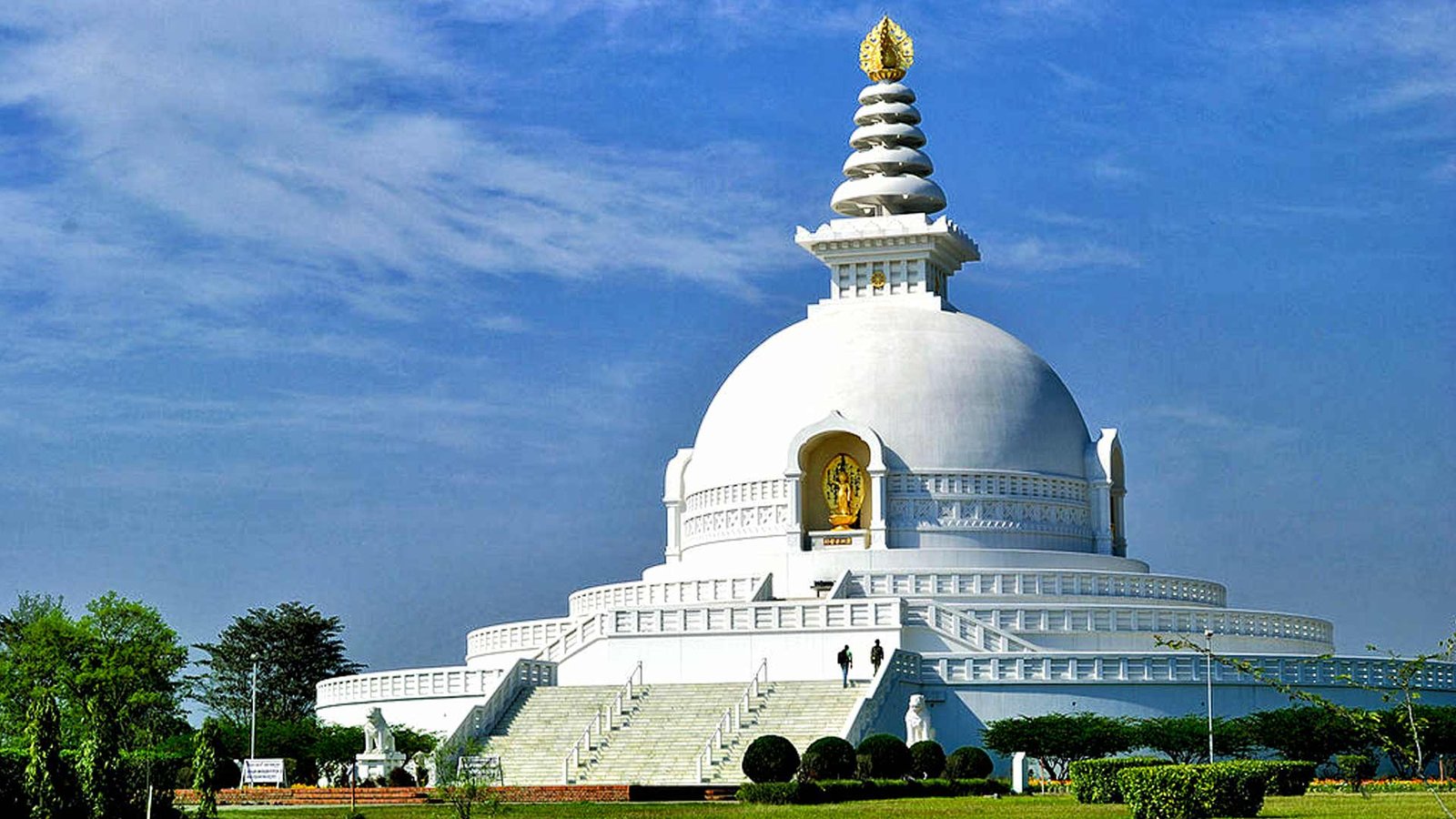
A trip to Nepal is incomplete without submerging oneself in the culture and beauty of the place called Lumbini. Known mainly for its deep connections with the story of Lord Buddha, the place is close to the bordering nation of India and is a UNESCO World Heritage site. Buddha was born here, in-between the homes of his parents, in a sacred garden, while her mother was travelling.

Maya Devi

The mother of Lord Buddha, Maya Devi is greatly celebrated in the region of Lumbini. Her importance is manifold in the Buddhist literature and it speaks of the birth of Lord Buddha. It is believed that she dreamt of a white elephant and foresaw that she would give birth to ‘the great one’. Another important event she is associated with is the birth of Lord Buddha during travels when she was heading to her parents’ home in Devdaha from the place of her husband who was king Sudhodhan from the Sakya Clan. Many efforts were made for the preparation of the delivery.

Legend of Buddha’s Birth

The scene depicting Buddha’s birth can be observed in many Buddhist sites. The dream scene of Maya Devi and Buddha’s birth are two important visual incidents. In the scene of Buddha’s Birth, Maya Devi is seen accompanied by Lord Buddha’s foster mother- Prajapati Gautami.

The scene is shown as Maya Devi is at a pond in Lumbini, holding the branch of a tree above her as she gave birth in a standing position. It is believed that as soon as Buddha took birth, he walked seven steps and lotuses bloomed with each footstep, wherever his feet touched the ground. Along with that, people are of the faith that when he was born, Gods of three worlds: Brahma, Vishnu and Mahesh came to receive the child. This is considered to be the beginning of the many miracles of Buddha’s life.

Maya Devi Temple – Lumbini

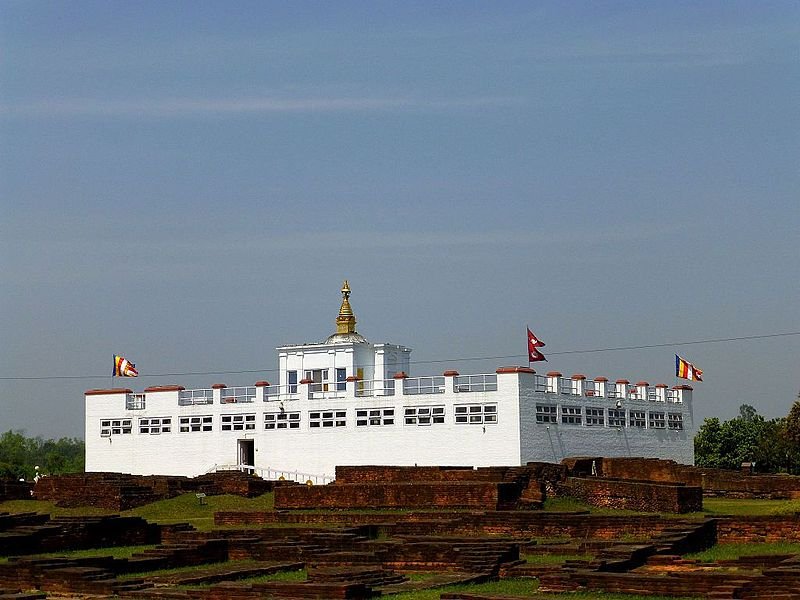
Maya Devi Temple is an ancient Buddhist temple and also a UNESCO World Heritage site. The temple is also known by the name of Maha Maya and the place where it is situated in Lumbini referred to as Pradimoksha Vana. While the temple laid deteriorating in the last few centuries, in recent years archaeologists have started excavation of the place and conserving all the findings.

There are also other important places to see as well such as Bodh Gaya, Sarnath, Kushinagar, Rajgriha and Vaishali

Things to see in & around Maya Devi Temple at Lumbini

Known mainly as the place where Buddha was born, there are many monuments to see inside the Maya Devi Temple.

Maya Devi Temple enclosure

As we entered the Maya Devi temple, walking on the wooden walkway around ancient ruins, looking at the large bricks arrangements, we were awe-struck and yet bedazzled by what we say. We could not quite make out what the place was supposed to be like. It was unlike any hall, monastery or temple. We could not tell if the place had been found like that or reconstructed over years. The temple enclosure with its white walls and a Buddhist Stupa on top that has the ruins of the ancient Maya Devi temple in it gave us a sight to behold.

Most of these structural ruins belong to the Gupta period i.e. 5-6th CE.

Nativity Sculpture and Marker Stone

At the end of the hall, there is a stone sculpture which has been rubbed down to such extent that nothing is clearly visible. It is believed that the statue is rubbed flat by the touch of so many devotees. Yet, this nativity sculpture dominates the aura of the place.

The Marker stone is situated beneath the nativity sculpture. A few feet below on the ground level, there is this irregularly shaped stone that has the marks of a human foot on it. It is believed to be the footprint of Lord Buddha but that is entirely a matter of faith. The stone is enclosed in bulletproof glass and is allowed to be looked upon. It is surrounded by currency notes of all kinds.

The marker stone has a long queue standing for just one look. One has to wait a long while to finally glance upon it and that too for barely a couple minutes.

Ashoka Pillar at Lumbini

Ashoka Pillar is a sight to behold. Standing tall at the back of the Maya Devi Temple, it is said to have been erected by Ashoka himself when he visited Lumbini. The inscription on the stone says – ‘Hida Budhe Jate Shakyamuniti‘ which means that Shakyamuni Buddha was born here. It is also mentioned that because Lumbini is the birthplace of Buddha, their taxes were reduced.


Pushkarni or the Sacred Pond

There is a beautiful and serene pond on the side of the Maya Devi temple. This is considered to be a sacred pond, the one in which Maya Devi took bath after giving birth to Lord Buddha. That gives a level of importance and holiness to the pond for the devotees. The pond that exists there on the date, is a recent reconstruction.

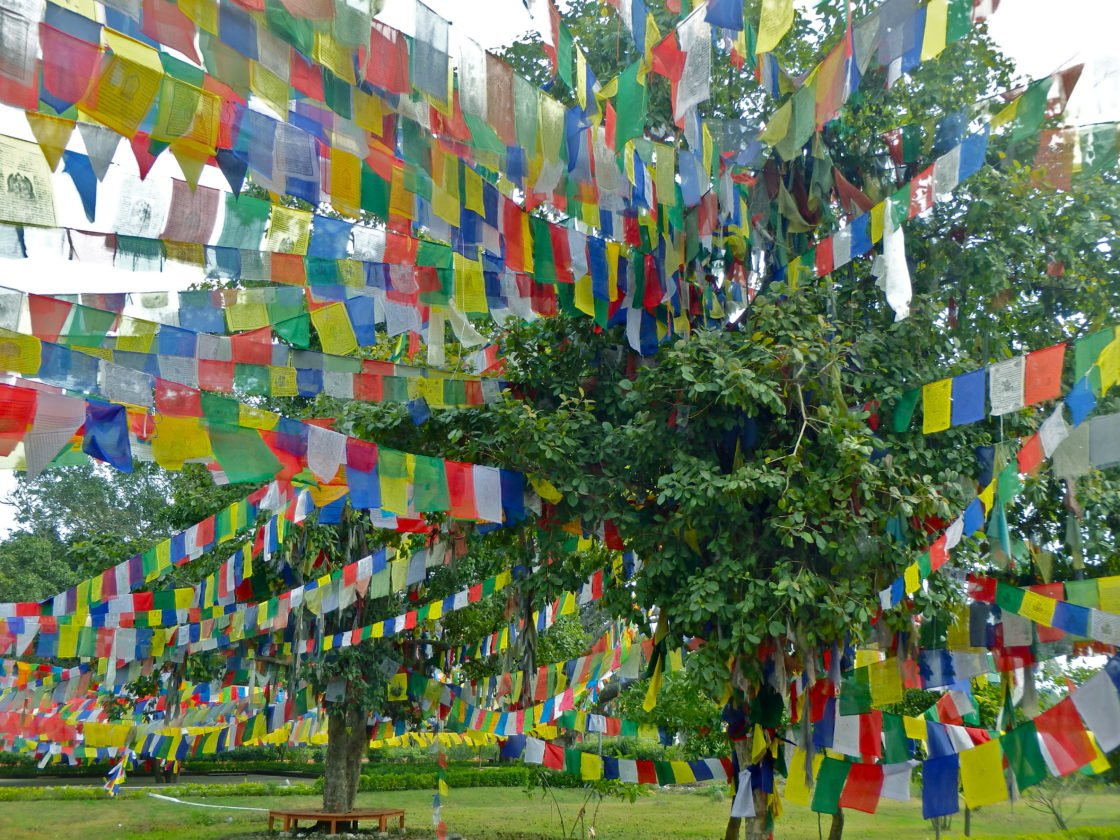
Near the pond, there exists a large Bodhi tree along with a shrine dedicated to Lord Buddha. There are plenty of other trees as well with round wooden benches surrounding them. People sat on these benches to relax or meditate. Walking near the pond, one sees the incredible sight of various colourful prayer flags tied to trees.

Standing beneath the barrage of colours, one sees a marvellous view of the pond and the Maya Devi temple. It creates a serene and joyful atmosphere all around.

Votive Stupas

There are many stupas, some Votive (built by the devotees after their wishes come true), some ancient (dating back to 1-3rd CE), some from different eras, surrounding the Maya Devi temple. The stupas vary in size and in their construction.

Some of the stupas have also deteriorated and close to ruination, though not as badly as the temple itself. It is not quite true that they would have been kept preserved. Probably, they haven’t been touched by people too much and thus still are better preserved. The votive stupas stand like pieces on a chessboard, an interesting sight to behold. It was a total set of 16 stupas, some circular and some square in shape.

Worship at Maya Devi Temple

On one of the evenings that we were there, we saw the Temple come alive with people from different places visiting. There were Buddhist monks from different countries performing their rituals.

Among them, was a group of Sri Lankan Monks who sat silently as the head monk went on to narrate the life and teachings of Lord Buddha for everyone. There was also a Chinese group that wore black robes and worshipped the images of young Lord Buddha. They also lighted lamps around Pushkarni, making the place light up like the eve of Diwali. Another group began praying and chanting hymns.

While the square stupas were being decorated with marigold flowers, another group decorated the Ashoka Pillar using a bright silk cloth. The Monks kept coming in and chanting along with other devotes. It was at that time that we felt the temple came truly alive with all the spiritual energy and peace. There was such devotion and energy in the atmosphere that it often felt overwhelming as we quietly observed it. It was at that moment; seeing the look of devotion on people’s faces that we felt that our trip to Lumbini was complete.

You need to walk a lot to see these temples

Though the temple and the places all around are open to visitors and travellers, they are not entirely tourist friendly as they are meant mainly for monks, Buddhist followers and people who live there. As an outsider, the most one can enjoy is the view and the architecture of the place, vaguely knowing the story of Buddha or the importance behind a particular structure. One can just admire the décor, statues as it represents the country and the religion.

But there won’t be much information about the temple itself or the religion that one can come across easily.

The best method to make the most of your trip would be to pick the particular temples you want to see and then focus upon those. If you try to see everything, you will end up disoriented after a while. Unless one has deep knowledge about the religion, there is not much that one would be able to appreciate about the temples apart from the structure and architectural design.

The Nepalese temple has a huge Buddha statue which is beautiful to look at and the German temple has murals. The Chinese temple is of beautiful red and yellow colour.

Lumbini Development Trust Museum

Lumbini Museum is not really a popular spot among people and with good reason. Standing at the end of one canal, it is a nicely shaped building of a bright red color. Though at first glance, it may look like a Buddhist Vihar, one would find no similarity upon entering. The tickets are bought from another building and you would have to cross a pond for that.

The Museum building may be beautiful but the reason why it sees such lack of crowd is that there are no real artifacts that it houses. There are plenty of replicas from other Buddhist sites like ones in Andhra Pradesh but he replicas lack the wonder and awe of the real stones. There are also some pictures of various popular Buddhist sites but none are too impressive.

The place is good enough to pass some time but not something particularly intriguing.

Walk around Lumbini Park

Lumbini Park is meant for people like us who love walking around. You can visit the park during the mornings or evening and see lots of other walkers enjoying the place as well. There are some water bodies nearby which attract birds and butterflies and one may even spot a Saras Crane during the winter season when the Migratory birds visit Lumbini’s wetlands.

There are some sections where one might need to take precautions since some of the roads are still under construction. Take proper care.

We had conversations with some monks and Bhikkunis. There were many young monks wearing their robes and looking half innocent half mischievous. We had some good time sitting and talking to the locals there, along with getting some good clicks as well.

Travel Tips for Lumbini – Nepal

  • You will have to walk through parks and large patches of jungles. So, it is highly suggestible to wear shoes that are comfortable.
  • Don’t expect restaurants or food to be available once you are inside Lumbini Park. There may be small ice cream and bhel vendors but it is preferable to eat before you’re visiting. There are still water shops available on the eastern side but none on the western side of the park.
  • Carry enough water bottles with you, no matter where you are visiting. Stay hydrated.
  • There is no availability of transportation facility inside the park. So, either hire a rickshaw in advance and use that or just roam around while walking on foot.
  • Though there is an option for a boat ride to go from one end of the park to another, you will not get to see all the temples on the way.
  • Be thoughtful of how you dress since it is a religious place.
  • The only places where you will need a ticket are Maya Devi temple as well as Lumbini Museum and that too, a small amount of INR 20/- each for Indians (including camera ticket). The rest of the places are free.
  • Temples and museums are open from 9 – 5 with a break from 1-2.
  • Maya Devi temple needs at least two hours of undivided attention. If you can spare only half a day, spend time at this temple.
  • Though the park remains open, it is not advisable to walk after dark.
Categories
Culture Festival Spiritual Hubs

Things you would not want to miss while in Dwarka

The ancient city and capital of the Kingdom of Lord Krishna, Dwarka is a popular choice among tourists for its religious history. The tourists keep pouring into the place because of its intimacy with mythology and imperialism.

Dwarka is truly an ancient city and is known to pre-date even the period of Mahabharata. It is located in the western region of the Indian state of Gujarat in the Saurashtra peninsula on the Arabian Sea.

Here are 15 things you can do in Dwarka:

Dwarkadhish Temple Darshan

The most popular thing that attracts people to the city of Dwarka is this temple. The best time to visit the temple is early in the morning for the Aarti at 7:00 am and also in the evening. It has crowds of pilgrims and a spiritual aura around it.

Watch the Flag Change at Dwarkadhish Temple

The flag changing at the Dwarkadheesh temple that takes place in the morning, as well as the evening, is one wonderful sight to watch. The 52-yard flag is brought by the family that is sponsoring it in what seems like a ceremonial procession. There is singing as well as dancing. As the Brahmin climbs the Shikhara of the temple to change the flag, the crowd bursts into happy cheers.

Visit the Rukmini Temple

Dedicated to Krishna’s Chief Queen Rukmini, this temple is inferred to belong to the 12th century. It is another one of Dwarka’s must-see temples.

Tulabhar

The meaning of Tulabhar is weighing some things according to your weight to be donated or given to charity. Tulabhar has much importance in the mythology and even the story related to Rukmini. Therefore, as we started walking along the Gomti River, we saw the weighing scales that hung from the ceiling. There was a person sitting on one side of it with grains on the other side.

Upon asking, the priest told us how much money it would cost to do a Tulabhar according to our weights. He talked with precision and professional expertise and then explained to us the significance as well as details of Tulabhar.

It is said that if you donate seven items, the weight of which would be equal to yours, it will grant you Moksha. These seven items include- Desi ghee, Wheat, Urad Daal and Moong Daal, Sugar, Clarified Butter & Oil. This is written in the scriptures, that tulabhar in Dwarka will get you liberation.

The Pandit told us that all this donation went to widows and poor Brahmins if you were curious to know.

Ride a camel on either bank of Gomti River

There are two banks of Gomti where you are allowed to take a camel ride. We saw kids having fun riding it but were a little apprehensive of it ourselves. On one side of Gomti, there are various temples and ghats while there is a small beach on the other side of it. The camel walks close to the river showing wondrous sights.

There are also five wells that one crosses by and it is said that these sweet water wells are supposedly five rivers that were brought to this place by rishis. There are boards that mention this story as well as the names of the rishis and the rivers. There are two temples there as well, one of which contains the footprint of those five rishis who brought the river there. These temples are Laxmi Narayan temple and Ambaji temple. The former has an old cave that also houses footprints of the Pandavas.

The camel ride actually turned out to be quite fun and afterwards, we just sat there on the sandy patch watching others ride, or seeing the camels run occasionally. It was a funny sight.

Sunrise at Sudama Setu on Gomti River

Dwarka is one such place where you can see the view of a lovely sunset that gets imprinted on your mind. Though it is hard to wake up on time and reach Sudama Setu by the time of Sunrise, yet there is no better place for watching the sunrise than here. As the cable bridge(newly built) joins the two edges of the Gomti River, you have to buy a ticket for it. The ticket window is open early in the morning.

All these elements join together, seeing the morning sunshine falling on Gomti in the meeting point with the sea, standing on the bridge, it is an amazing experience to be had.

There are walking paths along with sitting benches across the bridge. We sat down and relaxed for a while, watching the Dwarikadhish temple being reflected in the river Gomti. We saw people taking baths at the ghats and just diving in for a dip. The morning rituals began at the temples and the city slowly came to life. The view of the river (though it is the sea water that flows in the river now), yet the illusion of it is so stunning that we couldn’t quite take our eyes off of it for a long time.

At the edge of Gomti, there is another temple—one of the oldest in the city called the Samudra Narayan temple. Do visit it if you get the time and remember to visit the ghats as well. There are plenty of small temples all around Dwarka city.

Sunset at the Dwarka beach

If the Sudama Setu is the best place for watching the sunrise, the best place for seeing the setting sun would have to be Badkeshwar Mahadev Temple. It is a small and old temple from where you can have an unobstructed and magnificent view of the sunset.

The temple must have been located on an island at some point because the path still gets filled up with water when there are high waves. Fortunately, that wasn’t the case when we were visiting. We also saw a great view of Dwarka city from here and it looked like it sat on top of rocks with waves crashing on the rocks.

We took long walks along the edges of the city, looking at camel rides on one side and beautiful rock formations on the other side of it. There is also a black and white lighthouse that looks glorious standing tall. The sunset adds more beauty to it all and creates a perfect setting for clicking incredible pictures.

Gomti Arti

One can easily find out the timings of the Arti from visiting the Gomti Temple near the Gomti Ghat. While we were visiting, the aarti happened around 6:30 am. Though the whole thing is not as elaborate or grand like the Ganga Arti in Kashi, Haridwar and Rishikesh, it has a certain charm of its own. And if you are visiting Dwarka, you should stick around to see it.

Visit the presiding deities of Dwarka

Bhadrakali Mandir and Siddheshwar Mahadev Temple – Dwarka

Though it is true, that Dwarikadhish is known to be the foremost presiding deity of the city, there are deities who presided in the city even before Lord Krishna who is the King of Dwarika and is worshipped as such. These deities are Lord Shiva and Ma Bhadrakali who also have temples dedicated to them in the city at present. The temples dedicated to Lord Shiva and Ma Bhadrakali are quite small and underwhelming. One will have to ask the locals, in order to reach them. The Siddheshwar Mahadev temple has a beautiful ceremony of lamp lighting every evening, that one should see. Bhadrakali temple, on the other hand, is located on the main road with other temples close by.

Visit the Sharda Peeth

Dwarka houses one of the four Peethas that was set up by Adi Shankaracharya. It is a part of the Dwarikadhish Temple complex and they have some wonderful libraries and a nice temple. It also has many intellectuals and knowledgeable people you can talk to. We picked up a book here telling us about Dwarka city. The students of the Sharda Peeth also do a chanting which is an out-worldly experience in itself.

Visit More Temples in Dwarka


A few other interesting temples in Dwarka city are as below:

  • Swaminarayan Temple
  • ISCKON Temple
  • Gayatri Devi Temple
  • Shankaracharya Temple (which is mainly in ruins but still worth it to see the remains of what was once a great ancient temple.)
  • Mira Bai Temple (which is in the same temple as Samudra Narayan temple)

Birding

There are many birds in Dwarka city, especially around the water bodies. There are some around the bushes as well. We spotted Demoiselle Cranes on our way to the city which remained the highlight of the bird-watching escapade. It was sheer joy to see them.

Ride a Chhakda

These Chhakdas of various colours run all around the city. It is basically a kind of vehicle which is quite unique. The vehicle runs on a motorcycle engine and can carry around 12-14 people in it. Try riding on them. It is quite fun actually.

Visit the Oldest Stone Inscription of Dwarka City

The oldest stone inscription in Dwarka is situated at ASI Dwarika office. It dates back to 2nd BCE and is quite a large stone which is triangular in shape. Though the inscription is hard to head and we didn’t quite get it, it was still good to see.

Buy some Dwarka Souvenirs

Take some souvenirs back for your own memories or some for friends or family. The best thing is, of course, a picture of Dwarikadhish, whether it is a photograph or a glass box.

Chakrashila – These are basically corals from the sea that feel hard like a stone in your hand and have a wheel-like formation on them. Some of these are quite lightweight and even float on water. These can be used for decoration purposes or even as a paperweight. Seeing them float in water outside temples is quite a common sight in Dwarka.

There are conch-shaped seashells as well that you can get or traditional style conch shells, whatever suits you. There is also a type of Chandan, that is basically dried soil from Gopi Talaav and can be bought from almost any souvenir shop in Dwarka. It is called Gopi Chandan.


Best Time to visit:

October to March is the best time to visit.

Festivals:

Somnath Mahadev Fair and Mahashivratri are the two major festivals that are celebrated in Dwarka with much enthusiasm. Janmashtami is also one of the major festivals, that is celebrated in the month of August/ September.

Tip to Remember: In Dwarka, people start their days early and sleep their afternoons away, so plan your travels for the day accordingly.

You may drop us a note at ghoomophirosisters@gmail.com for further queries.

Categories
Culture Festival North India

The most vibrant festivals of Rajasthan you just can’t miss!

Arguably, Rajasthan is the only state in the entire country that has the most colorful culture and traditions. No wonder why most of the foreign tourists choose this north Indian dry state to start their Indian tour. The major credit goes to the festivals that get celebrated all across the year in this wonderful historic land.

Here are few such festivals that are celebrated in Rajasthan that you must visit.

Bikaner Camel Festival

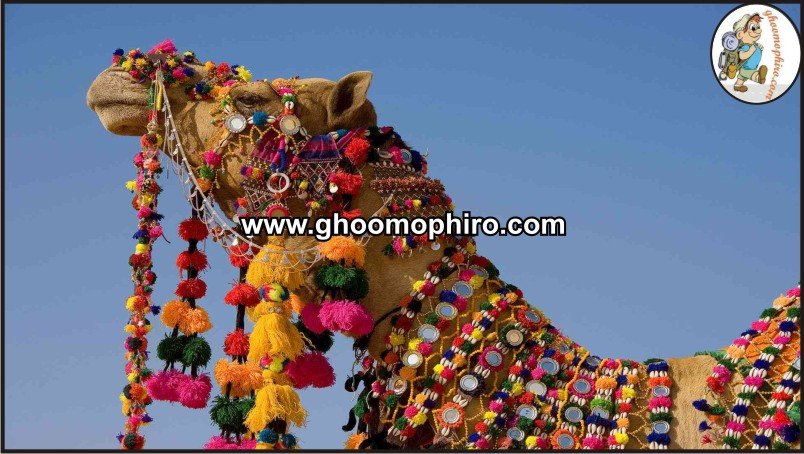
Known as the ship of the desert, the camel is one of the most favorite animals of the state. In order to celebrate the grandeur of this huge animal, the annual camel festival takes place in the city of Bikaner in the month of January each year. This festival is a must visit as the camel owners from all over the state arrive here and showcase the talents their animals possess.


Desert Festival

The festival takes place in the beginning of the year, in January or February. It happens to be a three day event that celebrates the wide Thar Desert in the state. The event takes place in the desert and would be better to call it a desert fare. It is one of the most popular tourist attractions in the state and a great way to experience Rajasthan in all its might.

Mewar Festival

The month of March-April is considered to be the best to visit the colorful city of Udaipur. This is the time when the Mewar festival takes place and the entire city is bathed in colors and brightness. A grand celebration follows and the locals can be seen organizing it with high octane energy. This is one of the most visited festivals by the tourists after the annual camel race.

Teej Festival

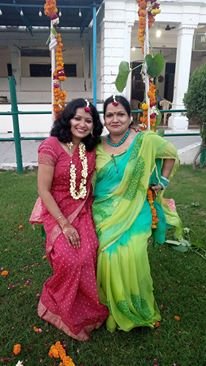
The Teej festival is also known as the celebration for the arrival of the beautiful spring season. The festival originated in Rajasthan and now it gets celebrated in almost all the major parts of the country. The women tie ropes on the trees and enjoy swinging on them. This is a very ancient festival that is around for quite a lot of time.

Marwar Festival

Jodhpur is the location and October/November is the time when this festival takes place. The Marwar festival is the celebration of the folk heroes that constitutes the glorious history of the state. The city comes alive as the day approaches and everyone celebrates it with a great joy and enthusiasm that perfectly showcases the greatness of Rajasthan as a state.

Rajasthan International Folk Festival, Jodhpur

RIFF is an annual music and art festival that promotes traditional folk music and arts. Celebrated around Sharad Purnima, the festival offers a delightful time to the visitors. The festival is held in the month of October during 23rd October to 27th October.

If you are a folk music lover, this festival is a must visit for you.


The distinctively exceptional festival is hailed as a “People’s Platform for Creativity and Sustainable Development” and supported by the Maharaja of Jodhpur and Sir Mick Jagger of the Rolling Stones.

Pushkar Fair, Pushkar

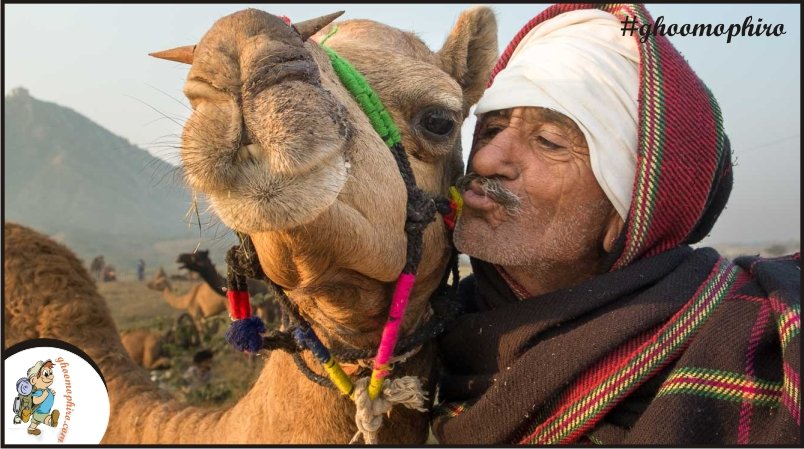
The Pushkar Fair is the most well known of all desert festivals. It’s a spectacular five-day camel and livestock fair, fair held in the town of Pushkar, where thousand of devotees take plunge in the sacred lake of Pushkar.

The celebrations of this festival also coincide with the religious occasion of Kartik Ekadashi, when the Pushkar lake was supposed to be created by Lord Brahma. Primarily a livestock fair which observes the buying and selling of camels, the Pushkar fair is a center of attention for hordes of tourists and this is what makes it a true cultural bonanza of art.

There are many other festivals such as the Gangaur festival and Jaipur Literature festival which are as important as the ones we have just mentioned. Rajasthan’s essence lies in its people and the different ways in which they are known to celebrate these festivals. It makes the people to keep themselves in touch with the age old customs that they are very proud of.

Categories
Culture Himalayas Itinerary North India

#ghoomophirosisters recommended itinerary for 8 days in Uttarakhand

Ours was an 8-day long trip exploring the region in Uttarakhand. We saw incredible views of the snow-capped Himalayas and mostly clear blue skies. Since there is a lot to be explored, we followed this itinerary instead of fumbling on our own through the days. Our journey began from Delhi via tempo traveler along with other fellow members and through the course of the next eight days, we were blown away by the beauty that Kumayon had to offer.

Day 1

We were so excited to be at our destination that we all reached our starting point on time.  During the journey, we took tuck buying, tea, photo break to keep ourselves entertained. Our guide  Mr. Ramesh, who decided to make KMVN’s Kathgodam as our lunch our pitstop. The lunch was delicious. We had Bhat ki dal, which is a traditional preparation of Kumaon. There is nothing much to do at Kathgodam, it is the last railway station on the railway line. Beyond this, you need to hire a car to discover Kumaon.

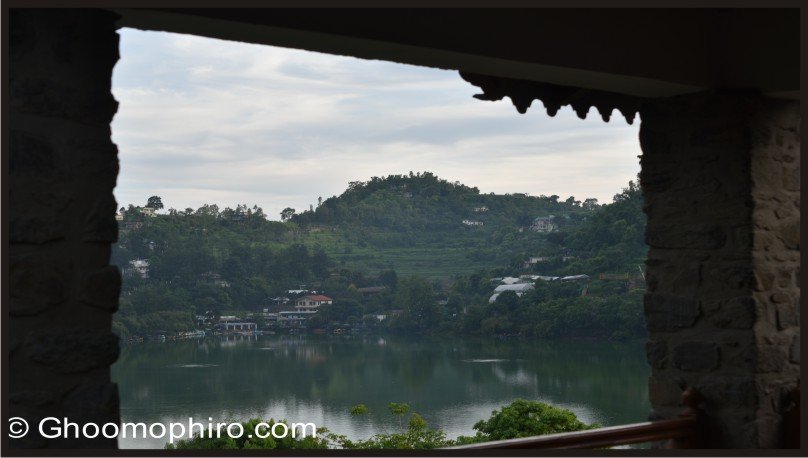
We stopped at Bhimtal. The main attraction there had to be the vast lake which was quite beautiful. Since it is monsoon season the tourist were almost nil and that have given we a chance to just sit by the lake and relax.

Then our last stop was Nakuchiatal, the nine-cornered lake. We stayed at KMVN Parichay which was right near the lake and our room gave the perfect view of the lake and the mountains in a scenic landscape. A stroll near the lake during sunset had us finally realizing that this trip was going to be incredible.

Day 2

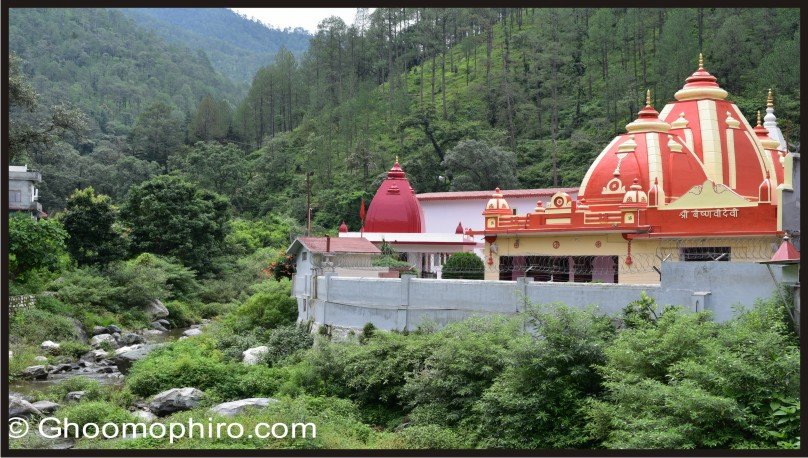
The next day took us firstly to Kainchidham which is located on the Nainital- Almora road. The temple had its own ethos and it was quite a peaceful place to be at. It is popular as the religious retreat for people of all faiths and we felt quite at ease around there. The next place we went to was Kakadighat where Swami Vivekananda got his inspiration. There is a Peepal tree under which he sat & meditate, before leaving for the Himalayas.

Then, we had our lunch at Khairna in a place called ‘Standard fast food and restaurant’ which had decent food. We stuck to our North-Indian routine since there was a lot of driving to look forward to, so we didn’t want to try something new and spoil our appetites. We drove through hilly areas to reach Ranikhet Golf course, stopped and wandered around for a while and then headed to Sitlakhet which is approximately 24 km away from Ranikhet via Kathpuria. We were welcomed at KMVN’s TRH at Sitlakhet. Today it was Harela festival, a local sowing festival. On this occasion we planted trees. The view from the terrace was amazing we could see the Almora city.

Day 3

We got up early in the morning to capture the sunrise and see the snow peaks. But our luck was bad as it was too cloudy to see anything. We decided to hike around Sitlakhet and were lucky to see peaks like Nanda Devi, Trishul, Panchachuli etc. After breakfast, we headed towards Katarmal sun temple which was built by the Katyuri King Katarmalla. It is the second most popular sun temple in India after Konark and one look at the place tells you exactly why.

While we were heading towards Someshwar, we saw a lot of farmers doing paddy plantations as it was sowing season. Mr. Ramesh told us that like every one of us gets bored with their job & routine work they too get bored and too keep themselves entertained, the group sing local folk songs which sowing the paddy. It was such an amazing feeling to see women working hard in the fields

Throughout the rides, we looked out the window for sights of the region which never failed to amaze us. It was incredible how similar the cities looked in every place, but the remote areas always had their unique identity. The trip from Someshwar to Kausani was another 10 kilometers. The best part about traveling in Uttarakhand was the delicious local food which was a treat for our taste buds.

Day 4

This day was dedicated to doing sightseeing & discovering places near Kausani. Kausani is also known as Switzerland of India. We first headed to the Anasakti Ashram which is a religious site and Gandhiji stayed here in 1929. It had a small prayer room, a museum, and a beautiful setting.

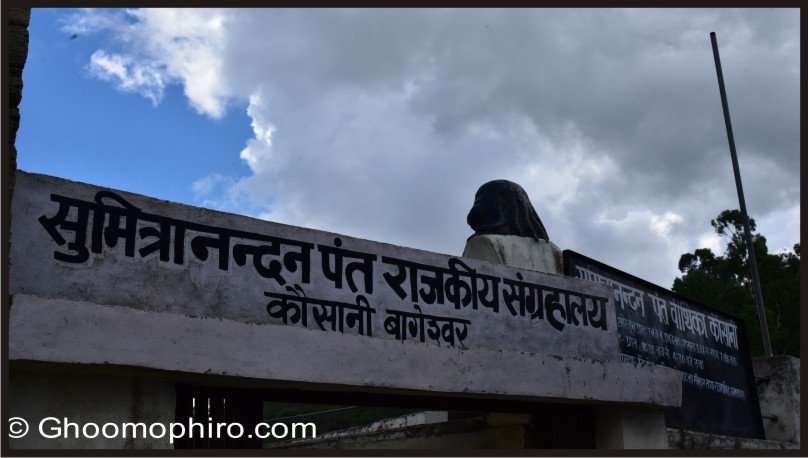
Then, we also visited the Sumitra Nandan Pant Museum. The famous Hindi poet was born here. His house is converted into the museum which has manuscripts of his poems, & the glimpse of his lifestyle. There is a large collection of Hindi & English book as well. To comrade his birth anniversary, poetry sessions are organized there. If you have an artistic taste and want to revisit your school days, then it is a must visit the place.

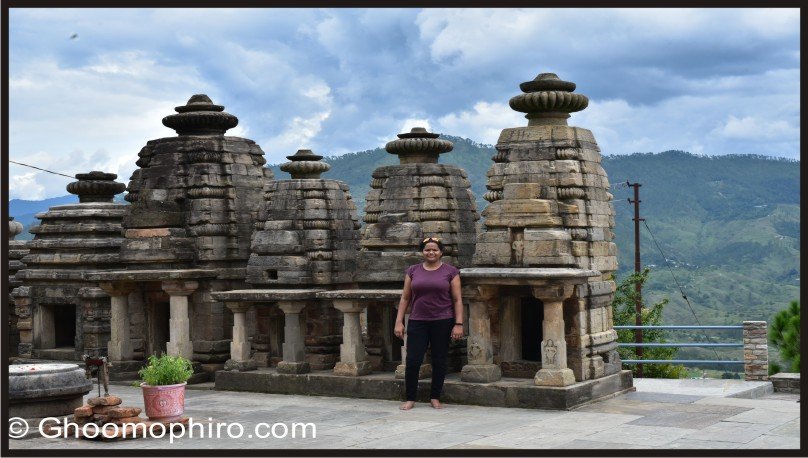
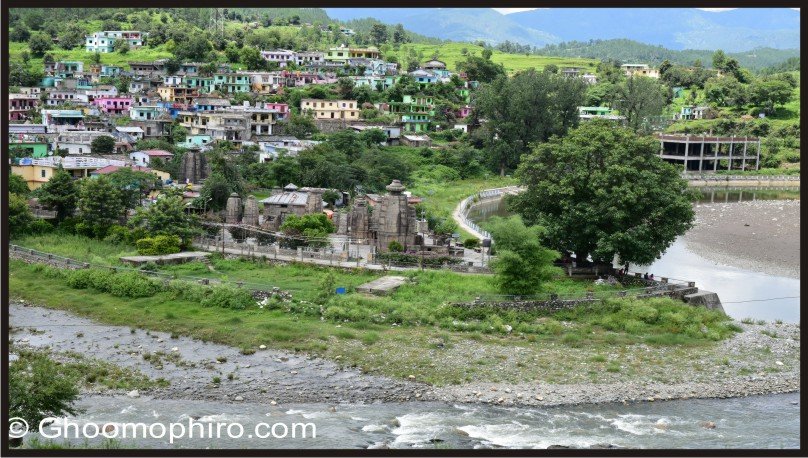
The bus was now heading towards the Baijnath Temple which was 37km west of Kausani. It was a nice Lord Shiva Temple on the banks of Gomti River. The temples were built in 1150 AD by local kings. It is one of the four places in Shiva Heritage Circuit’ in Kumaon.

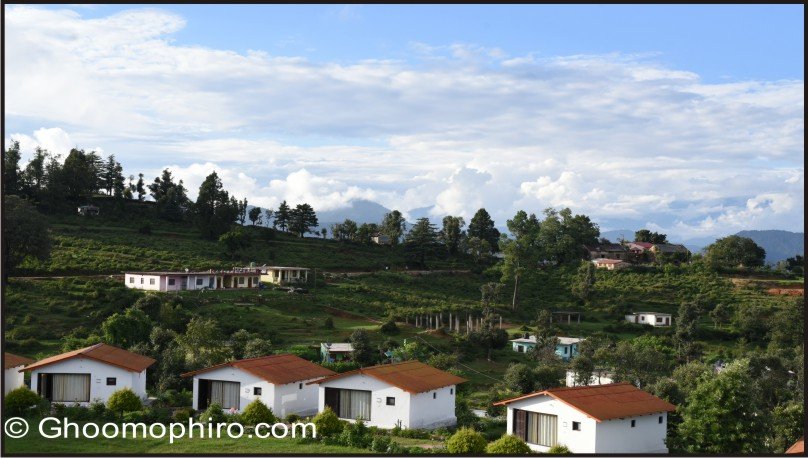
Before heading to our day’s final destination it was time to refuel ourselves, we had our lunch at Bageshwar at the KMVN TRH. Then we headed over to Chaukori and visited the picturesque Tea Plantation sites. Chaukori is another hill station and we stayed at KMVN Chaukori which gave the perfect view of the Himalayas right from our window. It is a quiet little relaxing place with great weather.

Day 5

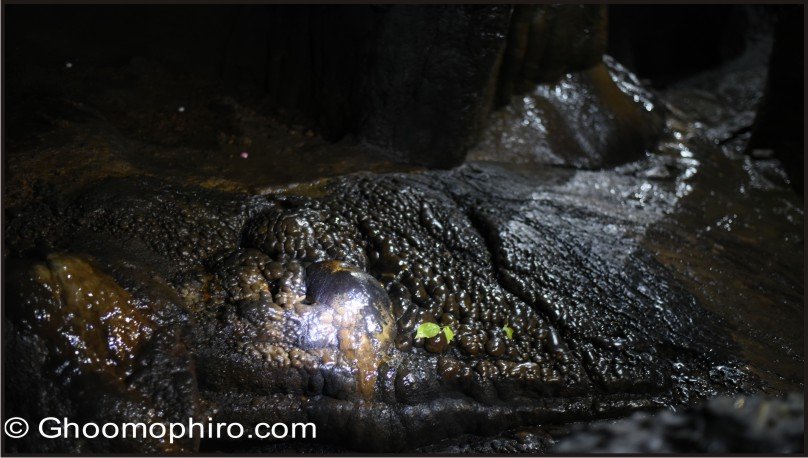
Though we got up early to capture the sunrise, we another unlucky day the whole town was engulfed in clouds & fogs. But this view was quite mesmerizing. The flower plants in the TRH were in full bloom. Since the rest-house itself is in a secluded area, there was not much to do there except sit back and enjoy the scenery, so we headed over to Patal Bhuvneshwar which had the limestone caves that are popular among pilgrims. Legend has it that the cave enshrines Lord Shiva which accounted to their popularity. Patal Bhuvneshwar was not just one cave but a series of caves. We almost crawled down to 90 feet to reach sanctum. The guide followed us through the cave & explained the carvings which were quite interesting.

After that, we headed over to Gangolihat which is 14 km away from Patal Bhuvneshwar. Then we headed to Paanar Gaon to view the Saryu-Ramganga confluence which is popular mainly because of Lord Shiva and the holy rivers. Then we also went to Lohaghat which is perched on the banks of river Lohawati. For as far as our eyes could see, there was lush green scenery and oak forests. There were also many temples with a historical and mythological importance that we stopped to pray and get blessings.

Day 6

The next day consisted of us heading to Abbott Mount which was at a 7 km distance. The Abbott hill had an infamous bungalow on it called ABBEY which is believed to be a haunted place. Since no one goes there after dark, we visited the place in bright light of the day but the place still managed to give us the creeps, just by appearances and the ghost stories of mysterious instances associated with it. It was believed that the building that was donated to a hospital contained a Mukti Kothri where the patients died exactly as predicted by the Doctor. Though another theory is that the doctor himself killed the patients to prove his prediction and now the ghosts of those patients haunt the place. After the scary visit, we traveled to the Mayawati Ashram which is an Ashram dedicated to the study of Advaita Vedanta. Till date, no idols are worshipped here. Our next stop was the Vivekananda Ashram at Shyamlatal which is situated on the banks of the Shyamlatal lake. So, we also got to see the Shyamlatal Lake which is of dark color due to muddy substances present in the water, thus giving it the name of ‘Shyam’ synonymous with Lord Krishna of Hindu Mythology. Then we went to Tanakpur which is a buzzing town known mainly for its Devi Purnagiri temple. People usually breeze by this place while heading towards Kumaon hills or some other place, but we took our time exploring the region.

Day 7

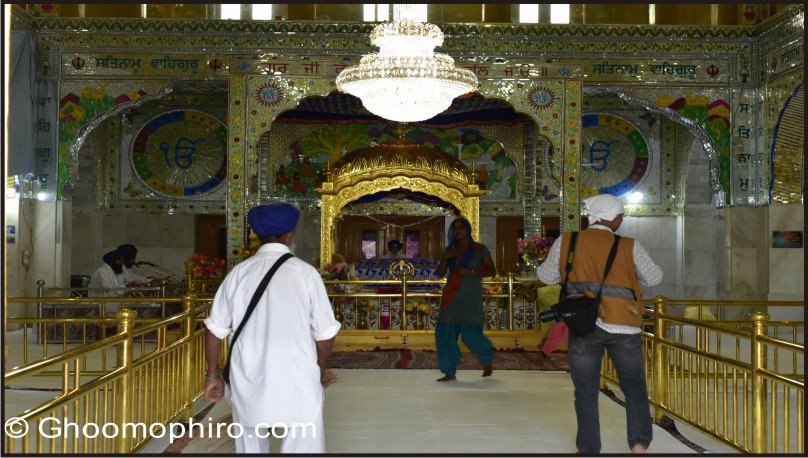
The next day we crossed the borders. Just kidding, or perhaps not. Our 7th day morning took us to Brahmdev in the western Nepal area. The Brahmdev Temple is quite adored by tourists and one can easily guess why after being there. Then we visited the Nanaksagar reservoir which was a magnificent sight. The lake spread out in front of us in all its magnificence. For further spiritual satisfaction, we headed over to the Nanakmatta Gurudwara which was just nearby. We heard the sound of Gurbani and it relaxed us to the core and then we ate delicious langar (food) there. By this time, we were already feeling the end of the journey and felt nostalgic about all the days spent and the places we had seen.

Day 8

The next day was our return to Delhi and we spent the time scrolling through pictures on our phones, relishing all these memories we had created in just eight days. Uttarakhand is simply beautiful, and we were glad we took our time to see all the places.

There are many other itineraries for exploring Uttarakhand, but this is the most common one and that is for a reason. The reason is that it covers most of the places a tourist would come to Uttarakhand to see. So, make your plans and travel arrangements and go exploring this wonderful place. We did find the KMVN properties to be most comfortable for our stays, certainly had the best views, but you can pick according to your needs and travel packages.

Categories
Culture Festival

Experiencing the Kumbh in Himalayas- Naropa Festival

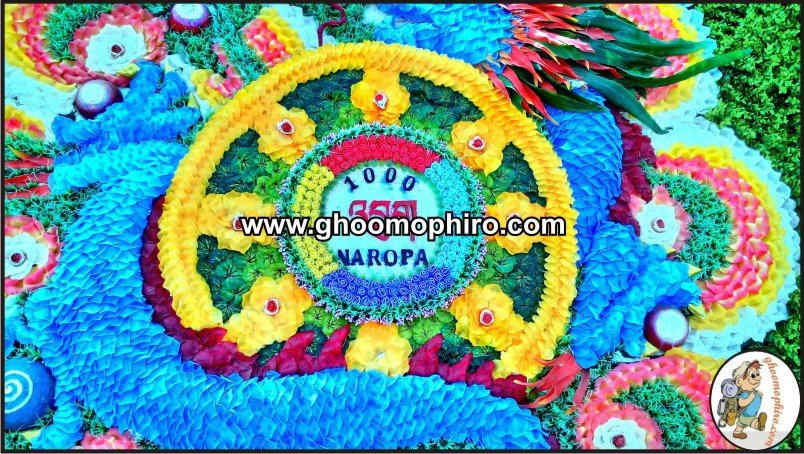
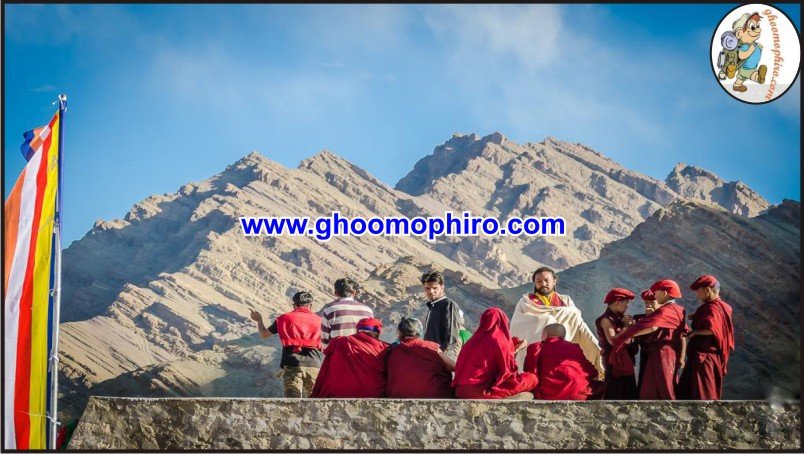
Commemorating the millennial birth anniversary of Naropa, the Naropa Festival sees the enthusiasm of thousands of Ladakhis who wait under the sun, with the chants of music, drums, cymbals adding spiritual chants to increase the level of festivity, giving the literal Kumbh Mela feel surrounded by the Himalayas. The festival is held just once every twelve years and the crowd that gathers is massive with people from all over- Bhutan,  Thailand, Nepal and of course, Ladakh joining together. The festival begins even before reaching the region as one sees beautiful views of Ladakh on the way.

We were there to see the magnificent festival- often referred to as the Kumbh of the Himalayas. Though, it is our belief that the festival need not attach itself to the Kumbh since it is majestic in its own space. The festival takes place near the Hemis Monastery of Ladakh which is also the largest Monastery of the reason along with being most distinguished where millions of people gather around to witness it in entirety. It is located at a distance of approximately 40km from Leh. Though Buddhism is at the core of the festival, that isn’t entirely what it is all about. There are music, dance and excitement like any other festival, perhaps even a college fest but with a vast population. One is surprised even looking at the various types of crowds, some braving the sun with the colorful umbrellas while families and nuns sit patiently waiting for something to happen, often chatting with each other and even chanting occasionally. The festival was a historical event made special by the disciplined crowd along with the events.

Many Buddhist philosophers have come and gone, preaching about life, learning, patience and just living in general.  Saint Naropa (1016-1100 CE) was one such saint who preached about learning through experience and pioneered the thought of infinite love. He was once a philosopher in the Nalanda University who later on moved to Ladakh, around a 1000 years ago gradually attaining the highest level of spiritualization (becoming one of the mahasiddhas). His thoughts and ideology shaped the Drukpa sect of Buddhism. He is also credited as a fundamental pillar in Vajrayana tradition for creating the Six Yogas. His life reflects perseverance, endurance, and compassion. His teachings are still followed largely in Ladakh region. He was adorned with the six bone ornament by Dakinis after his enlightenment, the same ornament which is now donned by His Holiness.

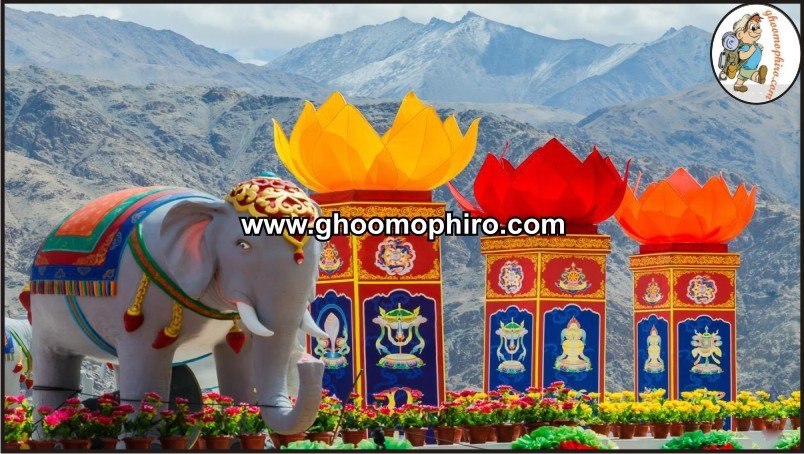
When we reached the place, the whole stage was set, with artificial lotuses and dragons hanging all around. The picturesque view of the mountains and the Naropa palace could be seen. For as long as the festival lasted, that was the only destination for every traveler on the road. The people gathered together, passing the local ‘tsampa’ dish to each other while chit-chatting, until it was time for His Holiness Gyalwang Drukpa’s speech because, at that point, everyone fell silent. We weren’t allowed to click the picture of the six bone ornament but its unveiling was done in a beautiful manner. There was this spiritual air all around us. The six bone ornament is protected with strict levels of security since it has a holy and sacred status for the people. But we still felt special for having a glimpse of it since people in thousands gathered to have just one look through the display. As strong as the philosophies are of Saint Naropa, the ornament manifests itself to be a physical legacy and as such holds a lot of importance for the people.

We were quite awed by the presence of His Holiness Gyalwang Drukpa as well. With millions of followers worldwide, he has such great power among a whole set of people, who came to the festival specifically to see him live. The devotees bowed down before him as he passed and it just showed the level of devotion and love they had. We had plenty of opportunities to observe him during the week and it just seemed like a sharing of mutual faith and good humor. He used the stage to address all the people to spread social messages, while marveling at the performances, clapping excitedly whenever he liked something

The various important events for one to look out for are:

Thangka Unfurling- Thangka was a mammoth silk brocade which has the incidents from the life of Padmasambhava (a Buddhist master) embroidered on it. It is the largest brocade of Ladakh and spreads far, hanging from the roof of the monastery to the floor.

Then there are the various song and dance performances to look forward to, especially by lamas. It was the first time in our life that we saw the dragon dance in reality and we were awed by it. Another type of dance to look out for would be the Tsam Dance. There was a light show coordinated by French lighting experts who showed 3D images mapping the images of Ladakh’s culture and wildlife while projecting them on the monastery walls.

When the prayer session of Drupka masters begin, with one of the largest assemblies of people witnessing and watching them, it is an out of the world experience. The Kung-fu monks had conducted a bike ride from Nepal to Ladakh which turned out to be the major highlight of the event. They also spoke and spread great messages to the people about various issues like animal cruelty, gender inequality, environmental pollution and education. These talks rose over the boundaries of spiritualism and it was amazing for us to see the spiritual leaders rising above the religious bounds.

This festival has never been all about spiritual activities like we just described, it has social welfare, the picturesque views, the incredible art and culture performances and another special highlight would be the Bollywood performances. There were a number of Bollywood performers who came attracting the audience and captivating them with their performances. There was also one Ladakhi instrumental session which we were quite pleased with.

Those 7-days that we spent in Ladakh for the festival would be our most memorable times in Ladakh. It was so many different cultures, different kind of entertainment all together in one beautiful valley. From the exotic dancers to the cultural performances, to the small shops and souvenirs, everything was perfectly managed and coordinated. Even after we returned to our home, we could still hear the ringing of those chants, cymbals and music in our ears because this was the experience of a lifetime. If you would like to experience all this firsthand, plan a trip to Ladakh, for when the festival happens again in twelve years.

A simple tip for first-time travellers though, give yourself some time to acclimatize with the environment. Try the local roadside food, it is amazing. Strike random conversations with people and try to make the most of your trip to Ladakh.

Categories
Asia Culture Itinerary

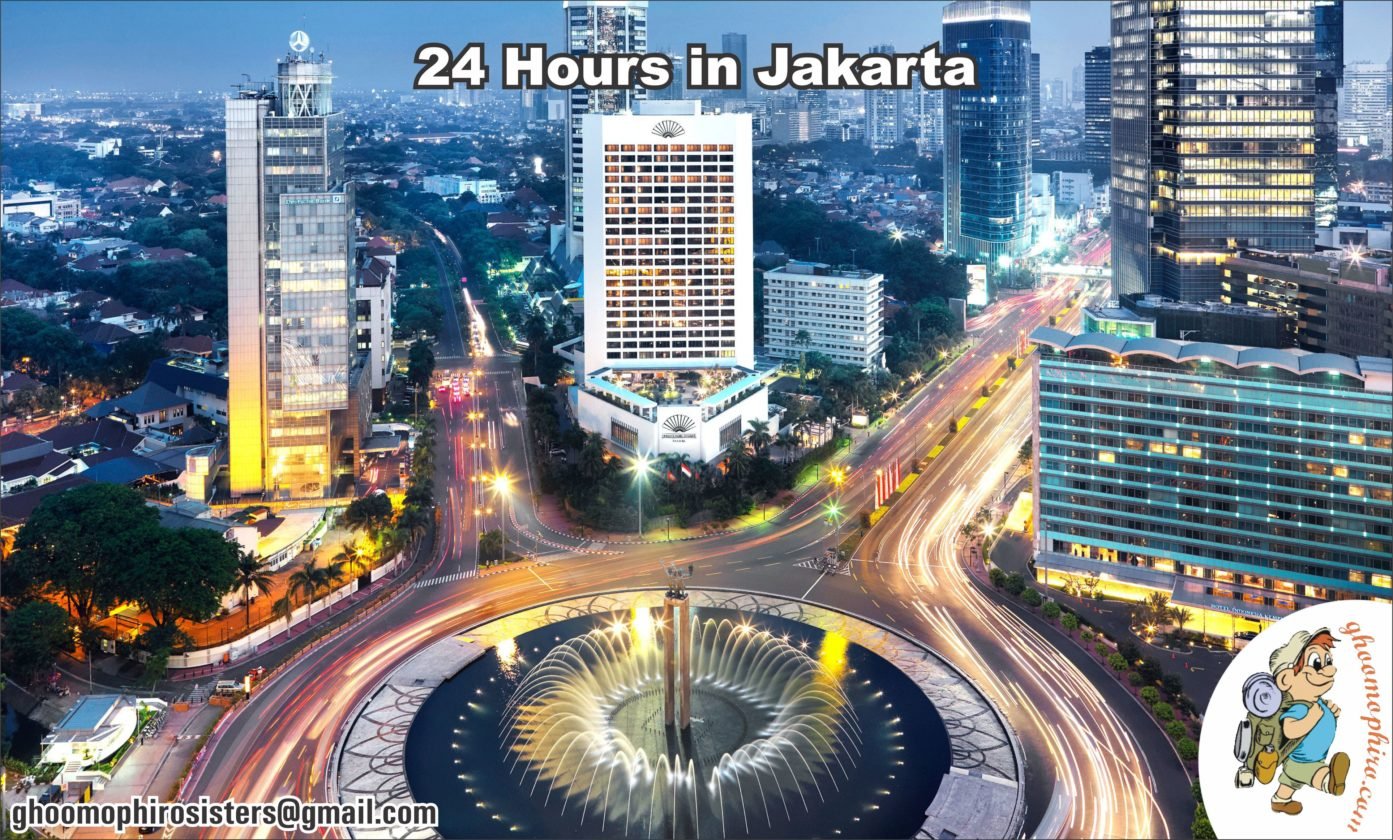
48 Hrs in Jakarta

Jakarta is a popular place for tourists as it has much to offer in terms of entertainment. Make your
trip to Jakarta an unforgettable one by following this list of things to do:
1. Ancol Dream Park
Ancol Dreamland is an amusement park near Ancol beach and you can spend your whole day here
refreshing your mind through wonderful rides and fun activities. There are animal shows, SeaWorld
beaches, Hailai club and paintball games. You can even play golf or go bowling. There is an ART
academy and art market to see as well.

2. National Museum, Jakarta
Jakarta has lots of museums including the Kite Museum, Bank Indonesia museum, maritime
museum, Jakarta textile museum and of course, the national museum. The National Museum has an
enormous collection of statues, treasures and artefacts. There are also models of architectural
brilliance, glittering necklaces and stone images displayed that will inspire awe in the eyes of the
beholder.

3. Enjoy the Nightlife and cuisines
Jakarta has one of the most happening nightlife in Indonesia. There are a number of incredible
restaurants and bars that you can visit all over the city. You can go to Awan Lounge which has a
Rooftop garden bar that is just incredible or cafe Ecobar. For good food, you can visit Nusa that has
best local cuisines of Indonesia. You can also go to Mamma Rosy’s Kitchen for some authentic Italian
food.
4. Monas tower
The Monas tower is a national monument and a spot for tourist attraction. It is a must-visit for every
person travelling to Jakarta as it is a symbol of strength in Indonesia. It is near the National History
museum and opens every day from 8 am – 3 pm. You can visit Monas early in the morning. Monas is
known because of the splendid view it has to offer.


5. The Catholic Cathedral and The Istiqlal Mosque
Istiqlal Mosque is the largest mosque in South East Asia and though there are lots of mosques in
Jakarta, this is a special must-visit. Right across the street from Istiqlal Mosque is the Jakarta
Cathedral. This cathedral was built back in 1901 in neo-gothic architectural style.

6. Spa and Massage

There are lots of spa and massage options to choose from. You can take a day off from hectic
travelling schedules and just relax. Try the traditional Indonesian massage or spa to soothe yourself.
7. Grand Indonesia Mall
There are lots of malls in Jakarta and The Grand Indonesia mall is the best one. You can just do
window shopping or buy souvenirs for your friends and family back home. But if you want some
cheaper place to go, try Thamrin city or Tanah Abang.

8. Market of Jakarta- Pasar Santa
Pasar Santa is an indoor market in Jakarta and you can find all sorts of trendy or vintage
commodities here. There are also Vinyl record stores and cafe lounges where you can sit back and
relax.


9. Taman Ismail Marzuki
It is the main cultural hub in Jakarta with a great variety of theatres and cinemas. You can watch live
performances of folk dance or performance arts like Sundanese dance or go there during the
gamelan musical event.


10. Escape the city and Visit the Thousand Islands
A thousand islands is a chain of islands that you can reach from North Jakarta. If you have had
enough of sightseeing in the city and want to escape to some peaceful and marvelous locations,
take a boat to these islands and make your trip unforgettable.
Remember, if you are in Jakarta take all that the city has to offer. Have a great trip!

Exit mobile version